Contents
Chapter 5 · NetworkPractice

LEARN WITH HARU

Video Lesson တွေက Haru အတန်းသားတွေအတွက်ပါ

Haru ရဲ့ ITPEC FE Full Course မှာ ယခု သင်ခန်းစာတွေကို တစ်ခုချင်း တစ်ကြောင်းချင်း အသေးစိတ်ရှင််ရှင်းပြထားပါတယ်

အခြေခံ မရှိတဲ့ ကျောင်းသားများစွာဟာလည်း ဒီ Course နဲ့ ပဲ အောင်မြင်ကုန်ကြပါပြီ

အတန်းမအပ်သေးပဲ Haru ဆီမှာ အစမ်းသင်ကြည့်ချင်ပါသလား?

သင်တန်းသားတွေရဲ့ စကားသံများ

သင်တန်းသားတွေရဲ့ စကားသံများ
Learning toolsProgress & bookmarks

Current section

3-1-1 Topology (Connection Form)

p. 321

Progress

Not marked complete

Progress and bookmarks

p. 321

3-1-1 Topology (Connection Form)

The types of LAN topology (i.e., connection form) are described below. The LAN topology includes physical topology and logical topology, and these need not necessarily match.
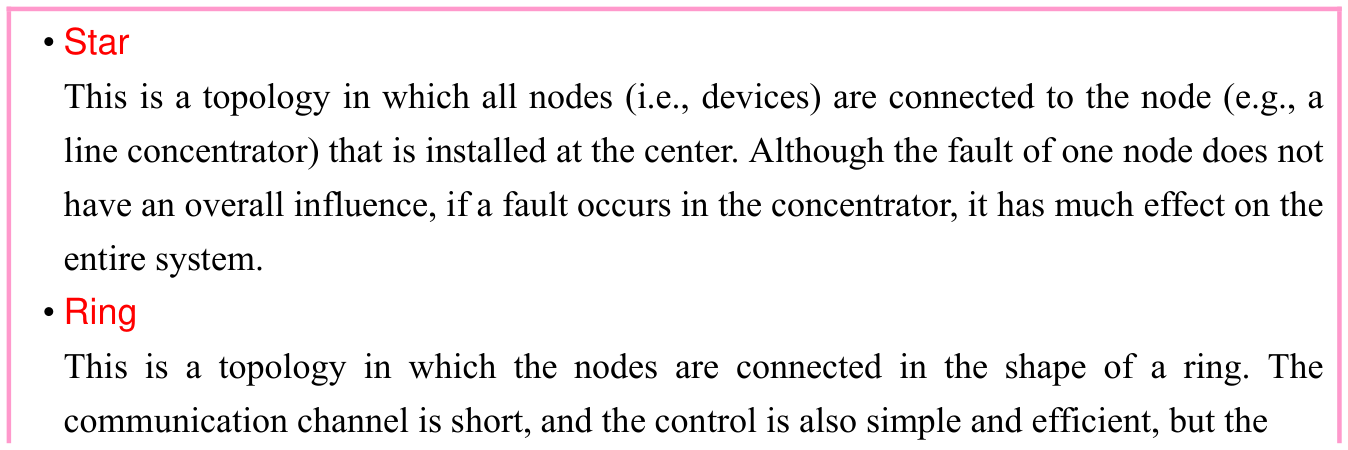
Original Topology (Connection Form) source table or explanation box, preserving its complete original arrangement, labels and values. Source text: • Star This is a topology in which all nodes (i.e., devices) are connected to the node (e.g., a line concentrator) that is installed at the center. Although the fault of one node does not have an overall influence, if a fault occurs in the concentrator, it has much effect on the entire system. • Ring This is a topology in which the nodes are connected in the shape of a ring. The communication channel is short, and the control is also simple and efficient, but the
p. 321 · Enlarge

p. 322

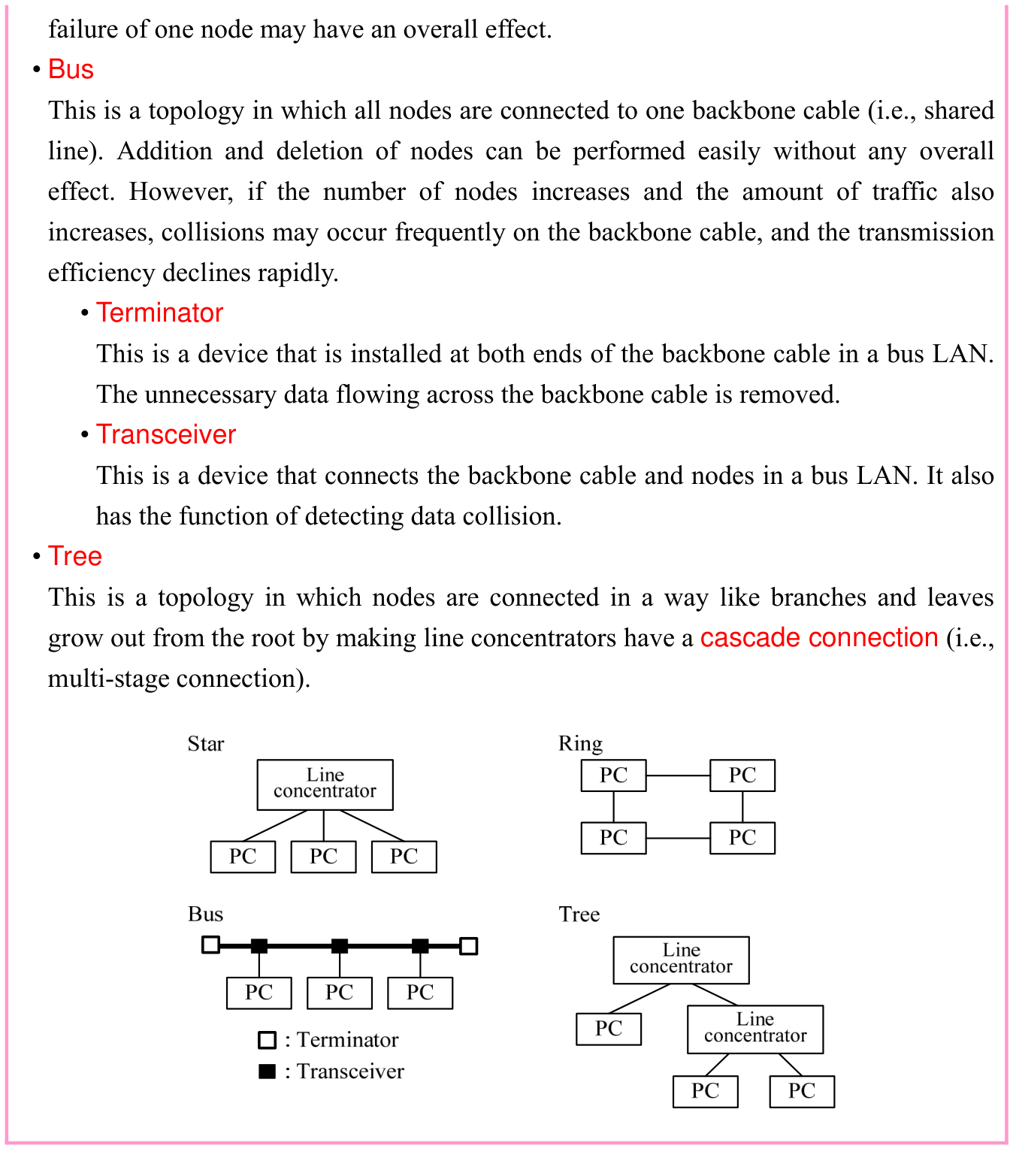
Original Topology (Connection Form) source table or explanation box, preserving its complete original arrangement, labels and values. Source text: failure of one node may have an overall effect. • Bus This is a topology in which all nodes are connected to one backbone cable (i.e., shared line). Addition and deletion of nodes can be performed easily without any overall effect. However, if the number of nodes increases and the amount of traffic also increases, collisions may occur frequently on the backbone cable, and the transmission efficiency declines rapidly. • Terminator This is a device that is installed at both ends of the backbone cable in a bus LAN. The unnecessary data flowing across the backbone cable is removed. • Transceiver This is a device that connects the backbone cable and nodes in a bus LAN. It also has the function of detecting data collision. • Tree This is a topology in which nodes are connected in a way like branches and leaves grow out from the root by making line concentrators have a cascade connection (i.e., multi-stage connection).
p. 322 · Enlarge

Section progress

Original chapter exercises

Original chapter exercises →

New FE Textbook Vol.1 · IT Fundamentals · First Edition, April 2015