Contents
Chapter 5 · NetworkPractice

LEARN WITH HARU

Video Lesson တွေက Haru အတန်းသားတွေအတွက်ပါ

Haru ရဲ့ ITPEC FE Full Course မှာ ယခု သင်ခန်းစာတွေကို တစ်ခုချင်း တစ်ကြောင်းချင်း အသေးစိတ်ရှင််ရှင်းပြထားပါတယ်

အခြေခံ မရှိတဲ့ ကျောင်းသားများစွာဟာလည်း ဒီ Course နဲ့ ပဲ အောင်မြင်ကုန်ကြပါပြီ

အတန်းမအပ်သေးပဲ Haru ဆီမှာ အစမ်းသင်ကြည့်ချင်ပါသလား?

သင်တန်းသားတွေရဲ့ စကားသံများ

သင်တန်းသားတွေရဲ့ စကားသံများ

Highlighted text? Practice this concept. Highlighted passages and figures open related questions.

Practice related questions (1)Progress & bookmarks

Current section

1-4-3 HDLC (High-Level Data Link Control)

p. 308

Progress

Not marked complete

Related questions in this lesson 1

HDLC Frame Check Sequence1
Progress and bookmarks

p. 308

1-4-3 HDLC (High-Level Data Link Control)

HDLC (High-level Data Link Control) is a transmission control procedure that is used when high-speed transmission of data is performed by transmitting data in units of frames.
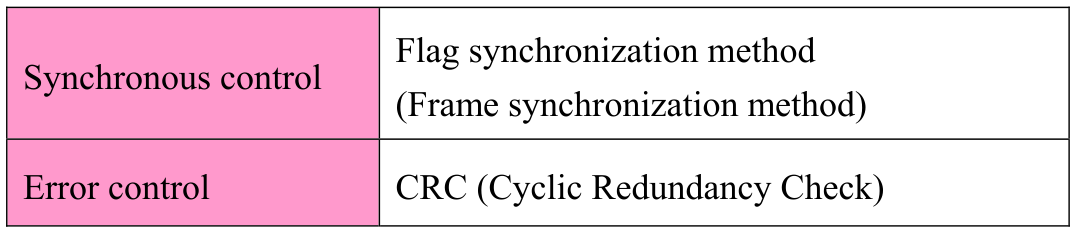
Original HDLC (High-Level Data Link Control) source table or explanation box, preserving its complete original arrangement, labels and values. Source text: Flag synchronization method Synchronous control (Frame synchronization method) Error control CRC (Cyclic Redundancy Check)
p. 308 · Enlarge

(1) Format of frames

According to HDLC, the frames having the following format become the unit of transmission.

Original HDLC (High-Level Data Link Control) source table or explanation box, preserving its complete original arrangement, labels and values. Source text: F A C I FCS F
p. 308 · Enlarge

p. 309

F : Flag sequence (8 bits) It is the start/end flag (01111110) that is added at the beginning and end of the frame. A : Address field (8 bits) The address of the transmitting station or receiving station of the frame is recorded. C : Control field (8 bits) The type and transmission sequence of the frame is recorded. I : Information field (any arbitrary n bits) The transmission data is recorded. FCS: Frame Check Sequence (16 bits) The CRC code for error control of the A, C, and I fields is recorded. · 1 question

(2) Types of frames

Depending on the purpose, the frames that are used in HDLC can be classified into the following three types.
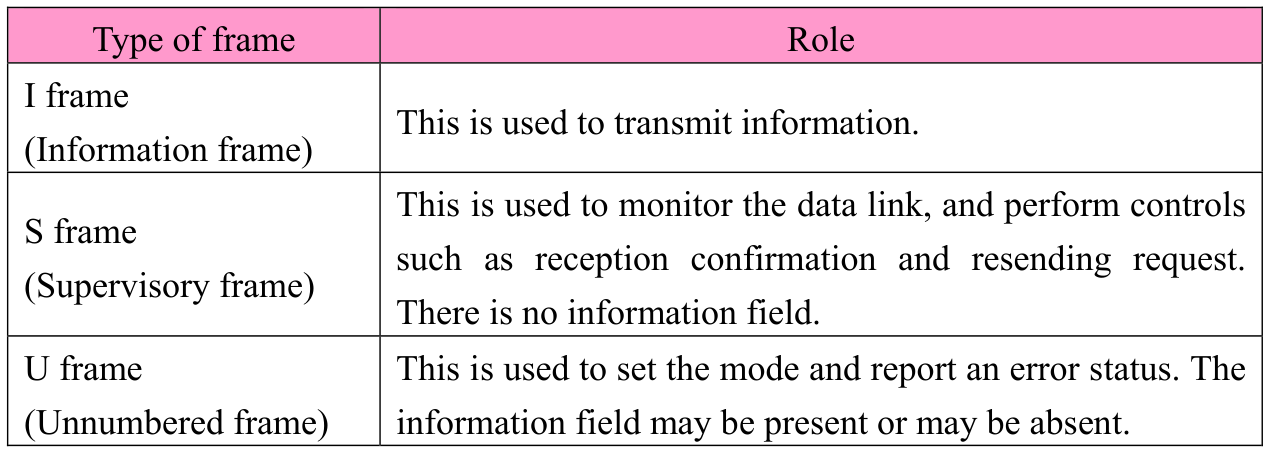
Original HDLC (High-Level Data Link Control) source table or explanation box, preserving its complete original arrangement, labels and values. Source text: Type of frame Role I frame This is used to transmit information. (Information frame) This is used to monitor the data link, and perform controls S frame such as reception confirmation and resending request. (Supervisory frame) There is no information field. U frame This is used to set the mode and report an error status. The (Unnumbered frame) information field may be present or may be absent.
p. 309 · Enlarge

(3) Establishing a data link

According to HDLC, the computer (or terminal) to be connected is called a station. The method of establishing a data link differs according to the type of the station.
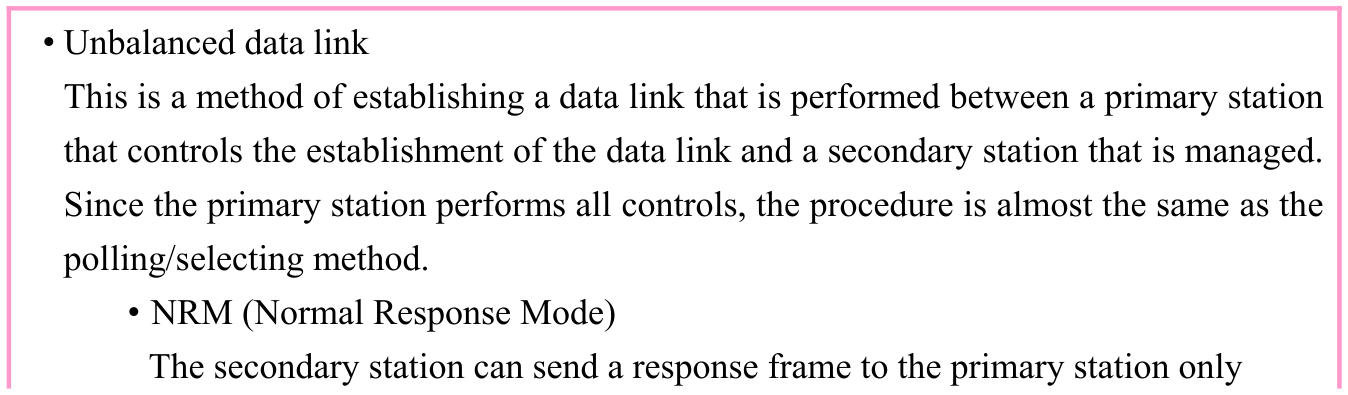
Original HDLC (High-Level Data Link Control) source table or explanation box, preserving its complete original arrangement, labels and values. Source text: • Unbalanced data link This is a method of establishing a data link that is performed between a primary station that controls the establishment of the data link and a secondary station that is managed. Since the primary station performs all controls, the procedure is almost the same as the polling/selecting method. • NRM (Normal Response Mode) The secondary station can send a response frame to the primary station only
p. 309 · Enlarge

p. 310

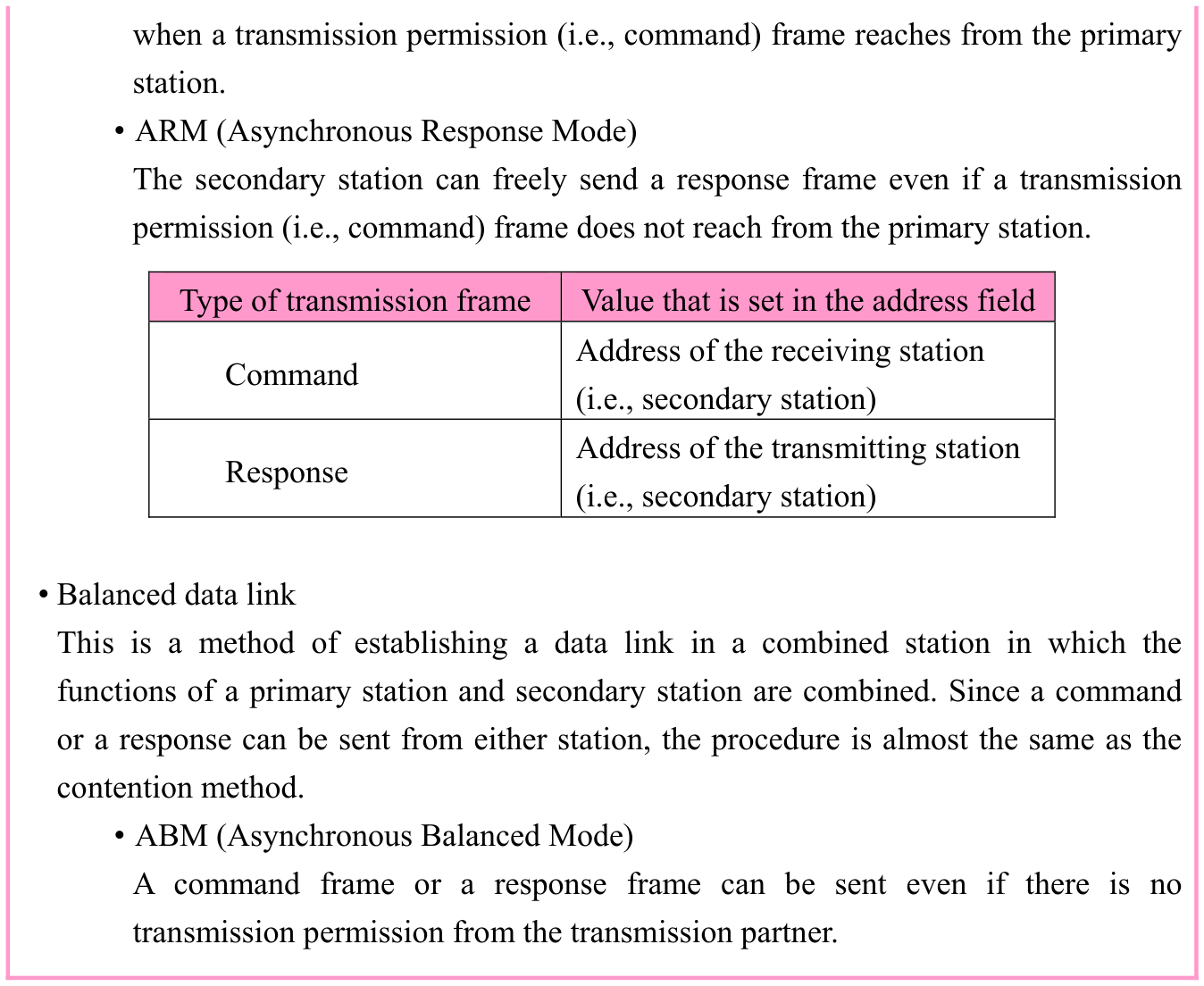
Original HDLC (High-Level Data Link Control) source table or explanation box, preserving its complete original arrangement, labels and values. Source text: when a transmission permission (i.e., command) frame reaches from the primary station. • ARM (Asynchronous Response Mode) The secondary station can freely send a response frame even if a transmission permission (i.e., command) frame does not reach from the primary station. Type of transmission frame Value that is set in the address field Address of the receiving station Command (i.e., secondary station) Address of the transmitting station Response (i.e., secondary station) • Balanced data link This is a method of establishing a data link in a combined station in which the functions of a primary station and secondary station are combined. Since a command or a response can be sent from either station, the procedure is almost the same as the contention method. • ABM (Asynchronous Balanced Mode) A command frame or a response frame can be sent even if there is no transmission permission from the transmission partner.
p. 310 · Enlarge

According to HDLC, continuous transmission of information (i.e., frames) is possible by using the information (transmission sequence number/reception sequence number) of the control field after a data link is established.

Section progress

Original chapter exercises

Original chapter exercises →

New FE Textbook Vol.1 · IT Fundamentals · First Edition, April 2015