Contents
Chapter 5 · NetworkPractice

LEARN WITH HARU

Video Lesson တွေက Haru အတန်းသားတွေအတွက်ပါ

Haru ရဲ့ ITPEC FE Full Course မှာ ယခု သင်ခန်းစာတွေကို တစ်ခုချင်း တစ်ကြောင်းချင်း အသေးစိတ်ရှင််ရှင်းပြထားပါတယ်

အခြေခံ မရှိတဲ့ ကျောင်းသားများစွာဟာလည်း ဒီ Course နဲ့ ပဲ အောင်မြင်ကုန်ကြပါပြီ

အတန်းမအပ်သေးပဲ Haru ဆီမှာ အစမ်းသင်ကြည့်ချင်ပါသလား?

သင်တန်းသားတွေရဲ့ စကားသံများ

သင်တန်းသားတွေရဲ့ စကားသံများ

Highlighted text? Practice this concept. Highlighted passages and figures open related questions.

Practice related questions (1)Progress & bookmarks

Current section

4-2 Basic Configuration of the Internet

p. 336

Progress

Not marked complete

Related questions in this lesson 1

RADIUS server1
Progress and bookmarks

p. 336

4 - 2 Basic Configuration of the Internet

The basic configuration for using the Internet from a company’s internal LAN is as shown below. (This is just an example of the basic configuration, and the configuration need not be absolutely identical.)
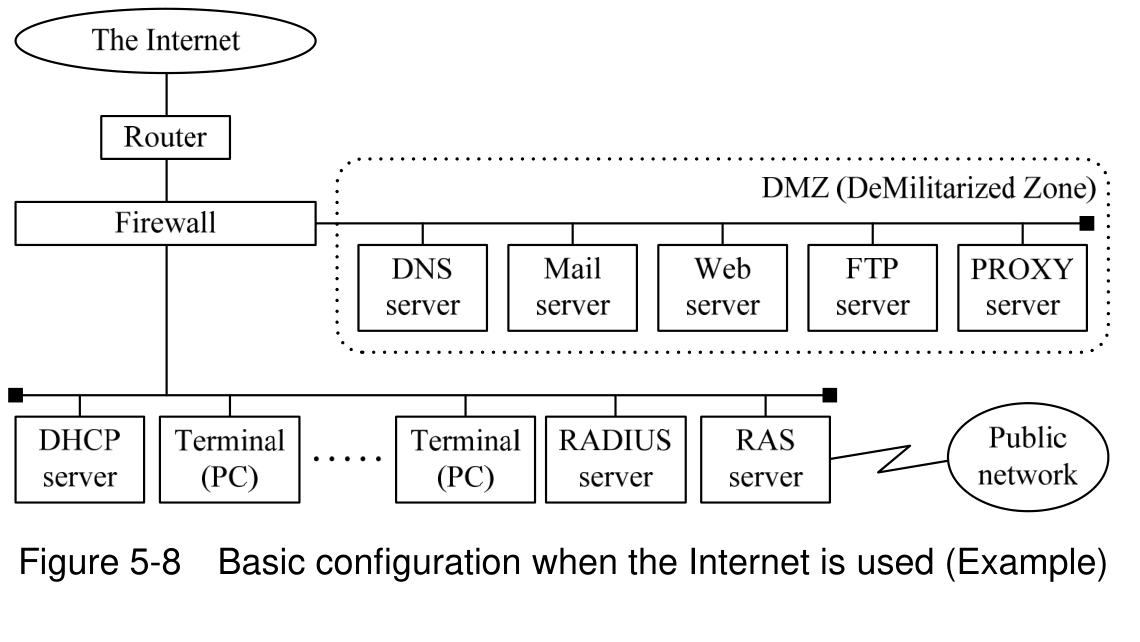
Internet router and firewall, server DMZ, internal clients and authentication and remote-access servers. Source text: Figure 5-8 Basic configuration when the Internet is used (Example)
p. 336 · Enlarge

The role of the components (e.g., the server) in Figure 8 is as described below. The mail server, web server, and FTP server are explained later together with the services.
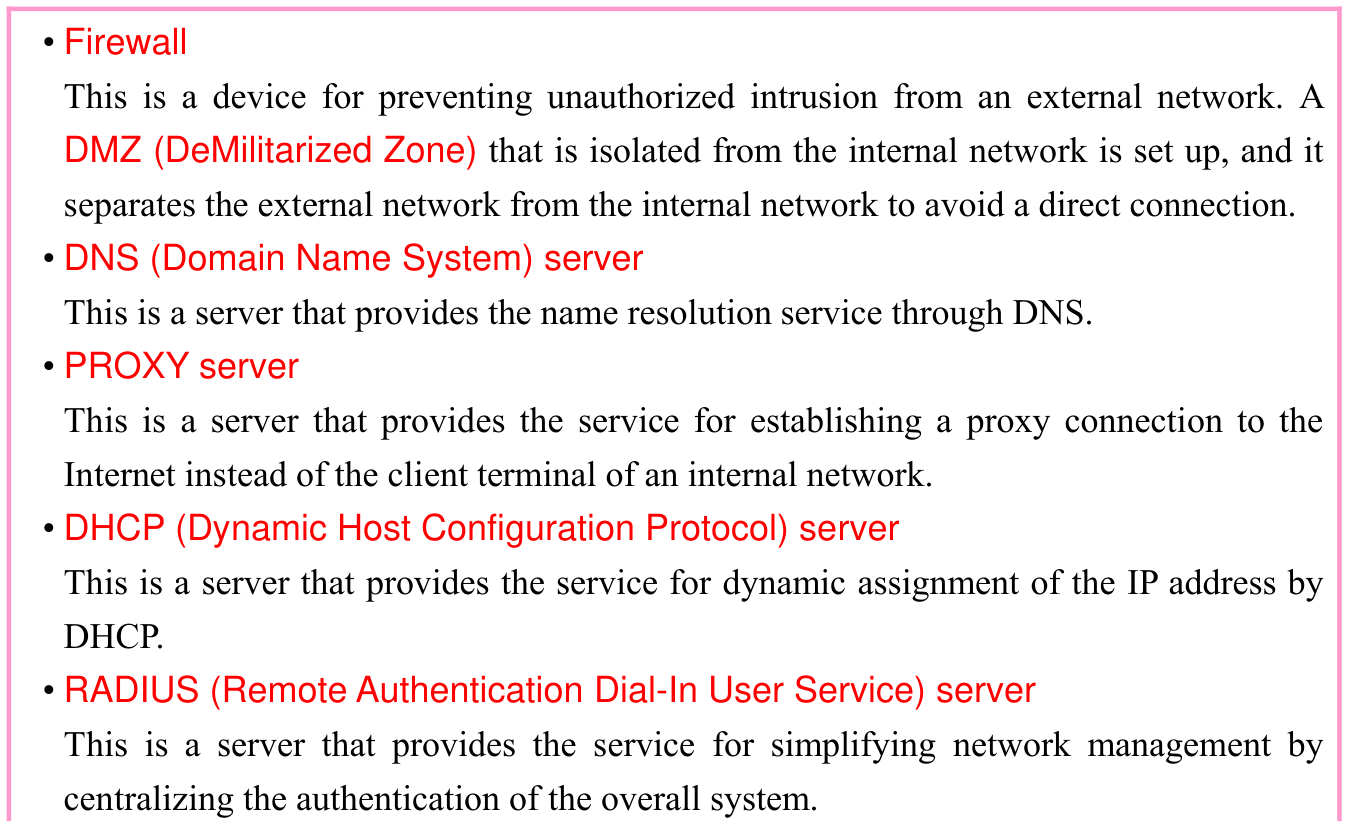
Original Basic Configuration of the Internet source table or explanation box, preserving its complete original arrangement, labels and values. Source text: • Firewall This is a device for preventing unauthorized intrusion from an external network. A DMZ (DeMilitarized Zone) that is isolated from the internal network is set up, and it separates the external network from the internal network to avoid a direct connection. • DNS (Domain Name System) server This is a server that provides the name resolution service through DNS. • PROXY server This is a server that provides the service for establishing a proxy connection to the Internet instead of the client terminal of an internal network. • DHCP (Dynamic Host Configuration Protocol) server This is a server that provides the service for dynamic assignment of the IP address by DHCP. • RADIUS (Remote Authentication Dial-In User Service) server This is a server that provides the service for simplifying network management by centralizing the authentication of the overall system.
p. 336 · Enlarge
RADIUS server · 1 practice questions

p. 337

Original Basic Configuration of the Internet source table or explanation box, preserving its complete original arrangement, labels and values. Source text: • RAS (Remote Access Service) server This is a server that provides the service to enable remote access to the network through a public network, such as a telephone line.
p. 337 · Enlarge

Section progress

Original chapter exercises

Original chapter exercises →

New FE Textbook Vol.1 · IT Fundamentals · First Edition, April 2015
