Contents
Chapter 5 · NetworkPractice

LEARN WITH HARU

Video Lesson တွေက Haru အတန်းသားတွေအတွက်ပါ

Haru ရဲ့ ITPEC FE Full Course မှာ ယခု သင်ခန်းစာတွေကို တစ်ခုချင်း တစ်ကြောင်းချင်း အသေးစိတ်ရှင််ရှင်းပြထားပါတယ်

အခြေခံ မရှိတဲ့ ကျောင်းသားများစွာဟာလည်း ဒီ Course နဲ့ ပဲ အောင်မြင်ကုန်ကြပါပြီ

အတန်းမအပ်သေးပဲ Haru ဆီမှာ အစမ်းသင်ကြည့်ချင်ပါသလား?

သင်တန်းသားတွေရဲ့ စကားသံများ

သင်တန်းသားတွေရဲ့ စကားသံများ

Highlighted text? Practice this concept. Highlighted passages and figures open related questions.

Practice related questions (3)Progress & bookmarks

Current section

5-2 Network Management Techniques

p. 342

Practice this section 3 linked exam questions with default filters

Progress

Not marked complete

Related questions in this lesson 4

Ping command3SNMP management and MIB1
Progress and bookmarks

p. 342

5 - 2 Network Management Techniques

(1) Network management tools

A network management tool is used to actually collect the network information and analyze the collected information. The typical network management tools include the following.
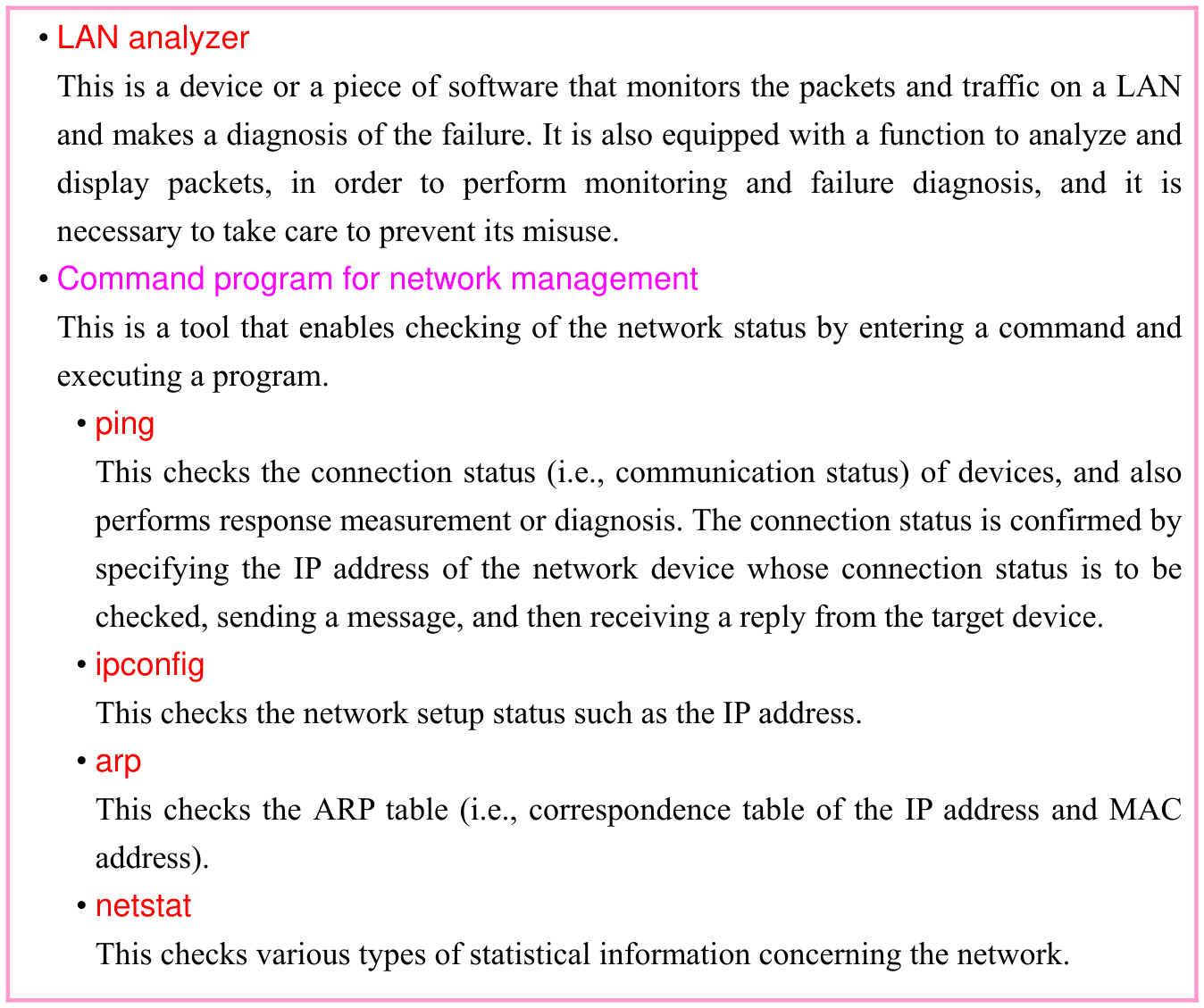
Original Network Management Techniques source table or explanation box, preserving its complete original arrangement, labels and values. Source text: • LAN analyzer This is a device or a piece of software that monitors the packets and traffic on a LAN and makes a diagnosis of the failure. It is also equipped with a function to analyze and display packets, in order to perform monitoring and failure diagnosis, and it is necessary to take care to prevent its misuse. • Command program for network management This is a tool that enables checking of the network status by entering a command and executing a program. • ping This checks the connection status (i.e., communication status) of devices, and also performs response measurement or diagnosis. The connection status is confirmed by specifying the IP address of the network device whose connection status is to be checked, sending a message, and then receiving a reply from the target device. • ipconfig This checks the network setup status such as the IP address. • arp This checks the ARP table (i.e., correspondence table of the IP address and MAC address). • netstat This checks various types of statistical information concerning the network.
p. 342 · Enlarge
Ping command · 3 practice questions

(2) SNMP (Simple Network Management Protocol)

SNMP is a simple network management protocol of TCP/IP. It manages the network by collecting and setting information between the manager operating at the SNMP management station and the agent operating at the management target, and also by using · 1 question

p. 343

SNMP trap from the management target. The devices to be managed provide their own information as MIB (Management Information Base).

(3) Network OS

The network OS provides the files, printer sharing function, and security function that are necessary for network management. Since such functions were not available in the conventional OSs, network OSs such as NetWare developed by Novell, Inc. were used. Currently, OSs having these functions are common, and the general idea of a network OS has been disappearing.

Original chapter exercises

Original chapter exercises →

New FE Textbook Vol.1 · IT Fundamentals · First Edition, April 2015