Contents
Chapter 5 · NetworkPractice

LEARN WITH HARU

Video Lesson တွေက Haru အတန်းသားတွေအတွက်ပါ

Haru ရဲ့ ITPEC FE Full Course မှာ ယခု သင်ခန်းစာတွေကို တစ်ခုချင်း တစ်ကြောင်းချင်း အသေးစိတ်ရှင််ရှင်းပြထားပါတယ်

အခြေခံ မရှိတဲ့ ကျောင်းသားများစွာဟာလည်း ဒီ Course နဲ့ ပဲ အောင်မြင်ကုန်ကြပါပြီ

အတန်းမအပ်သေးပဲ Haru ဆီမှာ အစမ်းသင်ကြည့်ချင်ပါသလား?

သင်တန်းသားတွေရဲ့ စကားသံများ

သင်တန်းသားတွေရဲ့ စကားသံများ

Highlighted text? Practice this concept. Highlighted passages and figures open related questions.

Practice related questions (1)Progress & bookmarks

Current section

1-3-2 Synchronization Method

p. 294

Progress

Not marked complete

Related questions in this lesson 1

Start-stop synchronization1
Progress and bookmarks

p. 294

1-3-2 Synchronization Method

Synchronization refers to matching the timing at the transmitting side and the receiving side. There are three typical kinds of synchronization methods as shown below.

p. 295
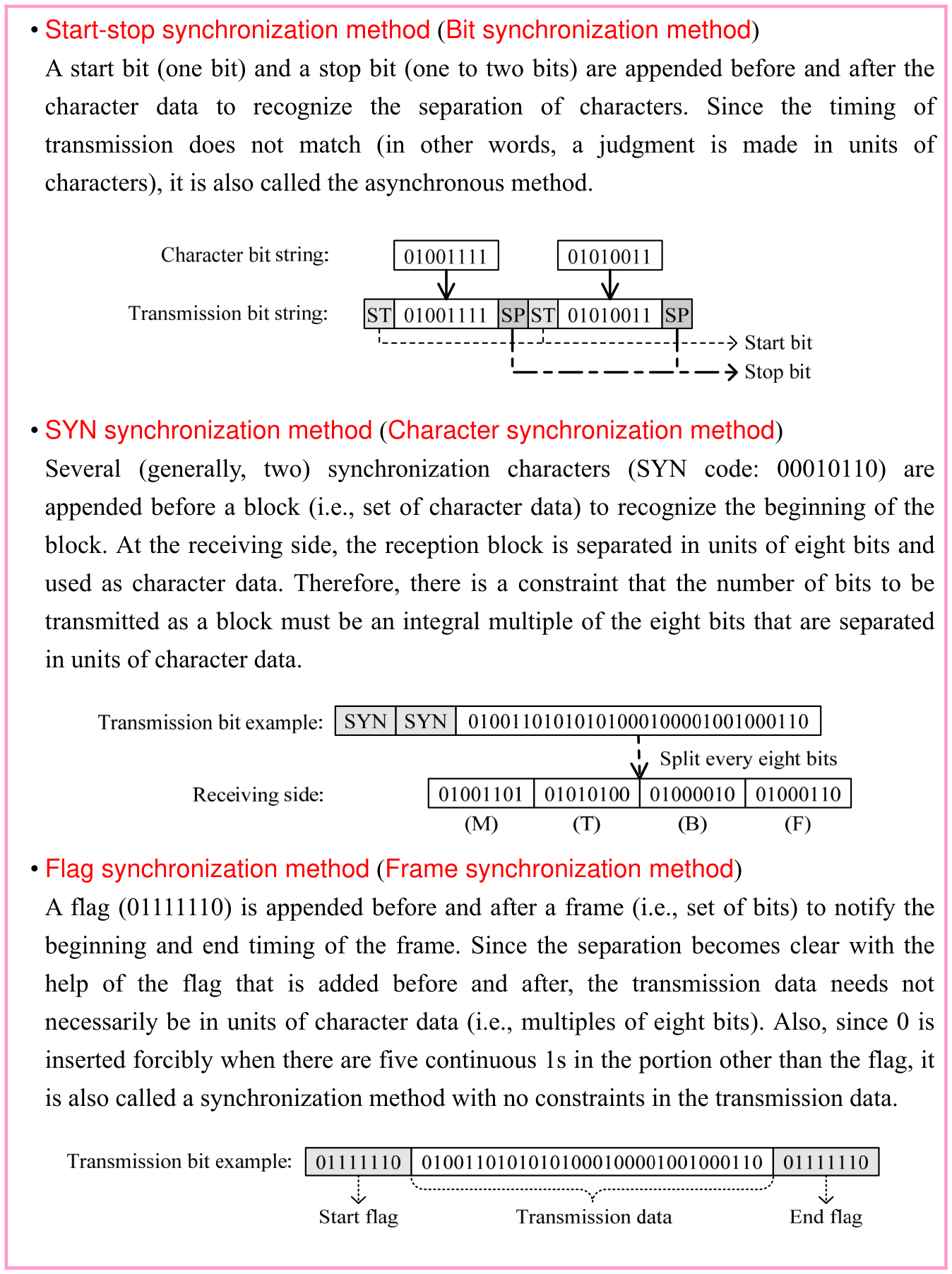
Original Synchronization Method source table or explanation box, preserving its complete original arrangement, labels and values. Source text: • Start-stop synchronization method (Bit synchronization method) A start bit (one bit) and a stop bit (one to two bits) are appended before and after the character data to recognize the separation of characters. Since the timing of transmission does not match (in other words, a judgment is made in units of characters), it is also called the asynchronous method. • SYN synchronization method (Character synchronization method) Several (generally, two) synchronization characters (SYN code: 00010110) are appended before a block (i.e., set of character data) to recognize the beginning of the block. At the receiving side, the reception block is separated in units of eight bits and used as character data. Therefore, there is a constraint that the number of bits to be transmitted as a block must be an integral multiple of the eight bits that are separated in units of character data. • Flag synchronization method (Frame synchronization method) A flag (01111110) is appended before and after a frame (i.e., set of bits) to notify the beginning and end timing of the frame. Since the separation becomes clear with the help of the flag that is added before and after, the transmission data needs not necessarily be in units of character data (i.e., multiples of eight bits). Also, since 0 is inserted forcibly when there are five continuous 1s in the portion other than the flag, it is also called a synchronization method with no constraints in the transmission data.
p. 295 · Enlarge
Start-stop synchronization · 1 practice questions

Section progress

Original chapter exercises

Original chapter exercises →

New FE Textbook Vol.1 · IT Fundamentals · First Edition, April 2015