Contents
Chapter 5 · NetworkPractice

LEARN WITH HARU

Video Lesson တွေက Haru အတန်းသားတွေအတွက်ပါ

Haru ရဲ့ ITPEC FE Full Course မှာ ယခု သင်ခန်းစာတွေကို တစ်ခုချင်း တစ်ကြောင်းချင်း အသေးစိတ်ရှင််ရှင်းပြထားပါတယ်

အခြေခံ မရှိတဲ့ ကျောင်းသားများစွာဟာလည်း ဒီ Course နဲ့ ပဲ အောင်မြင်ကုန်ကြပါပြီ

အတန်းမအပ်သေးပဲ Haru ဆီမှာ အစမ်းသင်ကြည့်ချင်ပါသလား?

သင်တန်းသားတွေရဲ့ စကားသံများ

သင်တန်းသားတွေရဲ့ စကားသံများ

Highlighted text? Practice this concept. Highlighted passages and figures open related questions.

Practice related questions (1)Progress & bookmarks

Current section

1-4-2 Basic Procedure (Basic Mode Data Transmission Control Procedure)

p. 307

Progress

Not marked complete

Related questions in this lesson 1

Contention and polling1
Progress and bookmarks

p. 307

1-4-2 Basic Procedure (Basic Mode Data Transmission Control Procedure)

Basic procedure (or basic mode data transmission control procedure) is a method of transmitting data in units of blocks and performing control by using transmission control characters. Basic procedure is an interactive transmission control procedure in which subsequent processes are performed after the partner’s response is waited for.
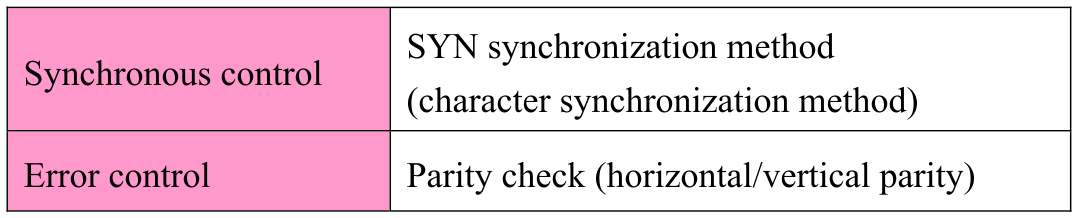
Original Basic Procedure (Basic Mode Data Transmission Control Procedure) source table or explanation box, preserving its complete original arrangement, labels and values. Source text: SYN synchronization method Synchronous control (character synchronization method) Error control Parity check (horizontal/vertical parity)
p. 307 · Enlarge

(1) Transmission control characters

In the basic procedure, a total of ten transmission control characters that are shown below are used. The transmission control characters are special codes that are defined in the 0 column and the 1st column of the character code.
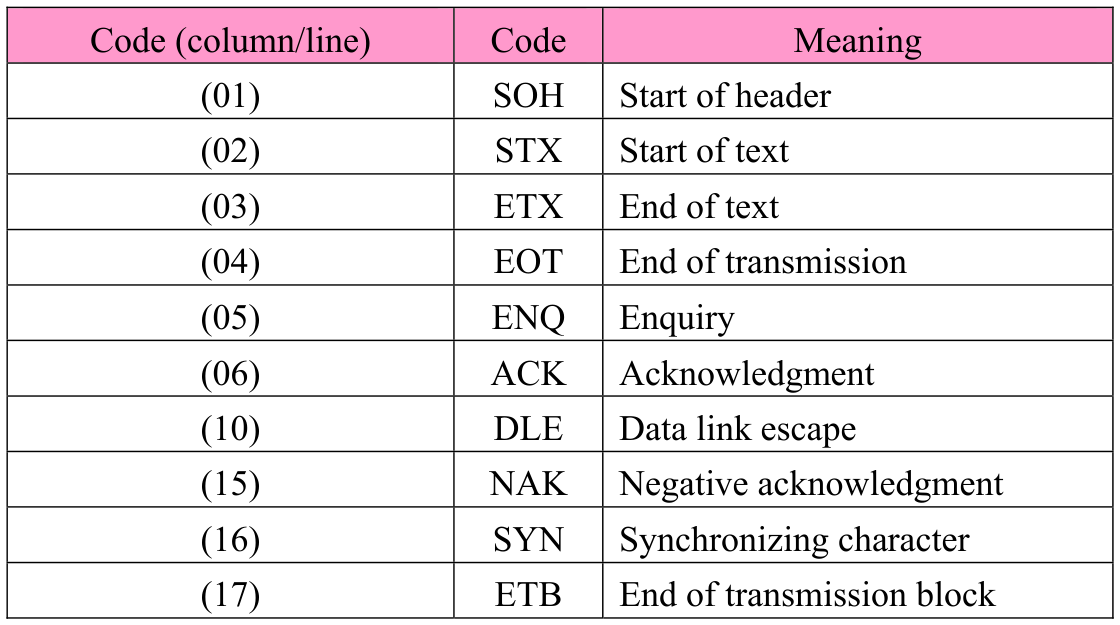
Original Basic Procedure (Basic Mode Data Transmission Control Procedure) source table or explanation box, preserving its complete original arrangement, labels and values. Source text: Code (column/line) Code Meaning (01) SOH Start of header (02) STX Start of text (03) ETX End of text (04) EOT End of transmission (05) ENQ Enquiry (06) ACK Acknowledgment (10) DLE Data link escape (15) NAK Negative acknowledgment (16) SYN Synchronizing character (17) ETB End of transmission block
p. 307 · Enlarge

(2) Transmission message

In the basic procedure, information is handled in units of messages. A message is divided into blocks, and information is transmitted in units of blocks.

Original transmission block with SOH, header, STX, text and ETX in sequence. Source text: SOH Header STX Text ETX Figure 5-4 Block image
p. 307 · Enlarge

p. 308

(3) Establishing a data link

The methods of establishing a data link in the basic procedure include the following two methods.
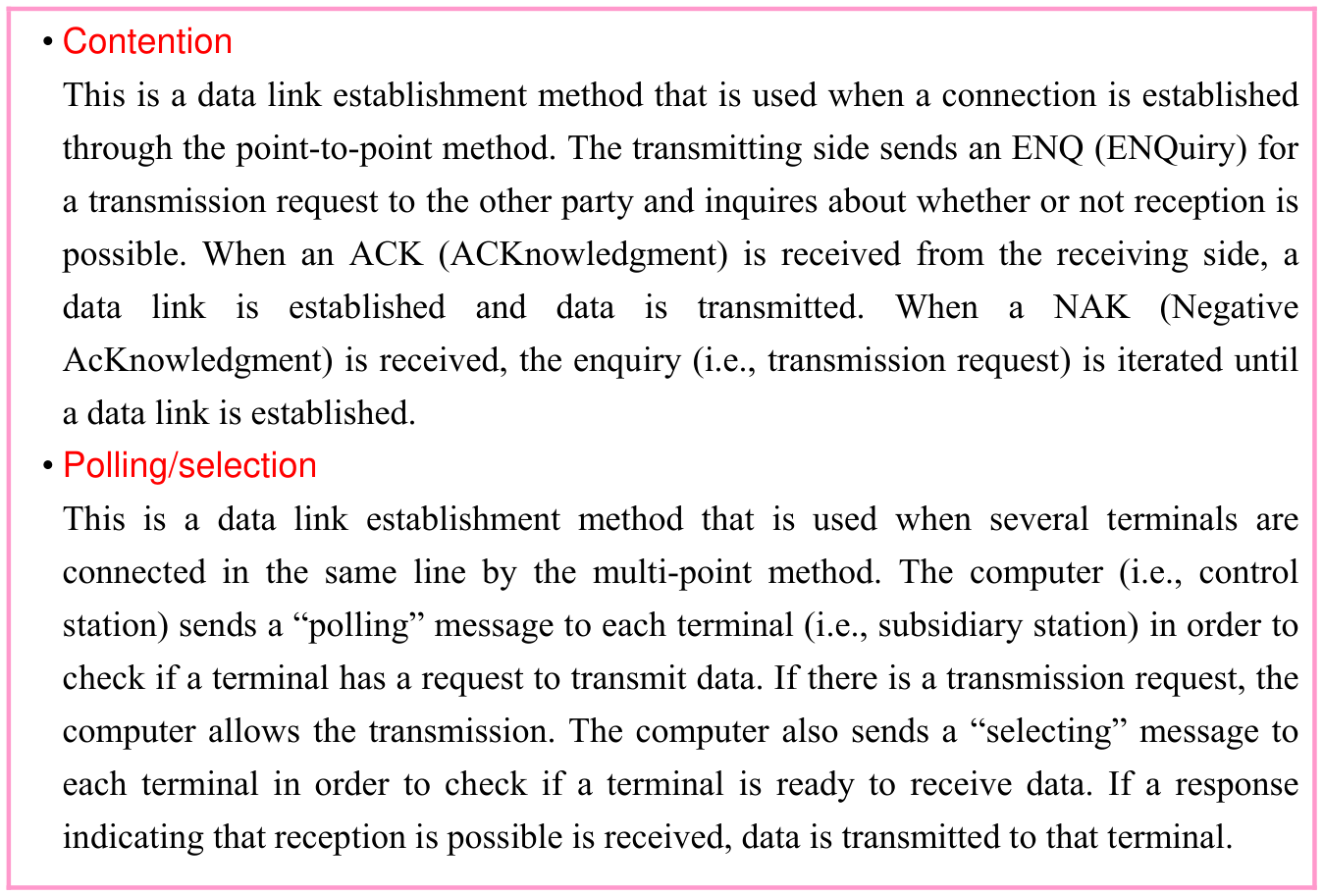
Original Basic Procedure (Basic Mode Data Transmission Control Procedure) source table or explanation box, preserving its complete original arrangement, labels and values. Source text: • Contention This is a data link establishment method that is used when a connection is established through the point-to-point method. The transmitting side sends an ENQ (ENQuiry) for a transmission request to the other party and inquires about whether or not reception is possible. When an ACK (ACKnowledgment) is received from the receiving side, a data link is established and data is transmitted. When a NAK (Negative AcKnowledgment) is received, the enquiry (i.e., transmission request) is iterated until a data link is established. • Polling/selection This is a data link establishment method that is used when several terminals are connected in the same line by the multi-point method. The computer (i.e., control station) sends a “polling” message to each terminal (i.e., subsidiary station) in order to check if a terminal has a request to transmit data. If there is a transmission request, the computer allows the transmission. The computer also sends a “selecting” message to each terminal in order to check if a terminal is ready to receive data. If a response indicating that reception is possible is received, data is transmitted to that terminal.
p. 308 · Enlarge
Contention and polling · 1 practice questions

Section progress

Original chapter exercises

Original chapter exercises →

New FE Textbook Vol.1 · IT Fundamentals · First Edition, April 2015