Contents
Chapter 5 · NetworkPractice

LEARN WITH HARU

Video Lesson တွေက Haru အတန်းသားတွေအတွက်ပါ

Haru ရဲ့ ITPEC FE Full Course မှာ ယခု သင်ခန်းစာတွေကို တစ်ခုချင်း တစ်ကြောင်းချင်း အသေးစိတ်ရှင််ရှင်းပြထားပါတယ်

အခြေခံ မရှိတဲ့ ကျောင်းသားများစွာဟာလည်း ဒီ Course နဲ့ ပဲ အောင်မြင်ကုန်ကြပါပြီ

အတန်းမအပ်သေးပဲ Haru ဆီမှာ အစမ်းသင်ကြည့်ချင်ပါသလား?

သင်တန်းသားတွေရဲ့ စကားသံများ

သင်တန်းသားတွေရဲ့ စကားသံများ
Practice related questions (3)Progress & bookmarks

Current section

5 Network Management

p. 341

Practice this section 3 linked exam questions with default filters

Progress

Not marked complete

Progress and bookmarks

p. 341

5 Network Management

Network management refers to the management of network operations. The purpose of network management is to improve the reliability, security, and efficiency of the network.

5 - 1 Network Operations Management

In network operations management, the following five types of management are implemented on a priority basis.
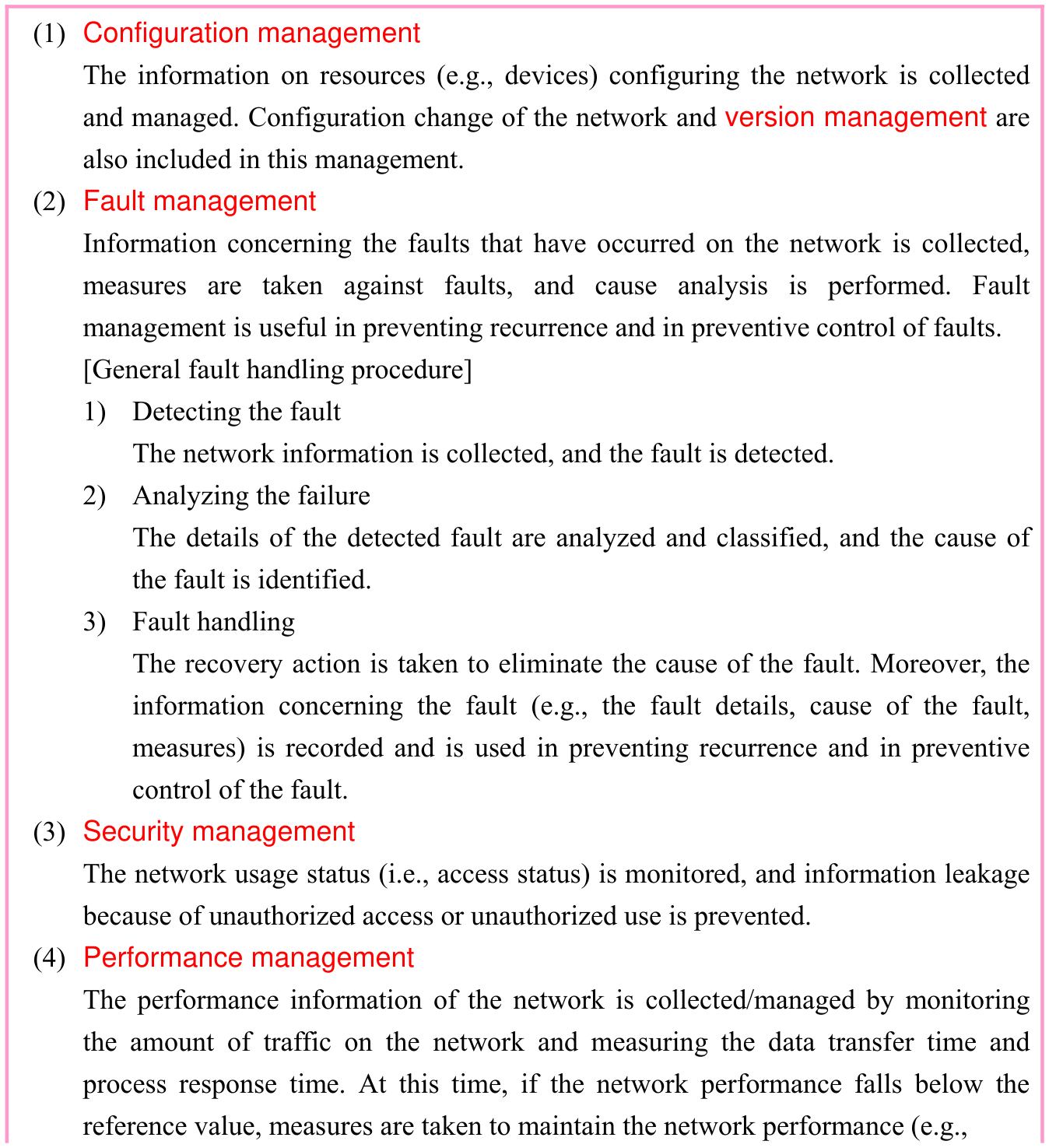
Original Network Operations Management source table or explanation box, preserving its complete original arrangement, labels and values. Source text: (1) Configuration management The information on resources (e.g., devices) configuring the network is collected and managed. Configuration change of the network and version management are also included in this management. (2) Fault management Information concerning the faults that have occurred on the network is collected, measures are taken against faults, and cause analysis is performed. Fault management is useful in preventing recurrence and in preventive control of faults. [General fault handling procedure] 1) Detecting the fault The network information is collected, and the fault is detected. 2) Analyzing the failure The details of the detected fault are analyzed and classified, and the cause of the fault is identified. 3) Fault handling The recovery action is taken to eliminate the cause of the fault. Moreover, the information concerning the fault (e.g., the fault details, cause of the fault, measures) is recorded and is used in preventing recurrence and in preventive control of the fault. (3) Security management The network usage status (i.e., access status) is monitored, and information leakage because of unauthorized access or unauthorized use is prevented. (4) Performance management The performance information of the network is collected/managed by monitoring the amount of traffic on the network and measuring the data transfer time and process response time. At this time, if the network performance falls below the reference value, measures are taken to maintain the network performance (e.g.,
p. 341 · Enlarge

p. 342

Original Network Operations Management source table or explanation box, preserving its complete original arrangement, labels and values. Source text: installing more lines and replacing devices). (5) Accounting management The usage status (i.e., access status) of the network is collected, and the accounting information of the users is managed.
p. 342 · Enlarge

Section progress

Original chapter exercises

Original chapter exercises →

New FE Textbook Vol.1 · IT Fundamentals · First Edition, April 2015
