Contents
Chapter 5 · NetworkPractice

LEARN WITH HARU

Video Lesson တွေက Haru အတန်းသားတွေအတွက်ပါ

Haru ရဲ့ ITPEC FE Full Course မှာ ယခု သင်ခန်းစာတွေကို တစ်ခုချင်း တစ်ကြောင်းချင်း အသေးစိတ်ရှင််ရှင်းပြထားပါတယ်

အခြေခံ မရှိတဲ့ ကျောင်းသားများစွာဟာလည်း ဒီ Course နဲ့ ပဲ အောင်မြင်ကုန်ကြပါပြီ

အတန်းမအပ်သေးပဲ Haru ဆီမှာ အစမ်းသင်ကြည့်ချင်ပါသလား?

သင်တန်းသားတွေရဲ့ စကားသံများ

သင်တန်းသားတွေရဲ့ စကားသံများ

Highlighted text? Practice this concept. Highlighted passages and figures open related questions.

Practice related questions (1)Progress & bookmarks

Current section

1-3-5 Other Communication Techniques

p. 303

Progress

Not marked complete

Related questions in this lesson 1

Time Division Multiplexing1
Progress and bookmarks

p. 303

1-3-5 Other Communication Techniques

(1) Transmission method
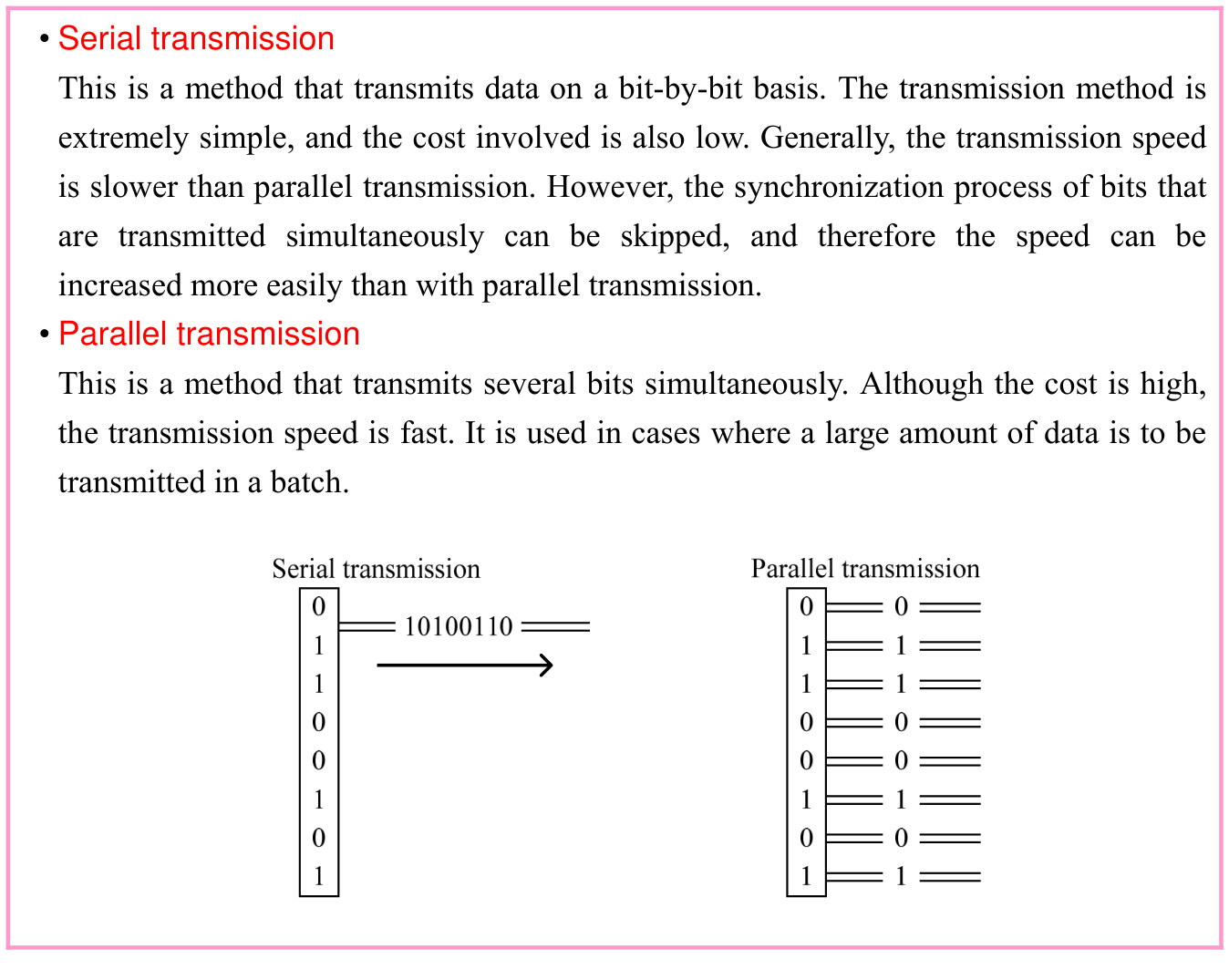
Original Other Communication Techniques source table or explanation box, preserving its complete original arrangement, labels and values. Source text: • Serial transmission This is a method that transmits data on a bit-by-bit basis. The transmission method is extremely simple, and the cost involved is also low. Generally, the transmission speed is slower than parallel transmission. However, the synchronization process of bits that are transmitted simultaneously can be skipped, and therefore the speed can be increased more easily than with parallel transmission. • Parallel transmission This is a method that transmits several bits simultaneously. Although the cost is high, the transmission speed is fast. It is used in cases where a large amount of data is to be transmitted in a batch.
p. 303 · Enlarge

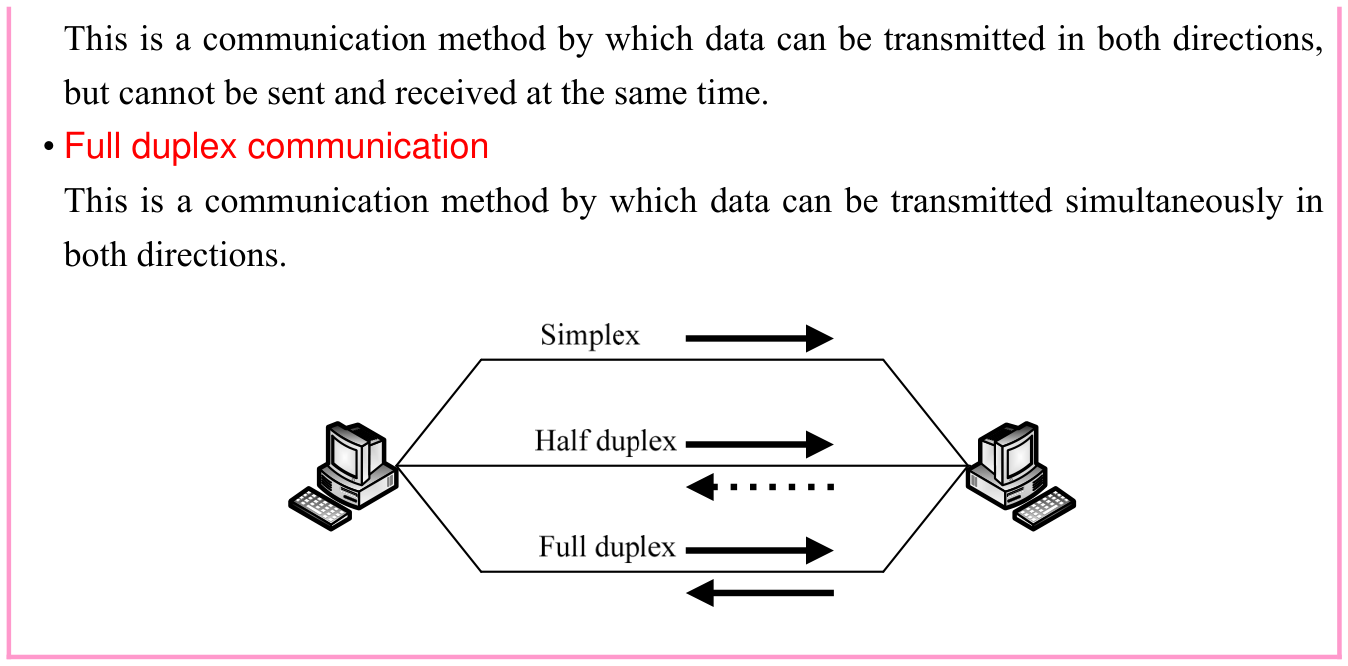
(2) Communication method

Original Other Communication Techniques source table or explanation box, preserving its complete original arrangement, labels and values. Source text: • Simplex communication (one-way communication) This is a communication method by which data can be transmitted only in one direction. • Half duplex communication
p. 303 · Enlarge

p. 304

Original Other Communication Techniques source table or explanation box, preserving its complete original arrangement, labels and values. Source text: This is a communication method by which data can be transmitted in both directions, but cannot be sent and received at the same time. • Full duplex communication This is a communication method by which data can be transmitted simultaneously in both directions.
p. 304 · Enlarge

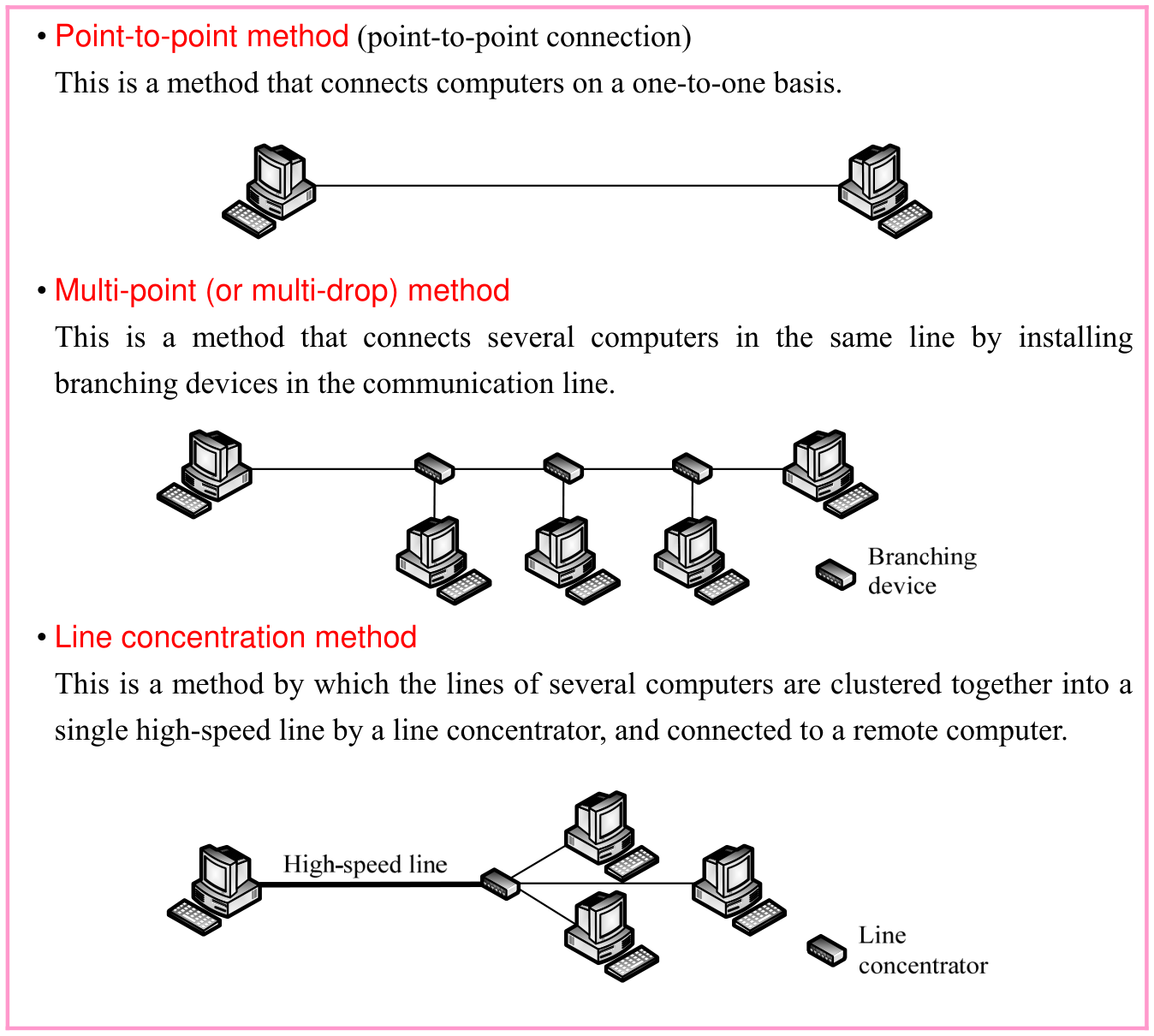
(3) Connection method

Original Other Communication Techniques source table or explanation box, preserving its complete original arrangement, labels and values. Source text: • Point-to-point method (point-to-point connection) This is a method that connects computers on a one-to-one basis. • Multi-point (or multi-drop) method This is a method that connects several computers in the same line by installing branching devices in the communication line. • Line concentration method This is a method by which the lines of several computers are clustered together into a single high-speed line by a line concentrator, and connected to a remote computer.
p. 304 · Enlarge

p. 305

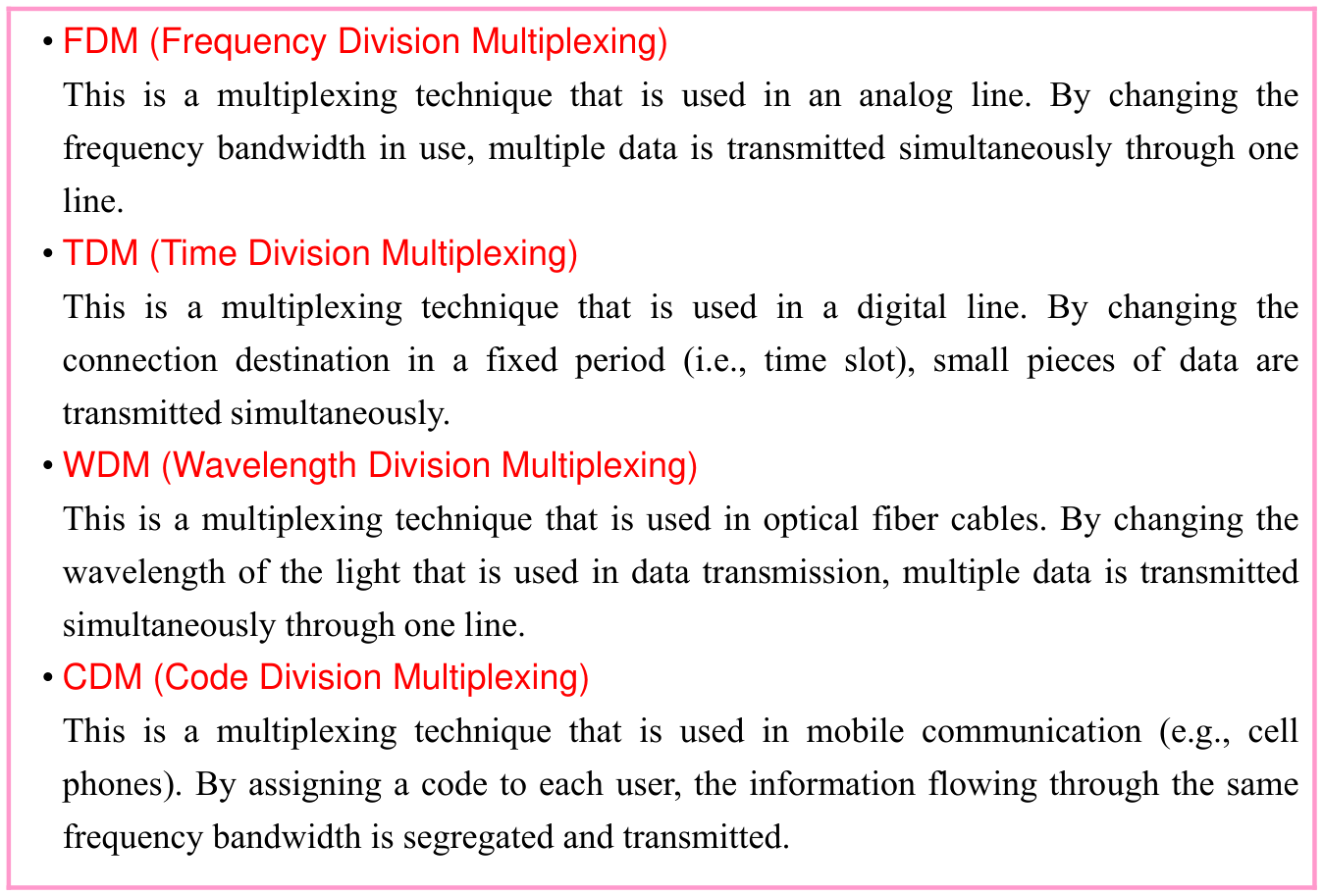
(4) Multiplexing

Original Other Communication Techniques source table or explanation box, preserving its complete original arrangement, labels and values. Source text: • FDM (Frequency Division Multiplexing) This is a multiplexing technique that is used in an analog line. By changing the frequency bandwidth in use, multiple data is transmitted simultaneously through one line. • TDM (Time Division Multiplexing) This is a multiplexing technique that is used in a digital line. By changing the connection destination in a fixed period (i.e., time slot), small pieces of data are transmitted simultaneously. • WDM (Wavelength Division Multiplexing) This is a multiplexing technique that is used in optical fiber cables. By changing the wavelength of the light that is used in data transmission, multiple data is transmitted simultaneously through one line. • CDM (Code Division Multiplexing) This is a multiplexing technique that is used in mobile communication (e.g., cell phones). By assigning a code to each user, the information flowing through the same frequency bandwidth is segregated and transmitted.
p. 305 · Enlarge
Time Division Multiplexing · 1 practice questions

Section progress

Original chapter exercises

Original chapter exercises →

New FE Textbook Vol.1 · IT Fundamentals · First Edition, April 2015