Contents
Chapter 5 · NetworkPractice

LEARN WITH HARU

Video Lesson တွေက Haru အတန်းသားတွေအတွက်ပါ

Haru ရဲ့ ITPEC FE Full Course မှာ ယခု သင်ခန်းစာတွေကို တစ်ခုချင်း တစ်ကြောင်းချင်း အသေးစိတ်ရှင််ရှင်းပြထားပါတယ်

အခြေခံ မရှိတဲ့ ကျောင်းသားများစွာဟာလည်း ဒီ Course နဲ့ ပဲ အောင်မြင်ကုန်ကြပါပြီ

အတန်းမအပ်သေးပဲ Haru ဆီမှာ အစမ်းသင်ကြည့်ချင်ပါသလား?

သင်တန်းသားတွေရဲ့ စကားသံများ

သင်တန်းသားတွေရဲ့ စကားသံများ

Highlighted text? Practice this concept. Highlighted passages and figures open related questions.

Practice related questions (1)Progress & bookmarks

Current section

1-2 Basic Configuration of a Network

p. 291

Progress

Not marked complete

Related questions in this lesson 1

Communication Control Unit1
Progress and bookmarks

p. 291

1 - 2 Basic Configuration of a Network

In a system like an OLTP system, the basic configuration of the network when the host computer at the center is used from a remote terminal is as described below. Data communication can be broadly divided into the data transmission system that is used for transmitting data and the data processing system that is used for processing the received data.
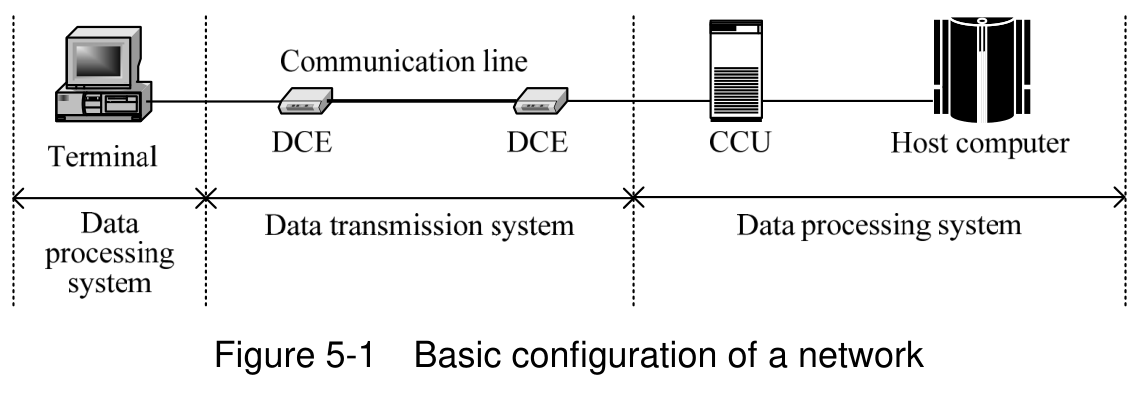
Network path from a terminal through DCE and CCU to the host, including data-processing and data-transmission boundaries. Source text: Figure 5-1 Basic configuration of a network
p. 291 · Enlarge

(1) DTE (Data Terminal Equipment) This is the collective term for the terminal and host computer that constitute the data processing system.
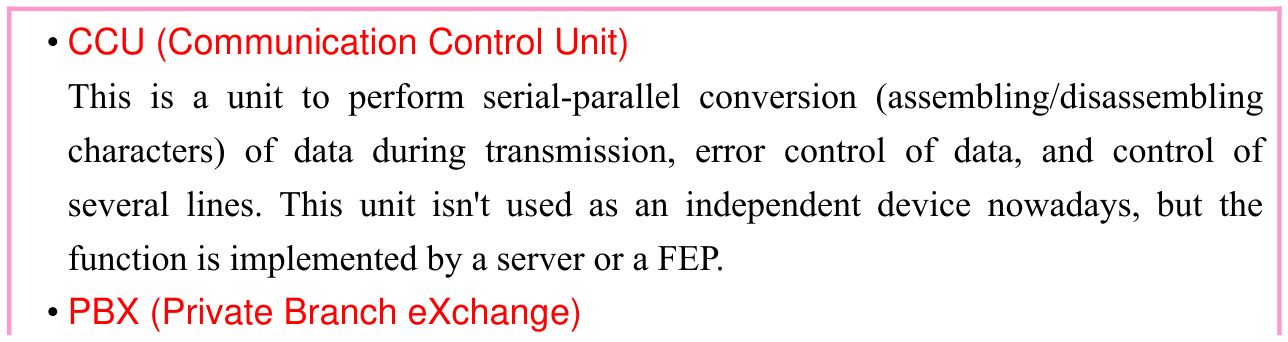
Original Basic Configuration of a Network source table or explanation box, preserving its complete original arrangement, labels and values. Source text: • CCU (Communication Control Unit) This is a unit to perform serial-parallel conversion (assembling/disassembling characters) of data during transmission, error control of data, and control of several lines. This unit isn't used as an independent device nowadays, but the function is implemented by a server or a FEP. • PBX (Private Branch eXchange)
p. 291 · Enlarge
Communication Control Unit · 1 practice questions

p. 292

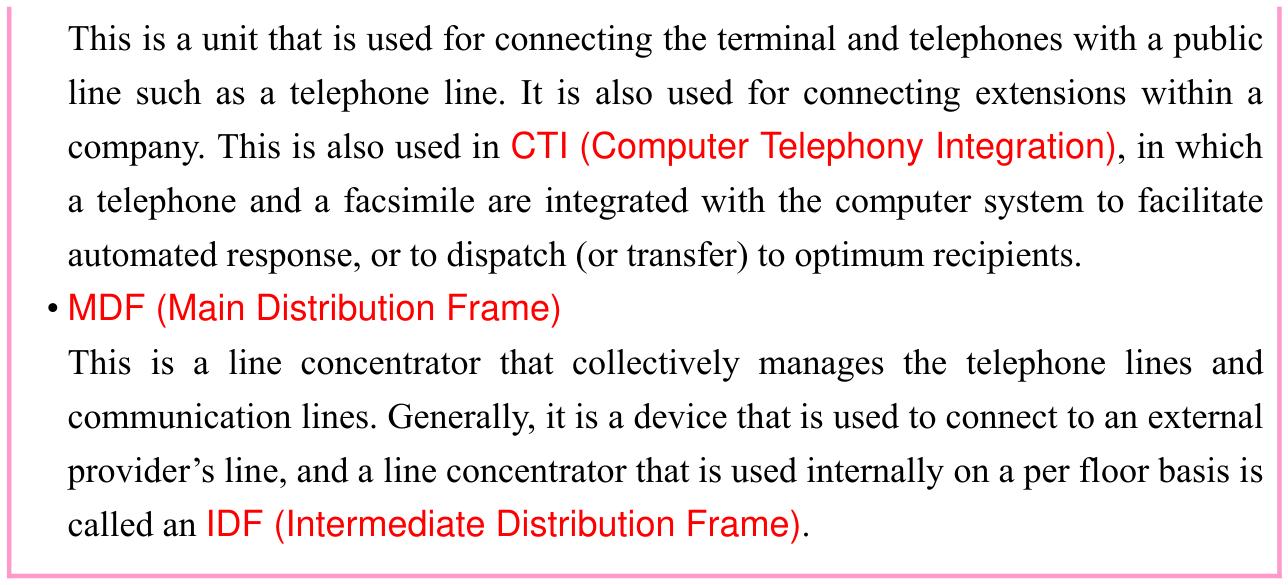
Original Basic Configuration of a Network source table or explanation box, preserving its complete original arrangement, labels and values. Source text: This is a unit that is used for connecting the terminal and telephones with a public line such as a telephone line. It is also used for connecting extensions within a company. This is also used in CTI (Computer Telephony Integration), in which a telephone and a facsimile are integrated with the computer system to facilitate automated response, or to dispatch (or transfer) to optimum recipients. • MDF (Main Distribution Frame) This is a line concentrator that collectively manages the telephone lines and communication lines. Generally, it is a device that is used to connect to an external provider’s line, and a line concentrator that is used internally on a per floor basis is called an IDF (Intermediate Distribution Frame).
p. 292 · Enlarge

(2) Communication line This is a physical transmission path for actually transmitting data.
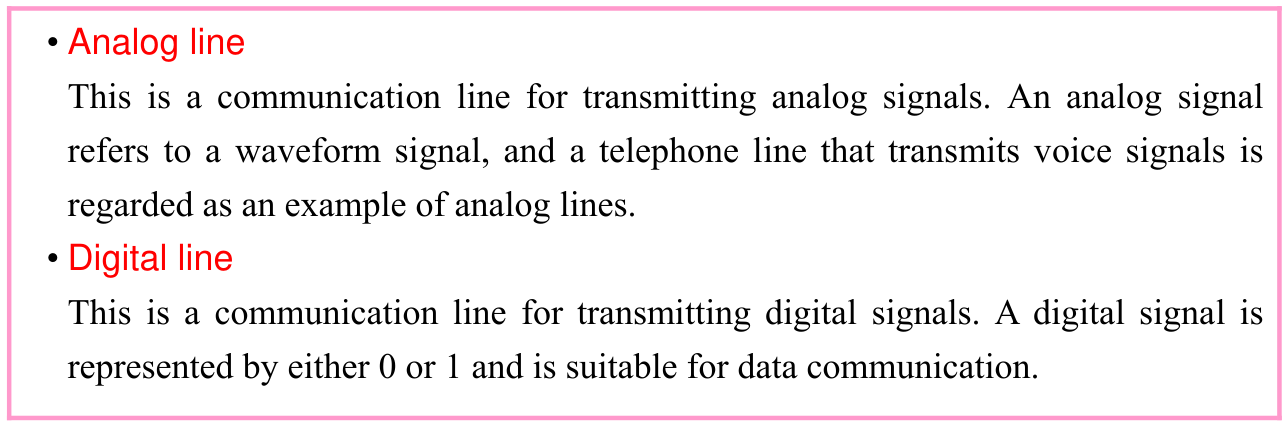
Original Basic Configuration of a Network source table or explanation box, preserving its complete original arrangement, labels and values. Source text: • Analog line This is a communication line for transmitting analog signals. An analog signal refers to a waveform signal, and a telephone line that transmits voice signals is regarded as an example of analog lines. • Digital line This is a communication line for transmitting digital signals. A digital signal is represented by either 0 or 1 and is suitable for data communication.
p. 292 · Enlarge

(3) DCE (Data Circuit terminating Equipment) This is a collective term for the equipment that is used to connect the data terminal and communication line. It refers to the equipment for converting/transforming a data signal to be transmitted into a signal that is suitable for transmission.
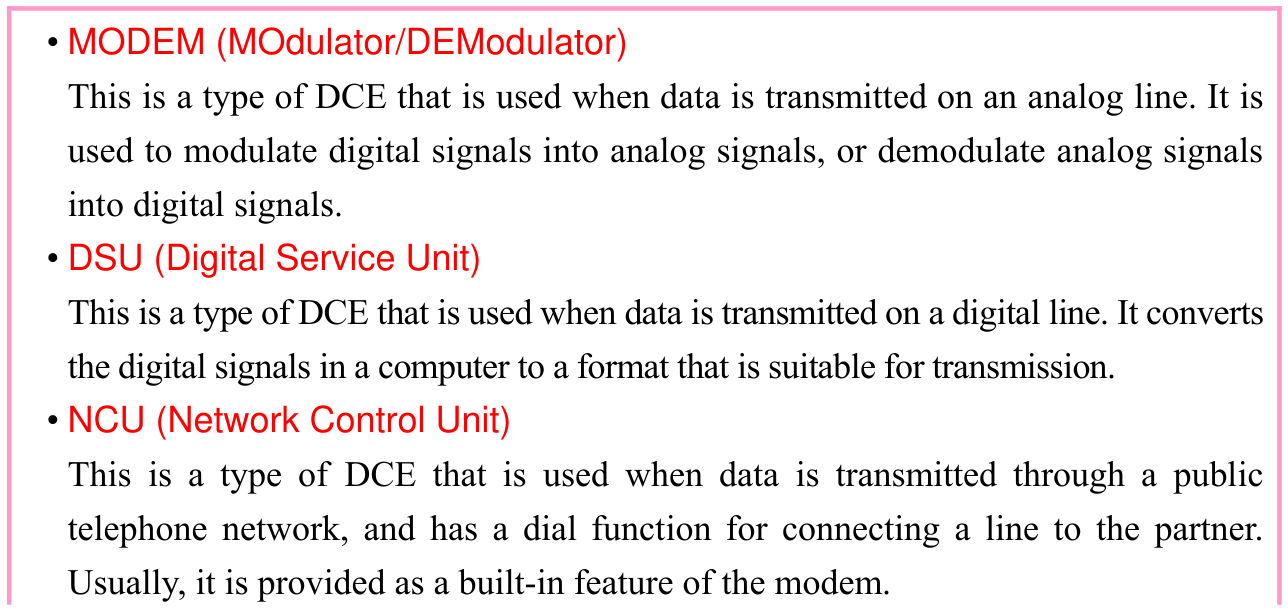
Original Basic Configuration of a Network source table or explanation box, preserving its complete original arrangement, labels and values. Source text: • MODEM (MOdulator/DEModulator) This is a type of DCE that is used when data is transmitted on an analog line. It is used to modulate digital signals into analog signals, or demodulate analog signals into digital signals. • DSU (Digital Service Unit) This is a type of DCE that is used when data is transmitted on a digital line. It converts the digital signals in a computer to a format that is suitable for transmission. • NCU (Network Control Unit) This is a type of DCE that is used when data is transmitted through a public telephone network, and has a dial function for connecting a line to the partner. Usually, it is provided as a built-in feature of the modem.
p. 292 · Enlarge

p. 293

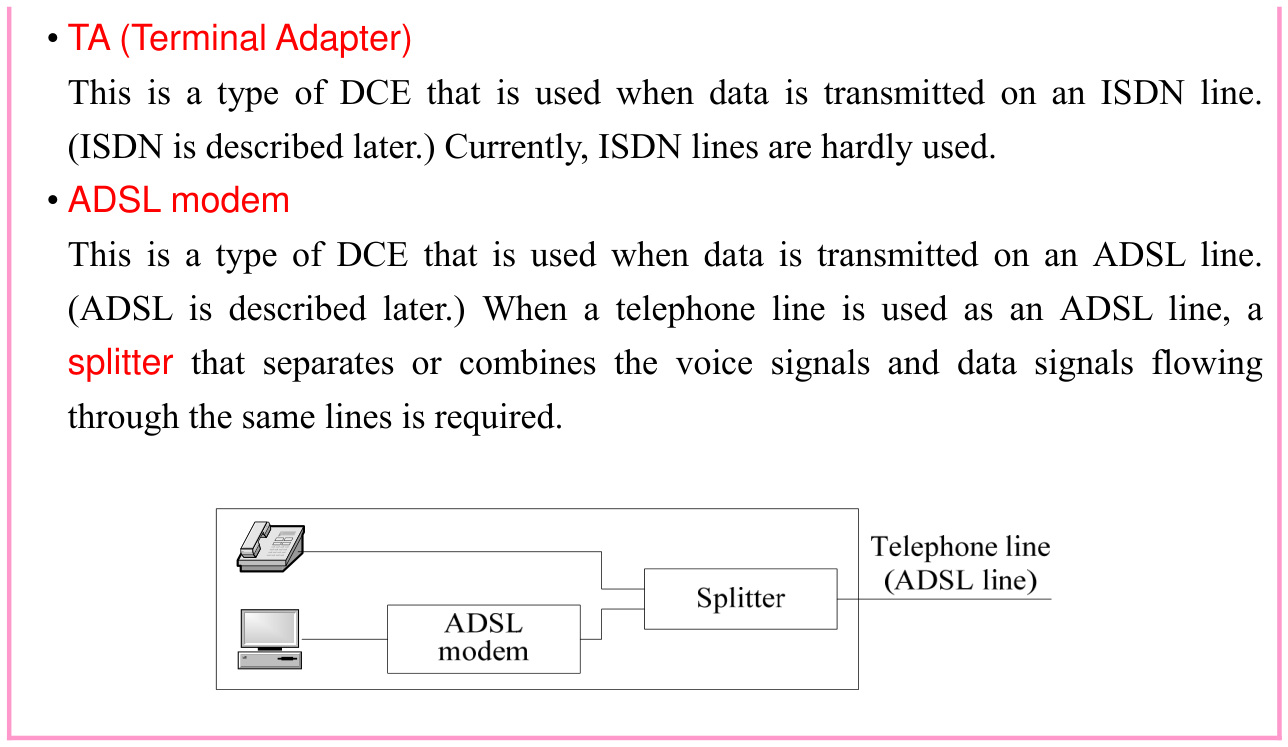
Original Basic Configuration of a Network source table or explanation box, preserving its complete original arrangement, labels and values. Source text: • TA (Terminal Adapter) This is a type of DCE that is used when data is transmitted on an ISDN line. (ISDN is described later.) Currently, ISDN lines are hardly used. • ADSL modem This is a type of DCE that is used when data is transmitted on an ADSL line. (ADSL is described later.) When a telephone line is used as an ADSL line, a splitter that separates or combines the voice signals and data signals flowing through the same lines is required.
p. 293 · Enlarge
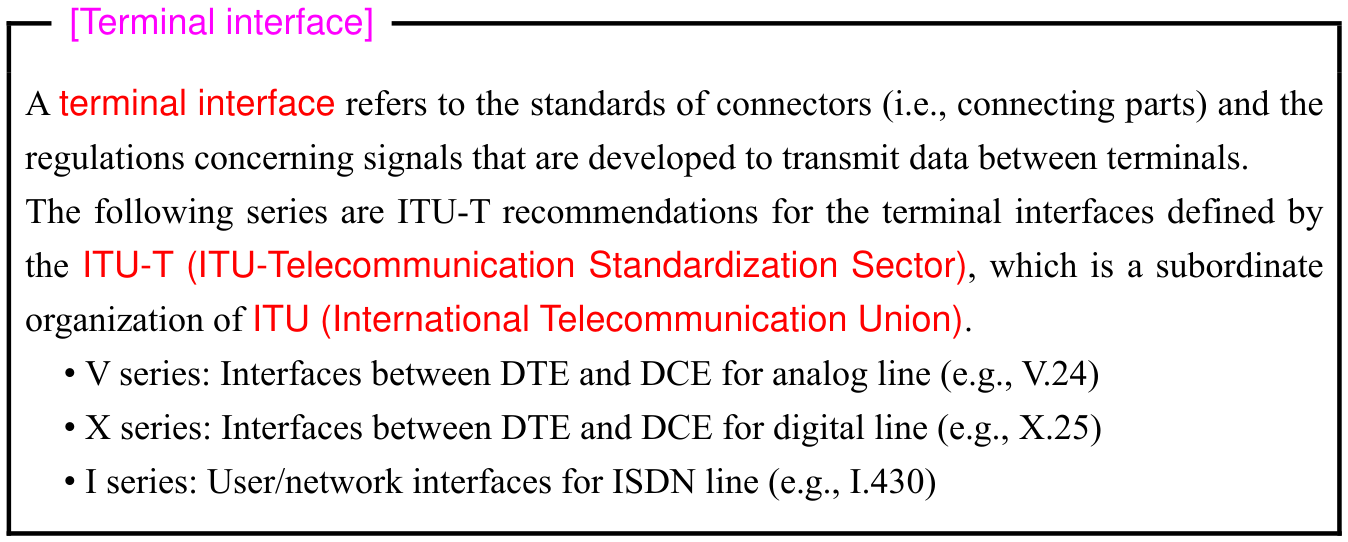
Original Basic Configuration of a Network source table or explanation box, preserving its complete original arrangement, labels and values. Source text: [Terminal interface] A terminal interface refers to the standards of connectors (i.e., connecting parts) and the regulations concerning signals that are developed to transmit data between terminals. The following series are ITU-T recommendations for the terminal interfaces defined by the ITU-T (ITU-Telecommunication Standardization Sector), which is a subordinate organization of ITU (International Telecommunication Union). • V series: Interfaces between DTE and DCE for analog line (e.g., V.24) • X series: Interfaces between DTE and DCE for digital line (e.g., X.25) • I series: User/network interfaces for ISDN line (e.g., I.430)
p. 293 · Enlarge

Section progress

Original chapter exercises

Original chapter exercises →

New FE Textbook Vol.1 · IT Fundamentals · First Edition, April 2015