Contents
Chapter 5 · NetworkPractice

LEARN WITH HARU

Video Lesson တွေက Haru အတန်းသားတွေအတွက်ပါ

Haru ရဲ့ ITPEC FE Full Course မှာ ယခု သင်ခန်းစာတွေကို တစ်ခုချင်း တစ်ကြောင်းချင်း အသေးစိတ်ရှင််ရှင်းပြထားပါတယ်

အခြေခံ မရှိတဲ့ ကျောင်းသားများစွာဟာလည်း ဒီ Course နဲ့ ပဲ အောင်မြင်ကုန်ကြပါပြီ

အတန်းမအပ်သေးပဲ Haru ဆီမှာ အစမ်းသင်ကြည့်ချင်ပါသလား?

သင်တန်းသားတွေရဲ့ စကားသံများ

သင်တန်းသားတွေရဲ့ စကားသံများ

Highlighted text? Practice this concept. Highlighted passages and figures open related questions.

Practice related questions (1)Progress & bookmarks

Current section

2-2 OSI (Open Systems Interconnection)

p. 314

Practice this section 1 linked exam question with default filters

Progress

Not marked complete

Related questions in this lesson 2

OSI network layer2
Progress and bookmarks

p. 314

2 - 2 OSI (Open Systems Interconnection)

OSI (Open Systems Interconnection) is the network architecture of international standards that was established in the year 1983 mainly by ISO (International Organization for Standardization) and ITU-T (International Telecommunication Union - Telecommunication Standardization Sector). When network architecture was first taken into consideration, each manufacturer published unique network architecture. However, when a network is to be constructed with the products of different manufacturers, the network architecture that is unique to manufacturers is not useful. Thus, standard network architecture was considered necessary. According to OSI, the functions necessary for communication are arranged in seven hierarchies (i.e., layers). This is called the OSI basic reference model.
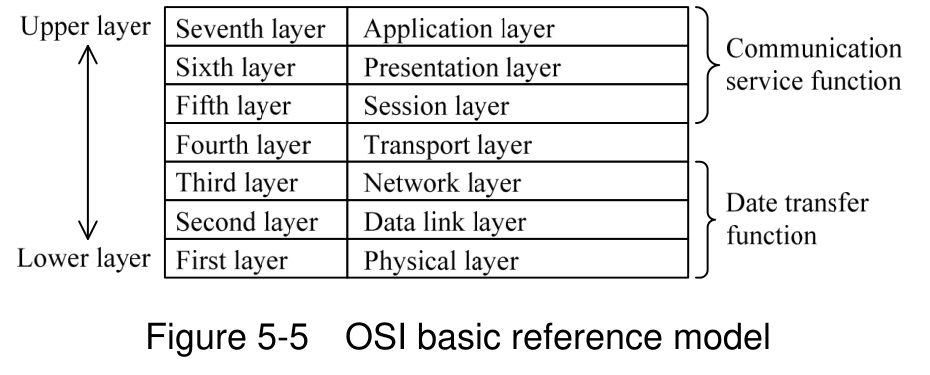
Seven-layer OSI reference model, grouped into communication-service and data-transfer functions. Source text: Figure 5-5 OSI basic reference model
p. 314 · Enlarge

p. 315

Several function modules (i.e., entities) are present in each layer of OSI. (The entity present in the N-th layer is called the (N) entity.) The (N) entity is a service provided from the (N−1) entity that belongs one layer below, and provides service to the (N+1) entity that belongs one layer above. (The service provided by the entity of the N-th layer is called the (N) service.) Moreover, the protocol present between the (N) entities belonging to the same level of the transmitting side and the receiving side is called the (N) protocol. Data is exchanged between the (N) entities by using an (N) connection, which is a logical communication channel.

The service provided by each layer of OSI and the specific functions are as described below.
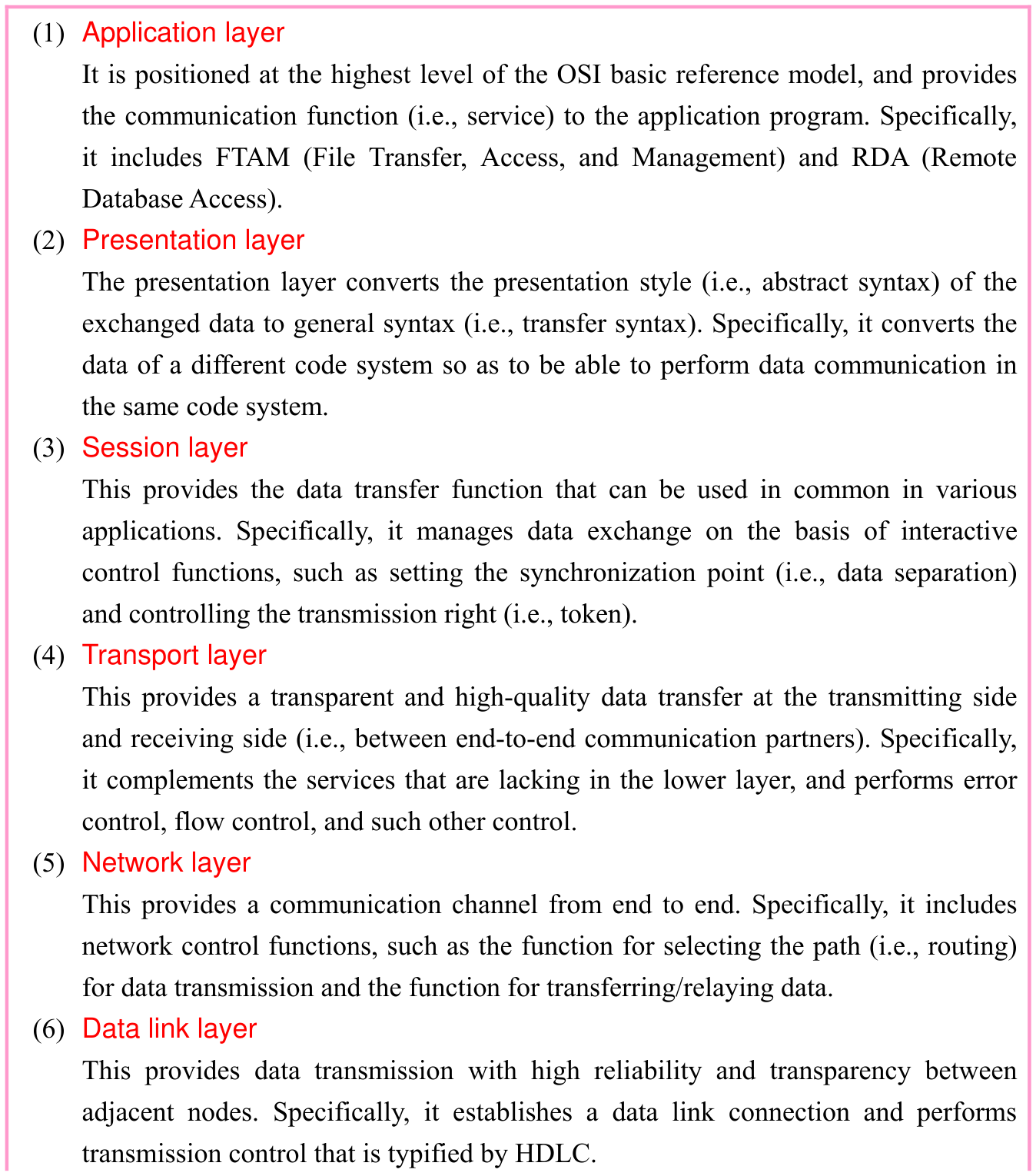
Original OSI (Open Systems Interconnection) source table or explanation box, preserving its complete original arrangement, labels and values. Source text: (1) Application layer It is positioned at the highest level of the OSI basic reference model, and provides the communication function (i.e., service) to the application program. Specifically, it includes FTAM (File Transfer, Access, and Management) and RDA (Remote Database Access). (2) Presentation layer The presentation layer converts the presentation style (i.e., abstract syntax) of the exchanged data to general syntax (i.e., transfer syntax). Specifically, it converts the data of a different code system so as to be able to perform data communication in the same code system. (3) Session layer This provides the data transfer function that can be used in common in various applications. Specifically, it manages data exchange on the basis of interactive control functions, such as setting the synchronization point (i.e., data separation) and controlling the transmission right (i.e., token). (4) Transport layer This provides a transparent and high-quality data transfer at the transmitting side and receiving side (i.e., between end-to-end communication partners). Specifically, it complements the services that are lacking in the lower layer, and performs error control, flow control, and such other control. (5) Network layer This provides a communication channel from end to end. Specifically, it includes network control functions, such as the function for selecting the path (i.e., routing) for data transmission and the function for transferring/relaying data. (6) Data link layer This provides data transmission with high reliability and transparency between adjacent nodes. Specifically, it establishes a data link connection and performs transmission control that is typified by HDLC.
p. 315 · Enlarge
OSI network layer · 2 practice questions

p. 316

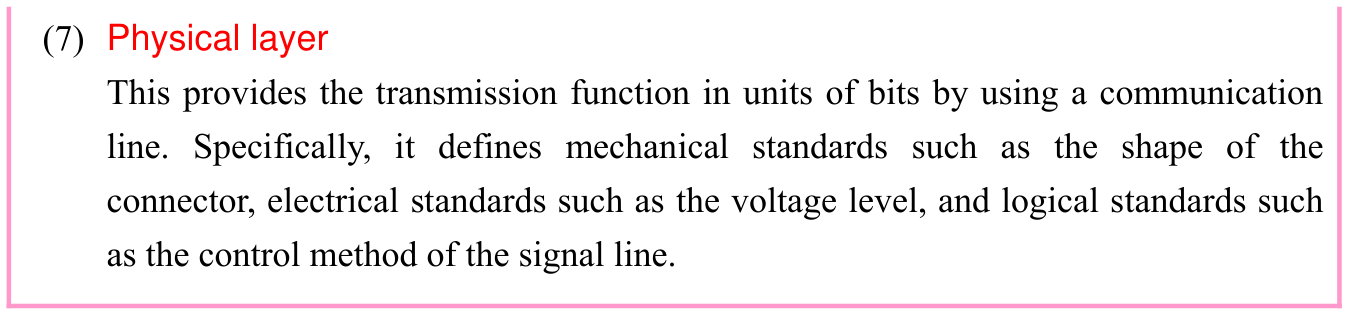
Original OSI (Open Systems Interconnection) source table or explanation box, preserving its complete original arrangement, labels and values. Source text: (7) Physical layer This provides the transmission function in units of bits by using a communication line. Specifically, it defines mechanical standards such as the shape of the connector, electrical standards such as the voltage level, and logical standards such as the control method of the signal line.
p. 316 · Enlarge

Section progress

Original chapter exercises

Original chapter exercises →

New FE Textbook Vol.1 · IT Fundamentals · First Edition, April 2015