Highlighted text? Practice this concept. Highlighted passages and figures open related questions.
Practice related questions (1)Progress & bookmarks
Current section
2-3 TCP/IP
p. 316
Practice this section 1 linked exam question with default filters
Progress
Not marked complete
Related questions in this lesson 2
TCP/IP and OSI layers1Original NTP and MIME protocol table1p. 316
2 - 3 TCP/IP
TCP/IP is a protocol that is used in the Internet. It was the protocol used at America’s ARPANET (original model of the present Internet), but as a result of an increase in the number of users, it has become the de facto standard (i.e., industry standard) protocol. TCP/IP is a set of several protocols, and is systematically organized in the hierarchical structure in the same way as OSI. The correspondence between each layer of TCP/IP and the OSI basic reference model is as shown below.
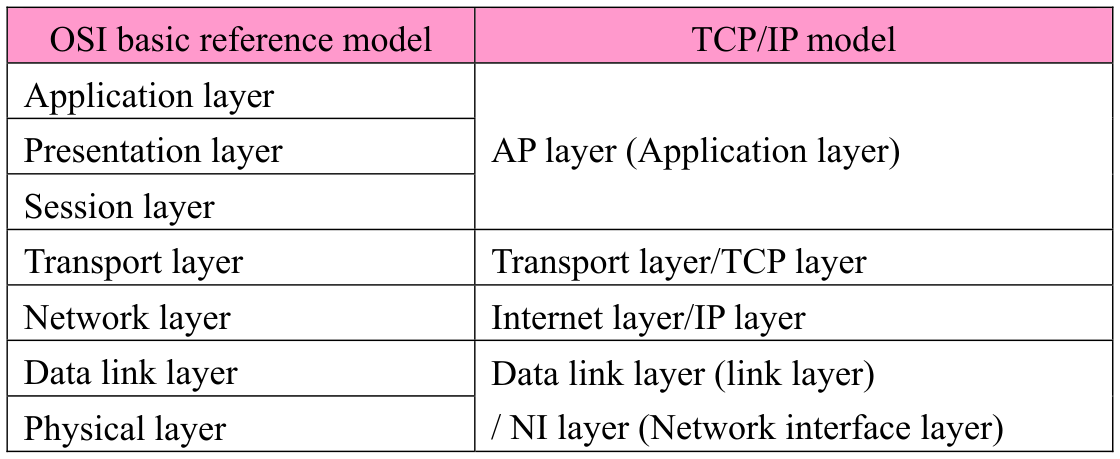
Note: In the names of layers of the TCP/IP model, the term within ( ) is the abbreviated name, and the term that is indicated after “/” is another name.
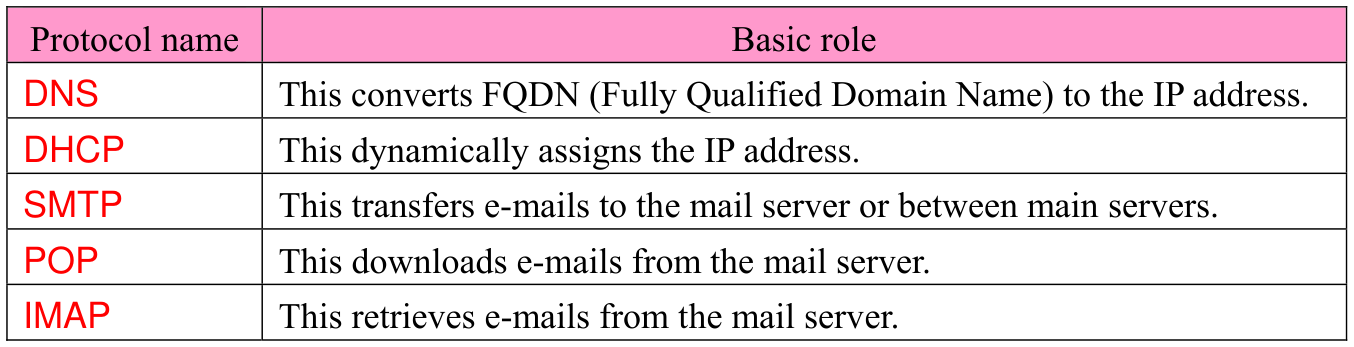
(1) AP layer (Application layer)
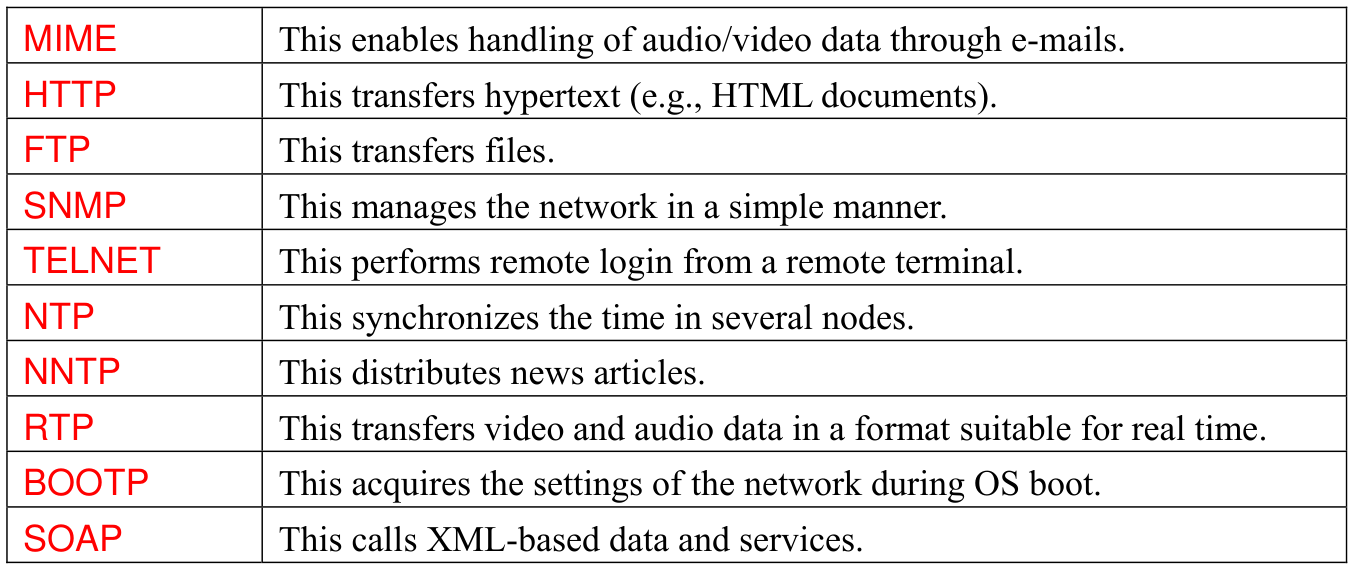
The application layer provides various services to the user. The services that are provided over the Internet are implemented through the protocols of this layer. (Various services of the Internet are explained in detail in Section 4.).
p. 317
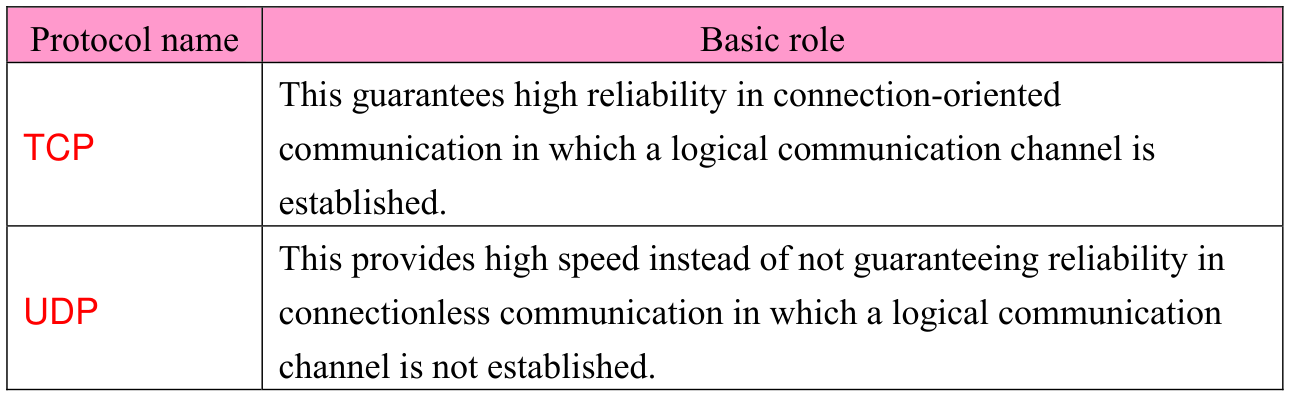
(2) Transport layer / TCP layer
The transport layer/TCP layer provides transparent, high quality, and high-speed data transmission from end to end. (This layer corresponds to the transport layer of the OSI basic reference model.)
(3) Internet layer / IP layer
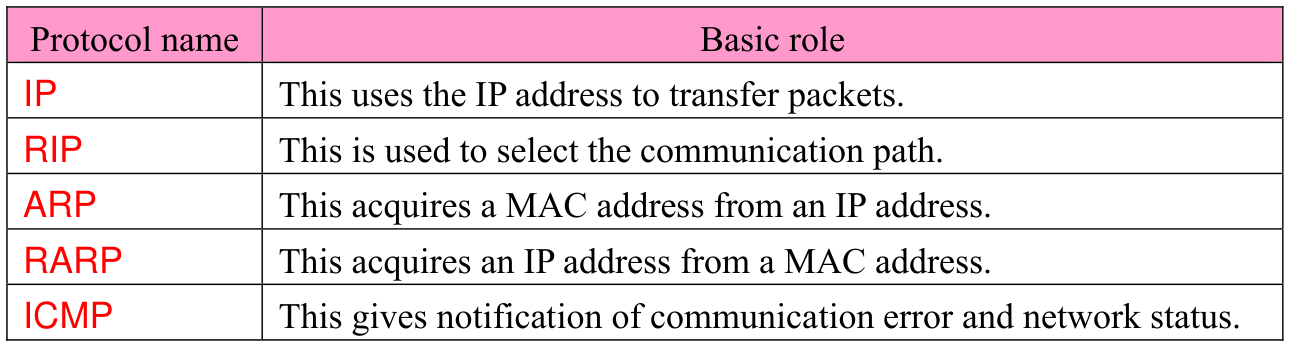
The Internet layer / IP layer provides the function for the path selection (i.e., routing) for data transmission and the function for transferring/relaying data. (This layer corresponds to the network layer of the OSI basic reference model.)
p. 318
(4) Data link layer / NI layer (Network Interface layer)
The data link layer/network interface layer provides transparent and error-free data transmission. It corresponds to the physical layer and data link layer in the OSI basic reference model. Generally, the data link layer is handled by dividing into the LLC (Logical Data Link) sublayer and the MAC (Media Address Control) sublayer.

Section progress
Original chapter exercises
Original chapter exercises →New FE Textbook Vol.1 · IT Fundamentals · First Edition, April 2015