Contents
Chapter 5 · NetworkPractice

LEARN WITH HARU

Video Lesson တွေက Haru အတန်းသားတွေအတွက်ပါ

Haru ရဲ့ ITPEC FE Full Course မှာ ယခု သင်ခန်းစာတွေကို တစ်ခုချင်း တစ်ကြောင်းချင်း အသေးစိတ်ရှင််ရှင်းပြထားပါတယ်

အခြေခံ မရှိတဲ့ ကျောင်းသားများစွာဟာလည်း ဒီ Course နဲ့ ပဲ အောင်မြင်ကုန်ကြပါပြီ

အတန်းမအပ်သေးပဲ Haru ဆီမှာ အစမ်းသင်ကြည့်ချင်ပါသလား?

သင်တန်းသားတွေရဲ့ စကားသံများ

သင်တန်းသားတွေရဲ့ စကားသံများ

Highlighted text? Practice this concept. Highlighted passages and figures open related questions.

Practice related questions (16)Progress & bookmarks

Current section

4 The Internet

p. 328

Practice this section 16 linked exam questions with default filters

Progress

Not marked complete

Related questions in this lesson 1

Ethernet header and MAC address1
Progress and bookmarks

p. 328

4 The Internet

The Internet is a network that establishes an integrated connection between the networks that are interspersed across the world. Therefore, it is also called the network of networks.

4 - 1 TCP/IP Protocol

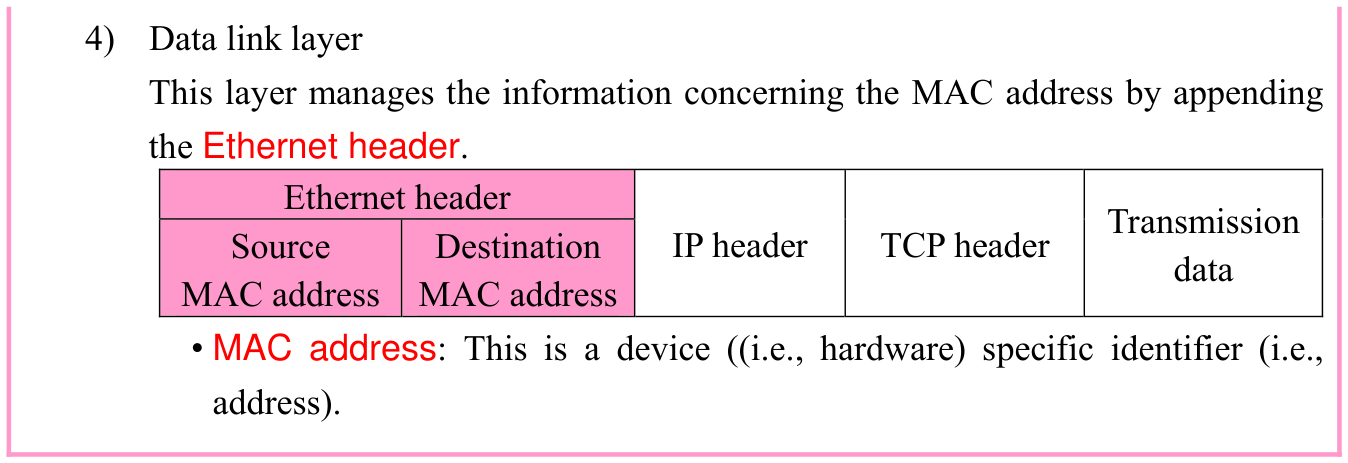
TCP/IP is the standard protocol of the Internet. The relatively simple configuration as compared with the OSI basic reference model is also considered to have become the indirect cause of the evolution of the Internet. In TCP/IP, data is transmitted by appending the management information of each layer as a header to the packets to be sent. The role of each layer in connection-oriented communication using TCP and the typical management information that is included in each header are as shown below.
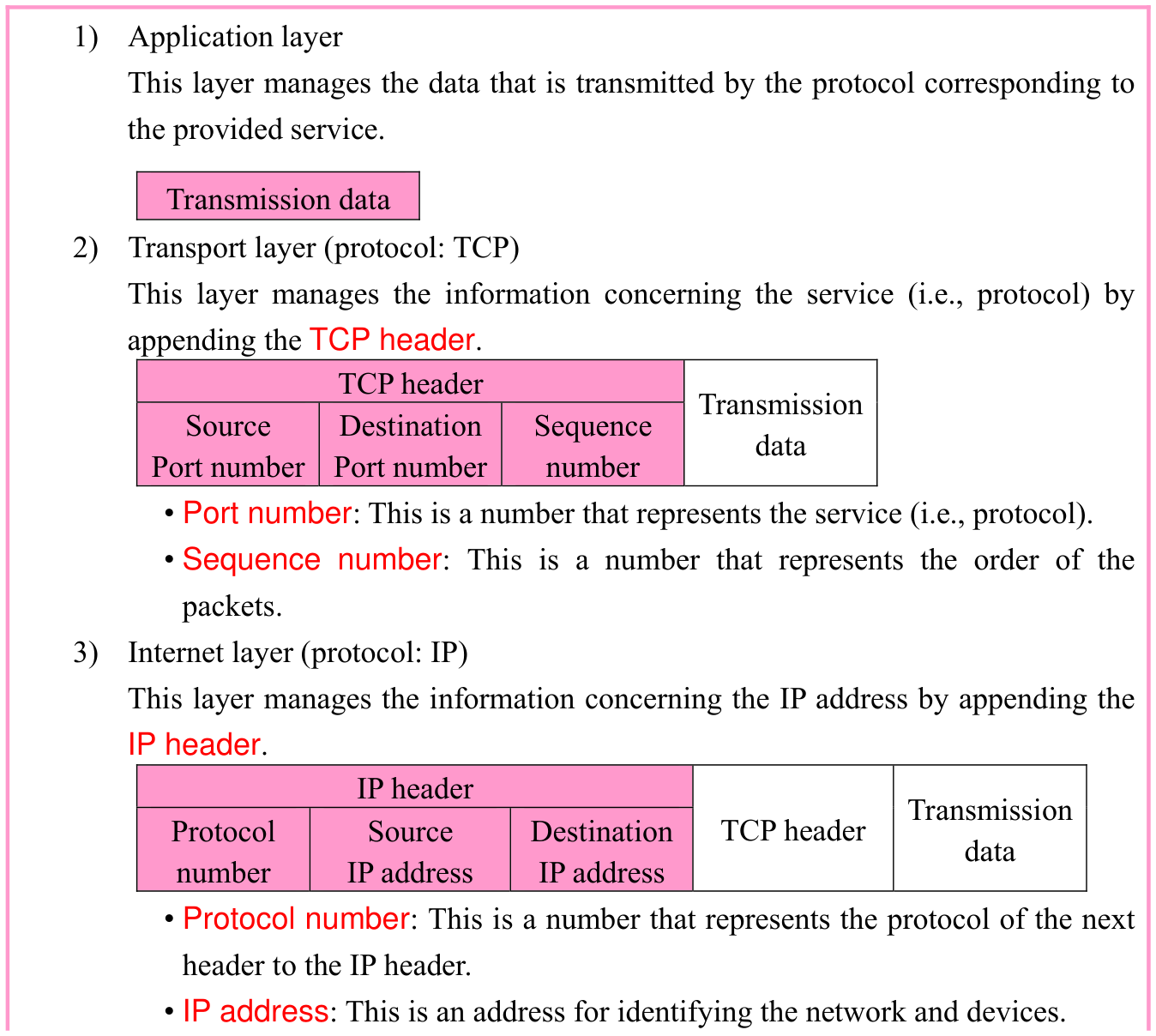
Original TCP/IP Protocol source table or explanation box, preserving its complete original arrangement, labels and values. Source text: 1) Application layer This layer manages the data that is transmitted by the protocol corresponding to the provided service. Transmission data 2) Transport layer (protocol: TCP) This layer manages the information concerning the service (i.e., protocol) by appending the TCP header. TCP header Transmission Source Destination Sequence data Port number Port number number • Port number: This is a number that represents the service (i.e., protocol). • Sequence number: This is a number that represents the order of the packets. 3) Internet layer (protocol: IP) This layer manages the information concerning the IP address by appending the IP header. IP header Transmission Protocol Source Destination TCP header data number IP address IP address • Protocol number: This is a number that represents the protocol of the next header to the IP header. • IP address: This is an address for identifying the network and devices.
p. 328 · Enlarge

p. 329

Original TCP/IP Protocol source table or explanation box, preserving its complete original arrangement, labels and values. Source text: 4) Data link layer This layer manages the information concerning the MAC address by appending the Ethernet header. Ethernet header Transmission Source Destination IP header TCP header data MAC address MAC address • MAC address: This is a device ((i.e., hardware) specific identifier (i.e., address).
p. 329 · Enlarge
Ethernet header and MAC address · 1 practice questions

Section progress

Original chapter exercises

Original chapter exercises →

New FE Textbook Vol.1 · IT Fundamentals · First Edition, April 2015