Contents
Chapter 5 · NetworkPractice

LEARN WITH HARU

Video Lesson တွေက Haru အတန်းသားတွေအတွက်ပါ

Haru ရဲ့ ITPEC FE Full Course မှာ ယခု သင်ခန်းစာတွေကို တစ်ခုချင်း တစ်ကြောင်းချင်း အသေးစိတ်ရှင််ရှင်းပြထားပါတယ်

အခြေခံ မရှိတဲ့ ကျောင်းသားများစွာဟာလည်း ဒီ Course နဲ့ ပဲ အောင်မြင်ကုန်ကြပါပြီ

အတန်းမအပ်သေးပဲ Haru ဆီမှာ အစမ်းသင်ကြည့်ချင်ပါသလား?

သင်တန်းသားတွေရဲ့ စကားသံများ

သင်တန်းသားတွေရဲ့ စကားသံများ

Highlighted text? Practice this concept. Highlighted passages and figures open related questions.

Practice related questions (6)Progress & bookmarks

Current section

3-1-4 LAN-to-LAN Connection Device

p. 325

Practice this section 6 linked exam questions with default filters

Progress

Not marked complete

Related questions in this lesson 7

LAN interconnection devices6Gateway protocol conversion1
Progress and bookmarks

p. 325

3-1-4 LAN-to-LAN Connection Device

The LAN-to-LAN connection device connects several LANs. LAN was originally a network in a restricted area. However, as a result of diversification of the processing content, it was required to become a wide-area network by connecting to other LANs, and therefore, a LAN-to-LAN connection device became necessary.
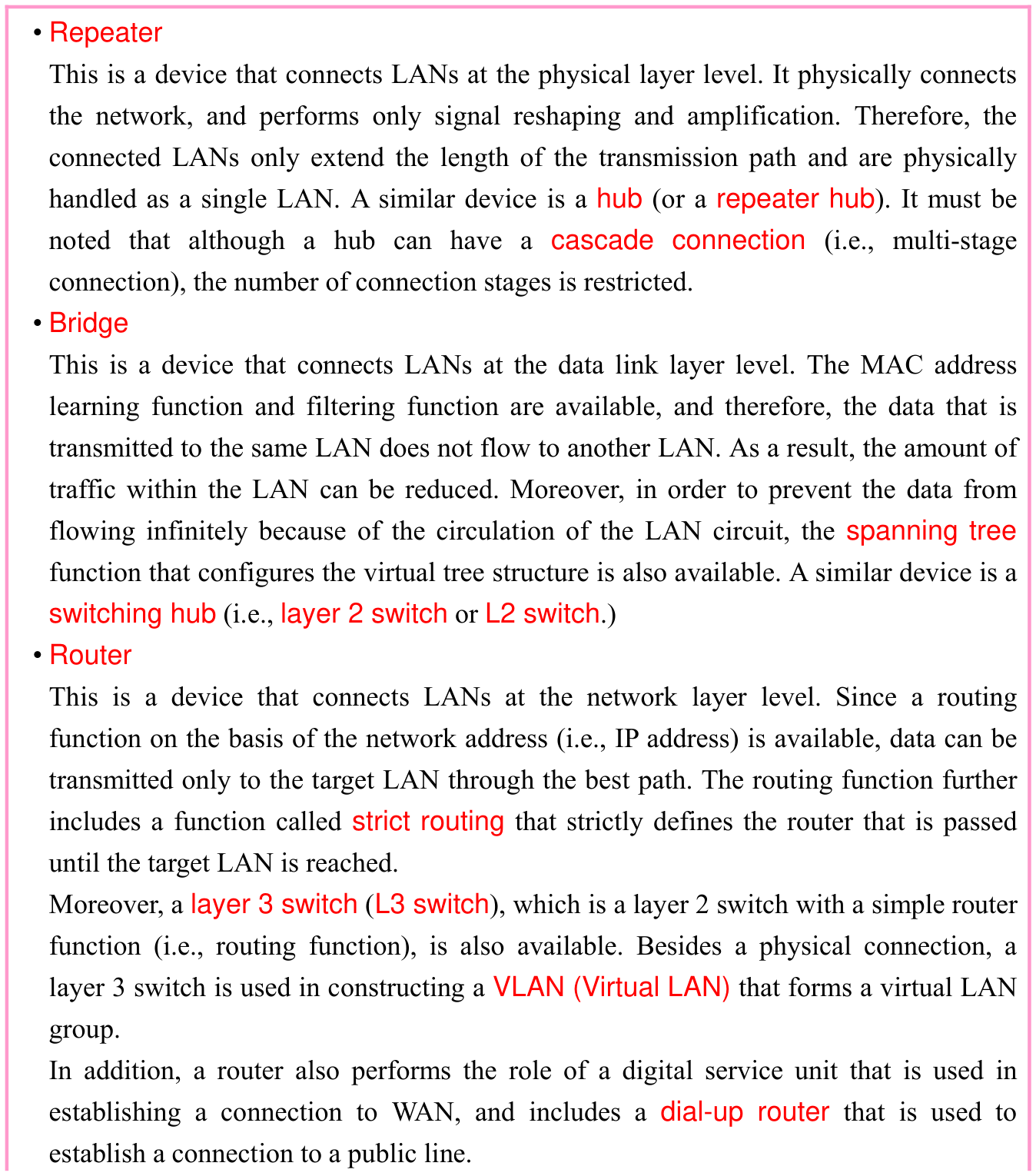
Original LAN-to-LAN Connection Device source table or explanation box, preserving its complete original arrangement, labels and values. Source text: • Repeater This is a device that connects LANs at the physical layer level. It physically connects the network, and performs only signal reshaping and amplification. Therefore, the connected LANs only extend the length of the transmission path and are physically handled as a single LAN. A similar device is a hub (or a repeater hub). It must be noted that although a hub can have a cascade connection (i.e., multi-stage connection), the number of connection stages is restricted. • Bridge This is a device that connects LANs at the data link layer level. The MAC address learning function and filtering function are available, and therefore, the data that is transmitted to the same LAN does not flow to another LAN. As a result, the amount of traffic within the LAN can be reduced. Moreover, in order to prevent the data from flowing infinitely because of the circulation of the LAN circuit, the spanning tree function that configures the virtual tree structure is also available. A similar device is a switching hub (i.e., layer 2 switch or L2 switch.) • Router This is a device that connects LANs at the network layer level. Since a routing function on the basis of the network address (i.e., IP address) is available, data can be transmitted only to the target LAN through the best path. The routing function further includes a function called strict routing that strictly defines the router that is passed until the target LAN is reached. Moreover, a layer 3 switch (L3 switch), which is a layer 2 switch with a simple router function (i.e., routing function), is also available. Besides a physical connection, a layer 3 switch is used in constructing a VLAN (Virtual LAN) that forms a virtual LAN group. In addition, a router also performs the role of a digital service unit that is used in establishing a connection to WAN, and includes a dial-up router that is used to establish a connection to a public line.
p. 325 · Enlarge
LAN interconnection devices · 6 practice questions

p. 326

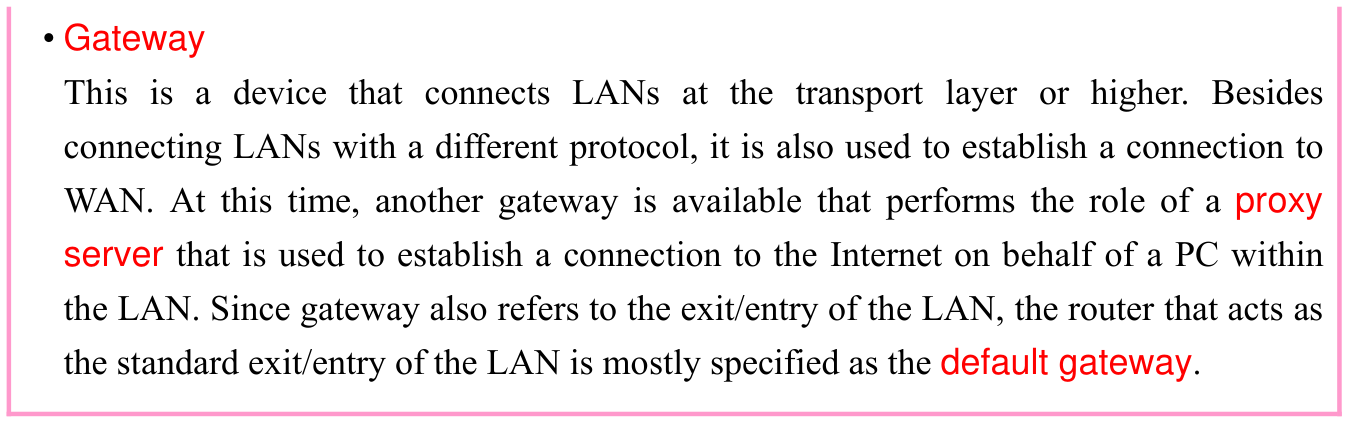
Original LAN-to-LAN Connection Device source table or explanation box, preserving its complete original arrangement, labels and values. Source text: • Gateway This is a device that connects LANs at the transport layer or higher. Besides connecting LANs with a different protocol, it is also used to establish a connection to WAN. At this time, another gateway is available that performs the role of a proxy server that is used to establish a connection to the Internet on behalf of a PC within the LAN. Since gateway also refers to the exit/entry of the LAN, the router that acts as the standard exit/entry of the LAN is mostly specified as the default gateway.
p. 326 · Enlarge
Gateway protocol conversion · 1 practice questions

Original chapter exercises

Original chapter exercises →

New FE Textbook Vol.1 · IT Fundamentals · First Edition, April 2015