Contents
Chapter 5 · NetworkPractice

LEARN WITH HARU

Video Lesson တွေက Haru အတန်းသားတွေအတွက်ပါ

Haru ရဲ့ ITPEC FE Full Course မှာ ယခု သင်ခန်းစာတွေကို တစ်ခုချင်း တစ်ကြောင်းချင်း အသေးစိတ်ရှင််ရှင်းပြထားပါတယ်

အခြေခံ မရှိတဲ့ ကျောင်းသားများစွာဟာလည်း ဒီ Course နဲ့ ပဲ အောင်မြင်ကုန်ကြပါပြီ

အတန်းမအပ်သေးပဲ Haru ဆီမှာ အစမ်းသင်ကြည့်ချင်ပါသလား?

သင်တန်းသားတွေရဲ့ စကားသံများ

သင်တန်းသားတွေရဲ့ စကားသံများ

Highlighted text? Practice this concept. Highlighted passages and figures open related questions.

Practice related questions (1)Progress & bookmarks

Current section

1-4 Transmission Control Procedures

p. 305

Practice this section 1 linked exam question with default filters

Progress

Not marked complete

Related questions in this lesson 1

Flow control1
Progress and bookmarks

p. 305

1 - 4 Transmission Control Procedures

Transmission control refers to the control that is implemented to perform efficient and accurate data transmission. The following types of controls are implemented under transmission control.
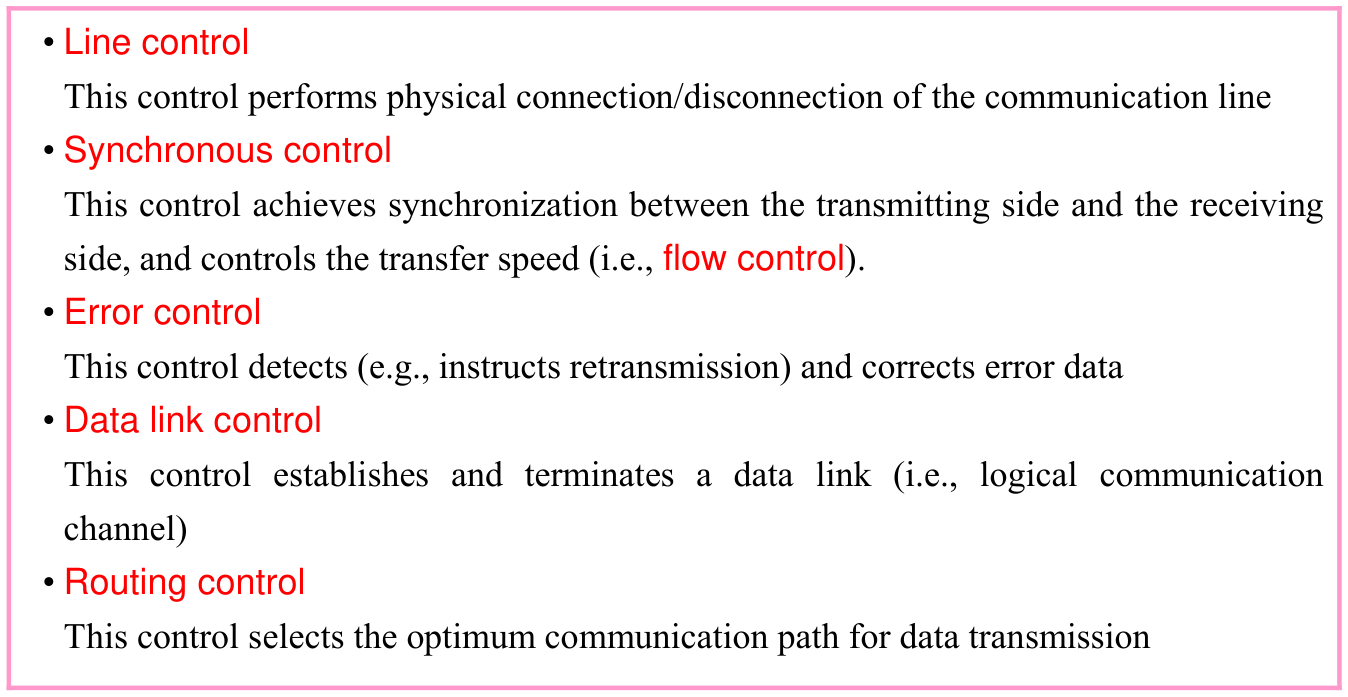
Original Non-Procedure (TTY Procedure) source table or explanation box, preserving its complete original arrangement, labels and values. Source text: • Line control This control performs physical connection/disconnection of the communication line • Synchronous control This control achieves synchronization between the transmitting side and the receiving side, and controls the transfer speed (i.e., flow control). • Error control This control detects (e.g., instructs retransmission) and corrects error data • Data link control This control establishes and terminates a data link (i.e., logical communication channel) • Routing control This control selects the optimum communication path for data transmission
p. 305 · Enlarge
Flow control · 1 practice questions

p. 306

When data transmission is performed, transmission control is implemented through each stage (i.e., phase) that is shown below.
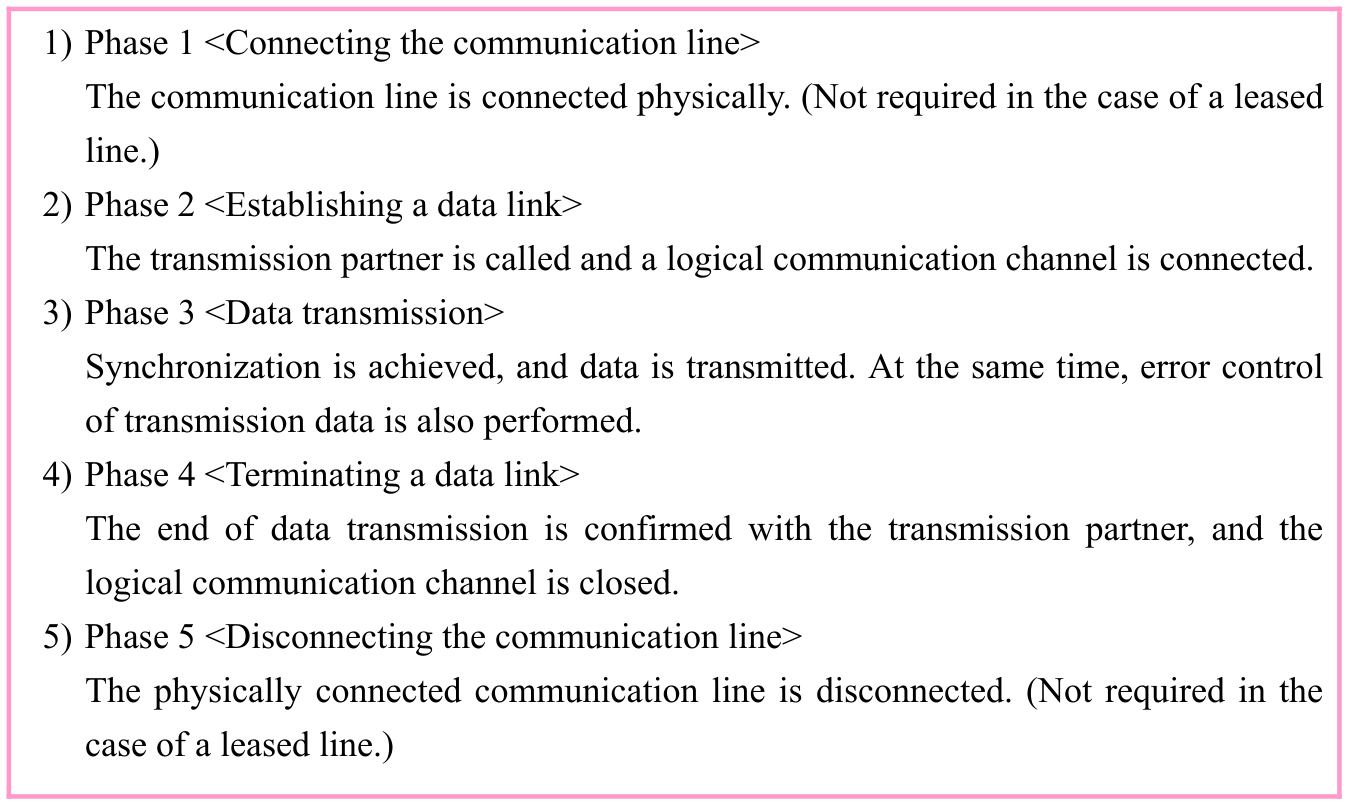
Original Non-Procedure (TTY Procedure) source table or explanation box, preserving its complete original arrangement, labels and values. Source text: 1) Phase 1 <Connecting the communication line> The communication line is connected physically. (Not required in the case of a leased line.) 2) Phase 2 <Establishing a data link> The transmission partner is called and a logical communication channel is connected. 3) Phase 3 <Data transmission> Synchronization is achieved, and data is transmitted. At the same time, error control of transmission data is also performed. 4) Phase 4 <Terminating a data link> The end of data transmission is confirmed with the transmission partner, and the logical communication channel is closed. 5) Phase 5 <Disconnecting the communication line> The physically connected communication line is disconnected. (Not required in the case of a leased line.)
p. 306 · Enlarge

Transmission control procedures refer to the procedures for implementing the above controls efficiently. However, since phase 1 and phase 5 are not required in the case of a leased line, phase 2 through phase 4 are defined in the transmission control procedures. Similar to phase 2 through phase 4, the method of communicating by establishing a data link is called the connection method. In contrast, the method of communicating without establishing a data link is called the connection-less method. Also, while the method of communicating by using a single data link is called the single link procedure, the method of communicating by using several parallel data links collectively as if they were a single data link is called the multilink procedure.

1-4-1 Non-Procedure (TTY Procedure)

Non-procedure (also known as TTY procedure or teletype procedure) is a method by which human beings specify the controls concerning data transmission without taking into consideration the transmission control procedures. Since only the minimum level of transmission control can be performed, it is used in low-speed lines.
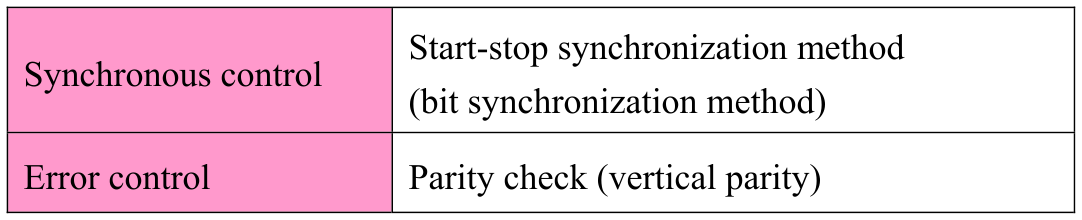
Original Non-Procedure (TTY Procedure) source table or explanation box, preserving its complete original arrangement, labels and values. Source text: Start-stop synchronization method Synchronous control (bit synchronization method) Error control Parity check (vertical parity)
p. 306 · Enlarge

Section progress

Original chapter exercises

Original chapter exercises →

New FE Textbook Vol.1 · IT Fundamentals · First Edition, April 2015