Highlighted text? Practice this concept. Highlighted passages and figures open related questions.
Practice related questions (1)Progress & bookmarks
Current section
3-3-2 EDI
p. 182
Progress
Not marked complete
Related questions in this lesson 1
EDI information representation protocol1p. 182 · PDF 186
3-3-2 EDI
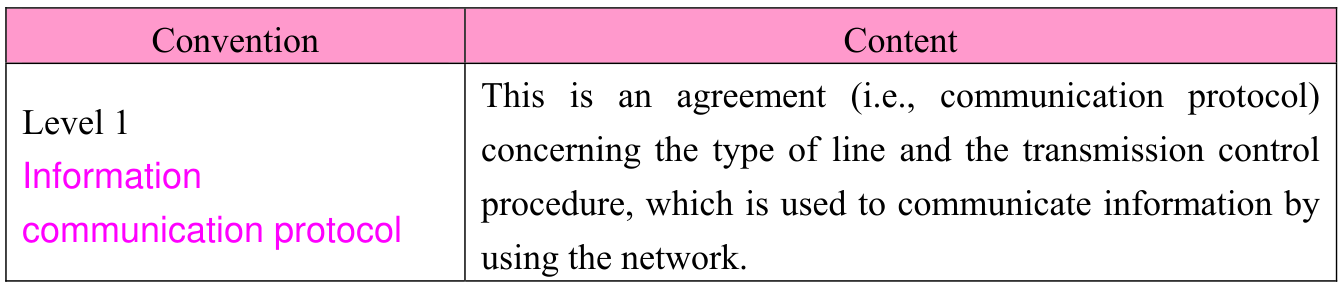
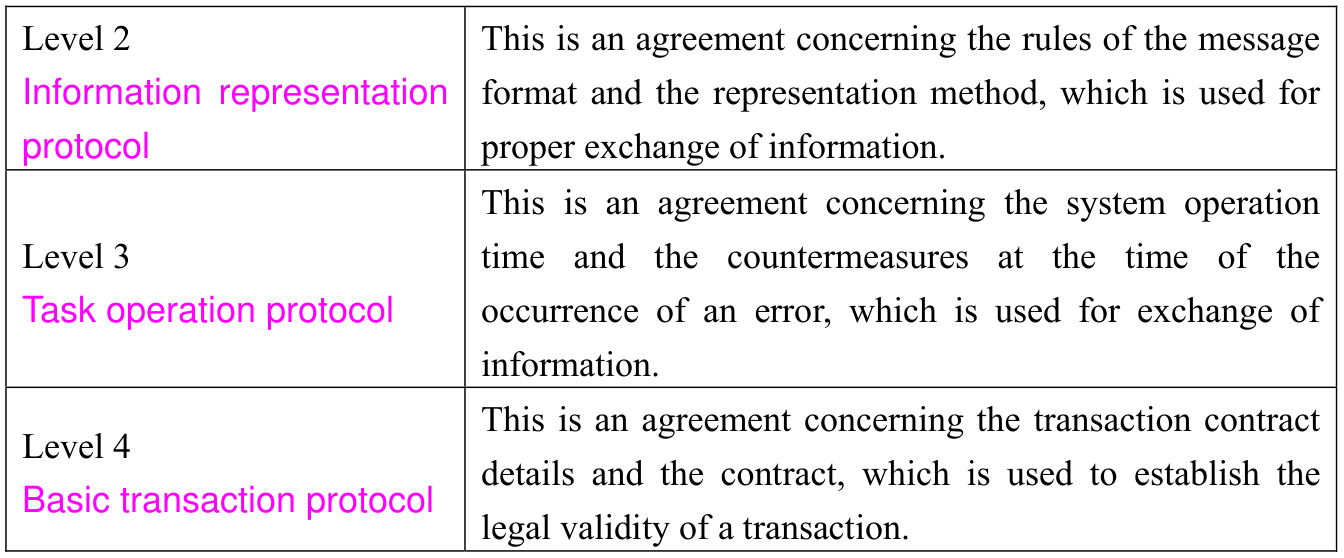
EDI (Electronic Data Interchange) is a mechanism by which the data type and data format of business transactions, such as EC, are consolidated, and the quotations, acceptance and placement of orders, and payments are exchanged electronically between companies. The EDI that uses the Internet without the use of a leased line for the exchange of data between companies is called Web-EDI. In the past, the data type and data format of EDI and the form of network connection was different in each industry in most of the cases, which made it difficult to convert a transaction to EDI. Thus, there have been ongoing standardization efforts mainly in the U.S. and Europe, and in the year 1988, the United Nations adopted EDIFACT (EDI For Administration, Commerce and Transportation) as an international standard protocol for EDI. In addition, standardization techniques, such as XML-EDI and XBRL (eXtensible Business Reporting Language) which are based on XML (eXtensible Markup Language), are incorporated as the data type or data format in which the Web browser is the standard interface, and standardization and open technology are being promoted beyond the industry and business type. In EDI, the protocols are decided as described below, depending on the hierarchical level.
| Convention | Content |
|---|---|
| Level 1 Information communication protocol | This is an agreement (i.e., communication protocol) concerning the type of line and the transmission control procedure, which is used to communicate information by using the network. |
p. 183 · PDF 187
| Level 2 Information representation protocol | This is an agreement concerning the rules of the message format and the representation method, which is used for proper exchange of information. |
|---|---|
| Level 3 Task operation protocol | This is an agreement concerning the system operation time and the countermeasures at the time of the occurrence of an error, which is used for exchange of information. |
| Level 4 Basic transaction protocol | This is an agreement concerning the transaction contract details and the contract, which is used to establish the legal validity of a transaction. |
In addition to the above, the following protocols are also related to EDI.
- • JIS X 7011-1
This is an electronic data interchange (EDIFACT) protocol for administration, business, and transportation. - • JIS X 7012-1
This is a syntax rule (i.e., CII syntax rule) for administration/industrial information interchange. It corresponds to the information representation protocol of level 2. - • STEP (STandard for the Exchange of Product model data)
This is a standard for the representation and exchange of the product data model that is defined by ISO. - • Japanese Bankers Association protocol
This is a standard (i.e., communication protocol) for the electronic banking system that is defined by the Japanese Bankers Association. - • JCA (Japan Chain Stores Association) procedure
This is a communication protocol defined by JCA.
Section progress
Original chapter exercises
Original chapter exercises →New FE Textbook Vol.2 · First Edition, April 2015