Highlighted text? Practice this concept. Highlighted passages and figures open related questions.
Practice related questions (4)Progress & bookmarks
Current section
1-2-2 Relational Model
p. 249
Practice this section 4 linked exam questions with default filters
Progress
Not marked complete
Related questions in this lesson 7
Relational tables and attributes5Original relational-operation definitions2p. 249
1-2-2 Relational Model
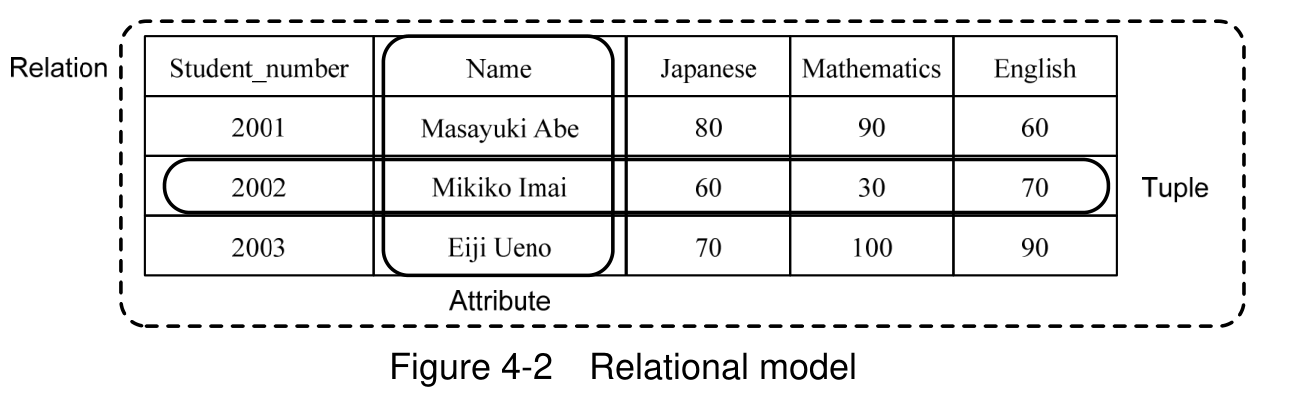
In Figure 4-2, values that are actually recorded, such as “2001”, “Masayuki Abe”, “80”, “90”, and “60”, are referred to as occurrence (or instance). In addition, a set of occurrences that an attribute can take is referred to as domain. (Domain may include data types and constraint conditions of attributes.) Therefore, relation is defined as a subset of the direct product of domains. (Direct product: a set operation that obtains all combinations, Subset: a set that is included in a certain set)
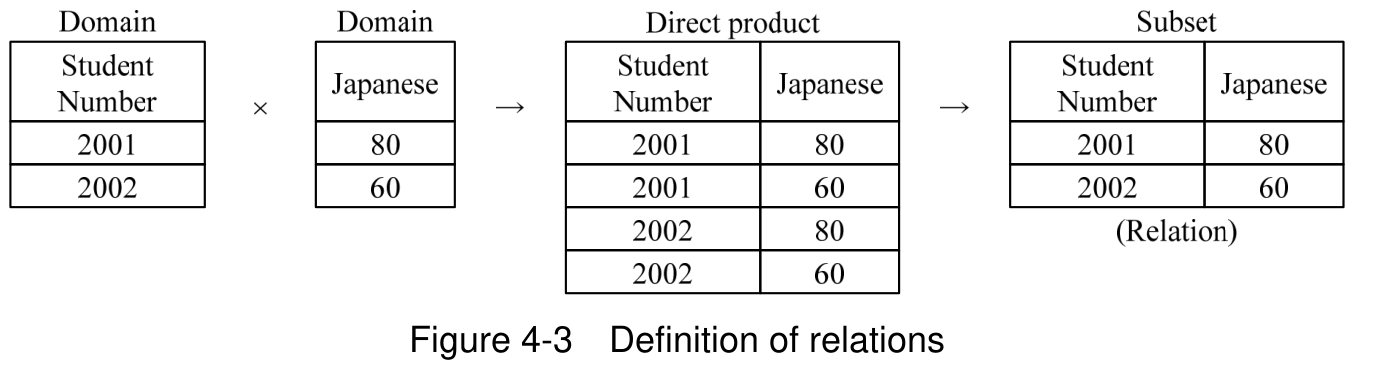
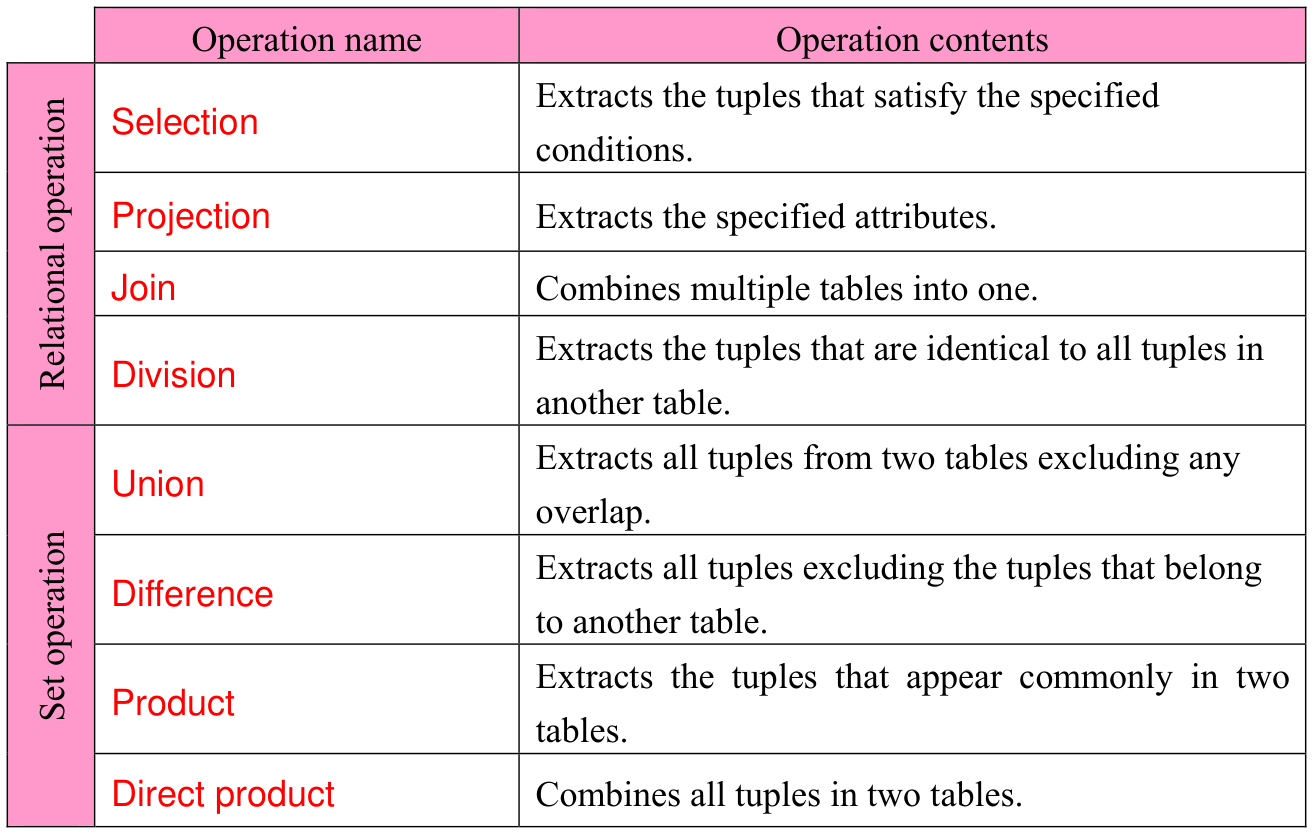
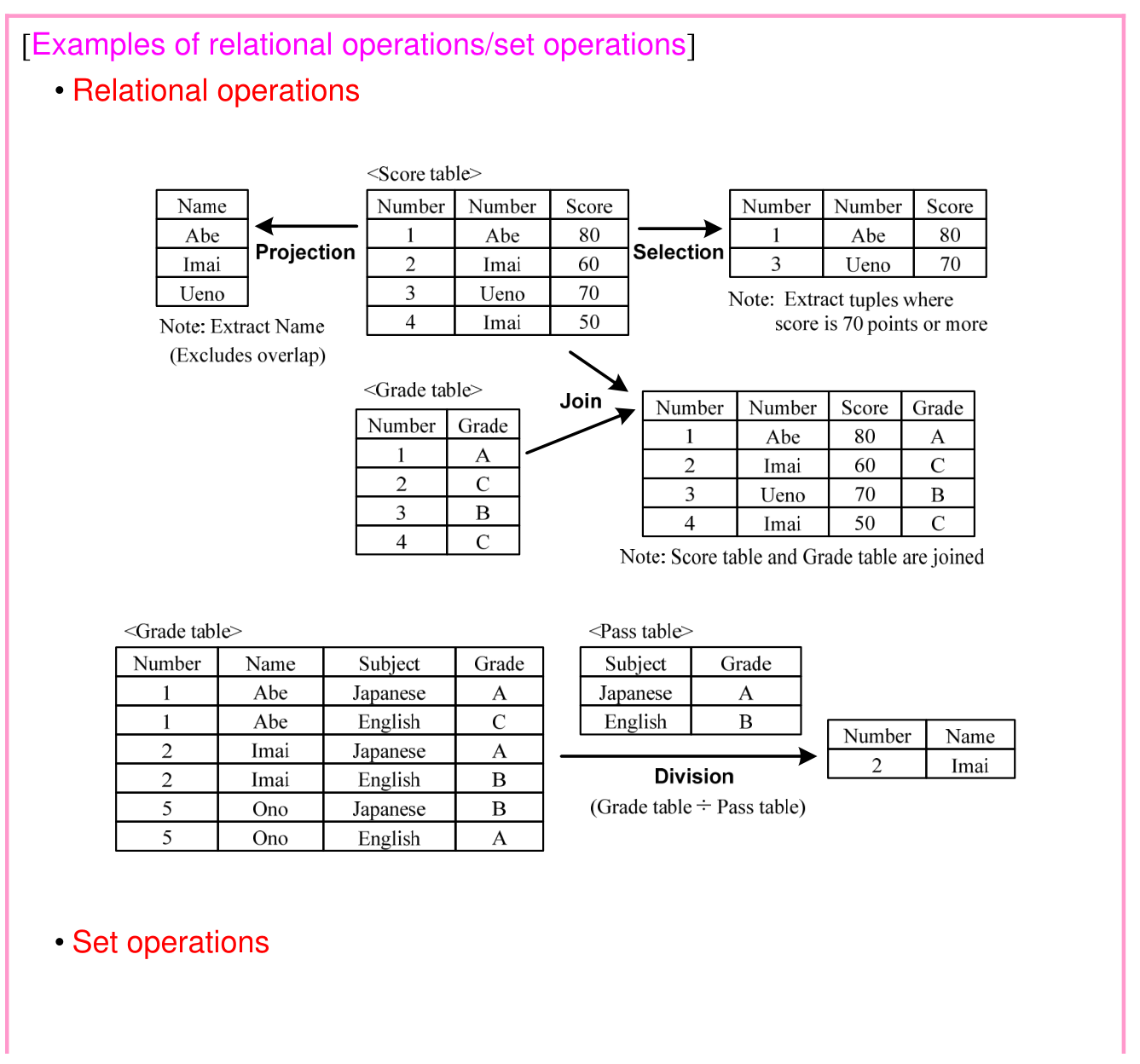
The relational model has a close relationship with the set. Therefore, in the relational database that implements a relational model, the database is operated in combination with relational operations (relational algebra) that are specific to relational database and set operations that are based on the concept of set.
p. 250
p. 251
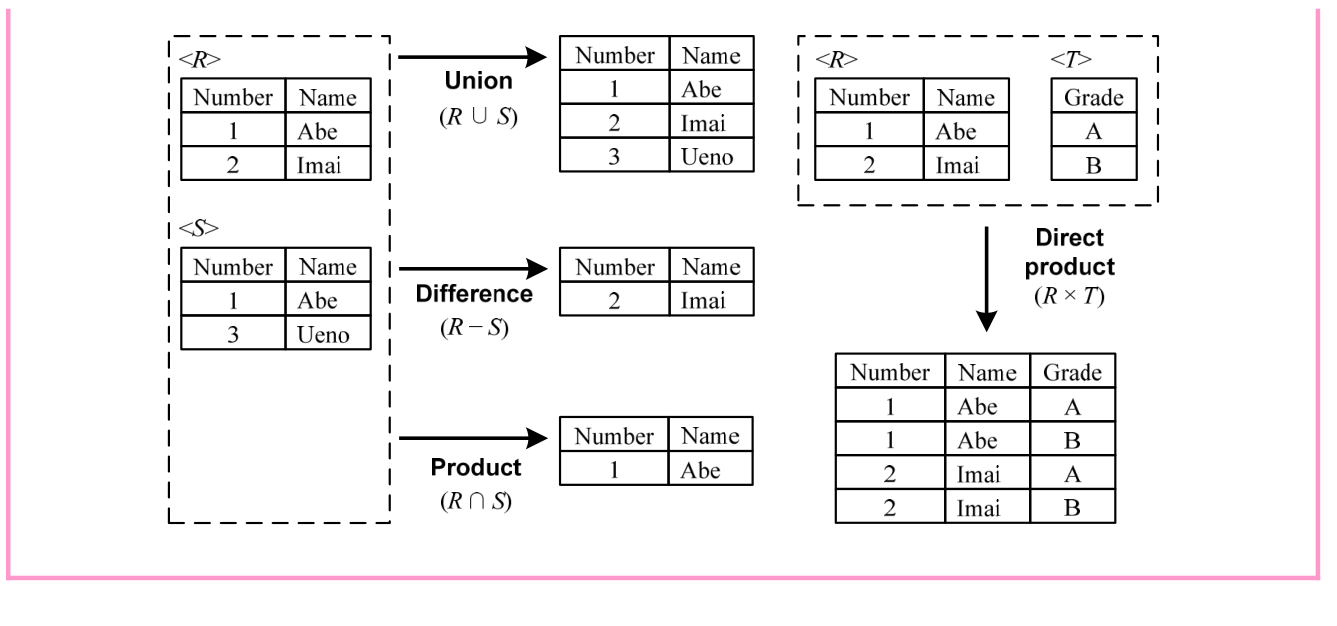
In addition, there are following manipulations of the relational database.

Section progress
Original chapter exercises
Original chapter exercises →New FE Textbook Vol.1 · IT Fundamentals · First Edition, April 2015