Contents
Chapter 4 · DatabasePractice

LEARN WITH HARU

Video Lesson တွေက Haru အတန်းသားတွေအတွက်ပါ

Haru ရဲ့ ITPEC FE Full Course မှာ ယခု သင်ခန်းစာတွေကို တစ်ခုချင်း တစ်ကြောင်းချင်း အသေးစိတ်ရှင််ရှင်းပြထားပါတယ်

အခြေခံ မရှိတဲ့ ကျောင်းသားများစွာဟာလည်း ဒီ Course နဲ့ ပဲ အောင်မြင်ကုန်ကြပါပြီ

အတန်းမအပ်သေးပဲ Haru ဆီမှာ အစမ်းသင်ကြည့်ချင်ပါသလား?

သင်တန်းသားတွေရဲ့ စကားသံများ

သင်တန်းသားတွေရဲ့ စကားသံများ

Highlighted text? Practice this concept. Highlighted passages and figures open related questions.

Practice related questions (3)Progress & bookmarks

Current section

3 Various Databases

p. 279

Practice this section 3 linked exam questions with default filters

Progress

Not marked complete

Related questions in this lesson 2

Original two-phase commitment: start and next-page continuation1Distributed database locations1
Progress and bookmarks

p. 279

3 Various Databases

In present day society, database technology is applied in various areas. In companies, databases are used in many systems, such as corporate accounting systems, inventory control systems, document management systems, and sales support systems. In this section, we will learn about the database technology used in these systems.

3 - 1 Distributed Database
Distributed database is a technology that handles databases distributed at multiple sites as if they were one database. Databases are, by nature, used for the purpose of consolidating data and managing it in an integrated manner. However, there are following problems concerning databases consolidated over a network: the fault of a database affects the entire system, the network becomes over crowded because of concentration of processes, and maintenance/management of the database becomes difficult. Therefore, the concept of distributed database was developed where databases are dispersed and constructed at multiple sites. In the distributed database, by using the RDA (Remote Database Access) system, users can use the database without becoming aware of which database they are accessing. (This is called transparency of distributed database.) However, just like usual distributed processing systems, it suffers from the problem that operations, such as security management, take a lot of effort. In addition, it is possible that data may duplicated. Therefore, there is a risk that consistency of data is lost. In the distributed database, these problems are resolved with the following techniques. · 1 question

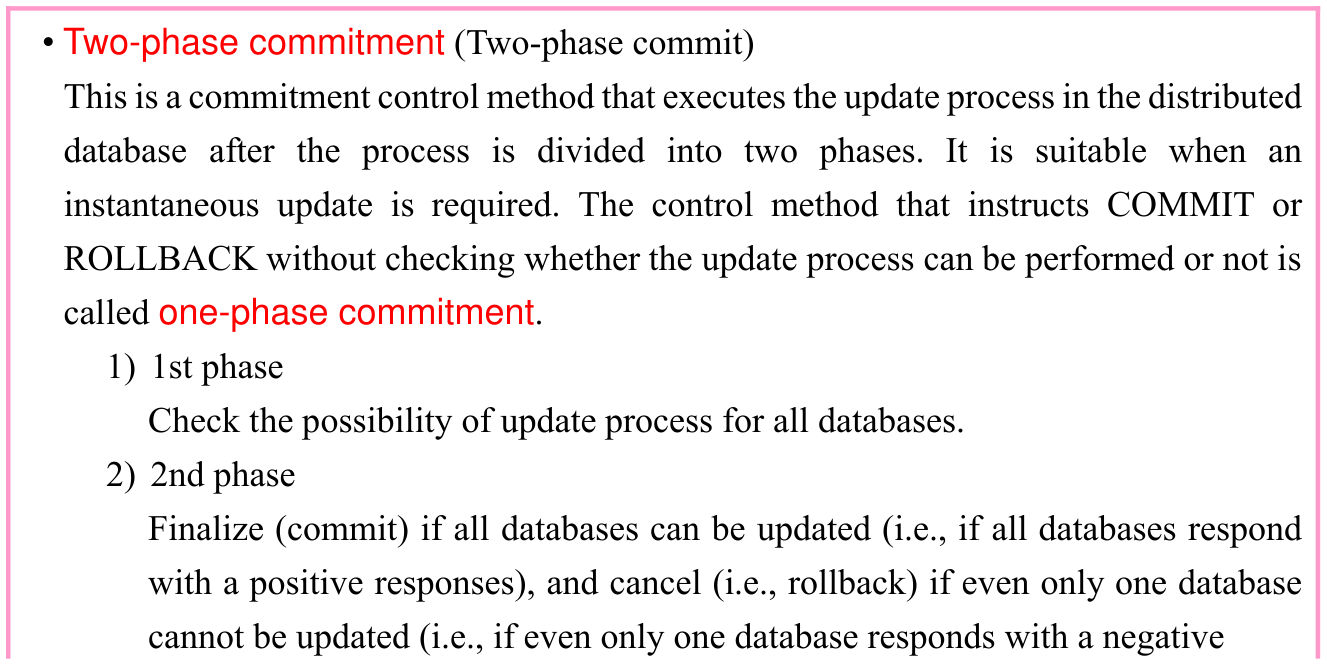
Original distributed-database callout describing two-phase commitment and replication; complete source steps and cross-page continuation are retained. Source text: • Two-phase commitment (Two-phase commit) This is a commitment control method that executes the update process in the distributed database after the process is divided into two phases. It is suitable when an instantaneous update is required. The control method that instructs COMMIT or ROLLBACK without checking whether the update process can be performed or not is called one-phase commitment. 1) 1st phase Check the possibility of update process for all databases. 2) 2nd phase Finalize (commit) if all databases can be updated (i.e., if all databases respond with a positive responses), and cancel (i.e., rollback) if even only one database cannot be updated (i.e., if even only one database responds with a negative
p. 279 · Enlarge
Original two-phase commitment: start and next-page continuation · 1 practice questions

p. 280

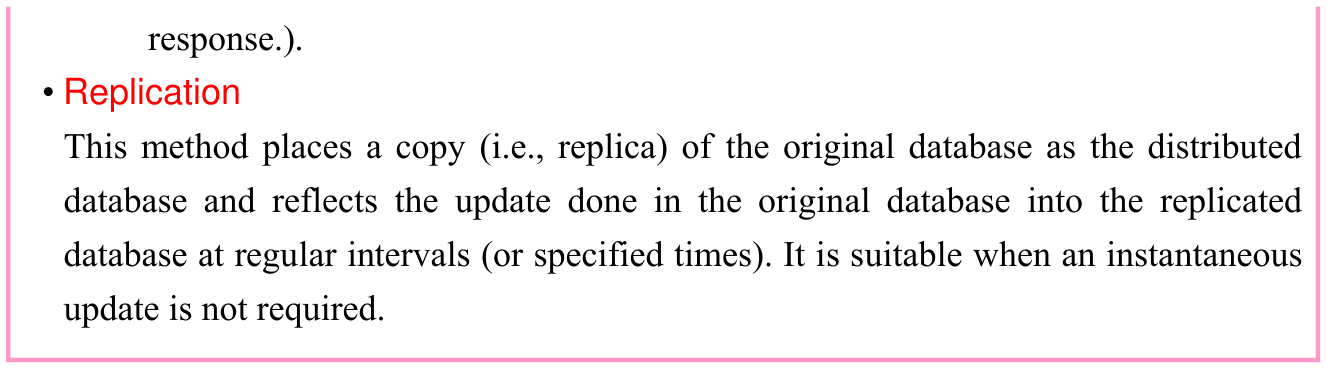
Original distributed-database callout describing two-phase commitment and replication; complete source steps and cross-page continuation are retained. Source text: response.). • Replication This method places a copy (i.e., replica) of the original database as the distributed database and reflects the update done in the original database into the replicated database at regular intervals (or specified times). It is suitable when an instantaneous update is not required.
p. 280 · Enlarge

Original chapter exercises

Original chapter exercises →

New FE Textbook Vol.1 · IT Fundamentals · First Edition, April 2015