Contents
Chapter 3 · SoftwarePractice

LEARN WITH HARU

Video Lesson တွေက Haru အတန်းသားတွေအတွက်ပါ

Haru ရဲ့ ITPEC FE Full Course မှာ ယခု သင်ခန်းစာတွေကို တစ်ခုချင်း တစ်ကြောင်းချင်း အသေးစိတ်ရှင််ရှင်းပြထားပါတယ်

အခြေခံ မရှိတဲ့ ကျောင်းသားများစွာဟာလည်း ဒီ Course နဲ့ ပဲ အောင်မြင်ကုန်ကြပါပြီ

အတန်းမအပ်သေးပဲ Haru ဆီမှာ အစမ်းသင်ကြည့်ချင်ပါသလား?

သင်တန်းသားတွေရဲ့ စကားသံများ

သင်တန်းသားတွေရဲ့ စကားသံများ
Learning toolsProgress & bookmarks

Current section

3-1-2 Procedural Language

p. 212

Progress

Not marked complete

Progress and bookmarks

p. 212

3-1-2 Procedural Language

Procedural languages are programming languages that use a procedure as the basic unit and describes process procedures (i.e., algorithms). Almost all procedural languages use a compilation method to translate a whole written program (i.e., source program) into a machine language program (i.e., object program) before it is executed.
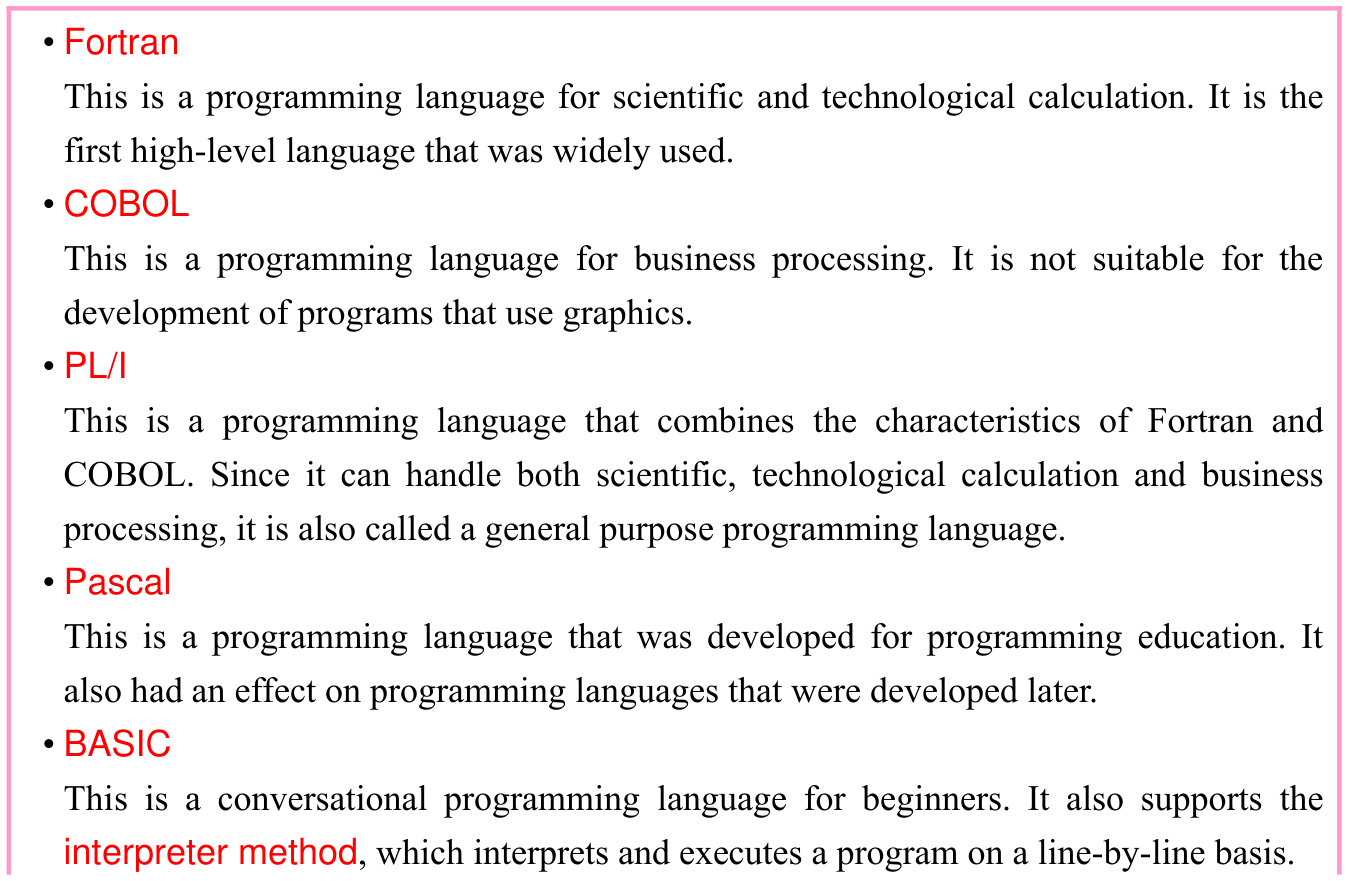
Original textbook callout or table. Source text: • Fortran This is a programming language for scientific and technological calculation. It is the first high-level language that was widely used. • COBOL This is a programming language for business processing. It is not suitable for the development of programs that use graphics. • PL/I This is a programming language that combines the characteristics of Fortran and COBOL. Since it can handle both scientific, technological calculation and business processing, it is also called a general purpose programming language. • Pascal This is a programming language that was developed for programming education. It also had an effect on programming languages that were developed later. • BASIC This is a conversational programming language for beginners. It also supports the interpreter method, which interprets and executes a program on a line-by-line basis.
p. 212 · Enlarge

p. 213

Original textbook callout or table. Source text: • C This is a programming language that was developed by AT&T Bell Laboratories to describe programs for the UNIX OS. It has high portability and is widely used for system development on a workstation or a PC.
p. 213 · Enlarge

Section progress

Original chapter exercises

Original chapter exercises →

New FE Textbook Vol.1 · IT Fundamentals · First Edition, April 2015
