Contents
Chapter 3 · SoftwarePractice

LEARN WITH HARU

Video Lesson တွေက Haru အတန်းသားတွေအတွက်ပါ

Haru ရဲ့ ITPEC FE Full Course မှာ ယခု သင်ခန်းစာတွေကို တစ်ခုချင်း တစ်ကြောင်းချင်း အသေးစိတ်ရှင််ရှင်းပြထားပါတယ်

အခြေခံ မရှိတဲ့ ကျောင်းသားများစွာဟာလည်း ဒီ Course နဲ့ ပဲ အောင်မြင်ကုန်ကြပါပြီ

အတန်းမအပ်သေးပဲ Haru ဆီမှာ အစမ်းသင်ကြည့်ချင်ပါသလား?

သင်တန်းသားတွေရဲ့ စကားသံများ

သင်တန်းသားတွေရဲ့ စကားသံများ
Practice related questions (16)Progress & bookmarks

Current section

2 OS (Operating System)

p. 196

Practice this section 16 linked exam questions with default filters

Progress

Not marked complete

Progress and bookmarks

p. 196

2 OS (Operating System)

An OS is software that manages resources such as hardware and enables effective use of such resources.

2 - 1 Functions and Configurations of OS

The three points below are the main aims of usage of an OS.
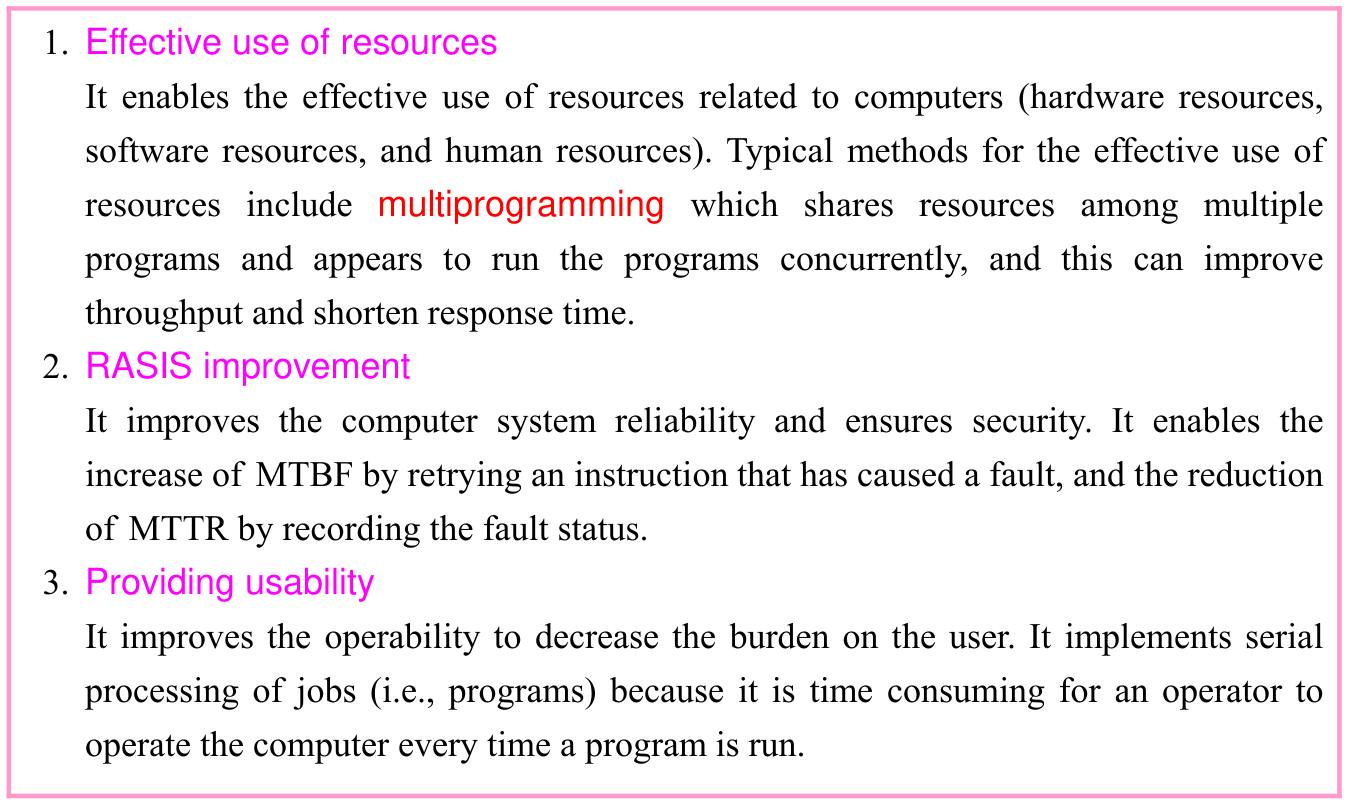
Original textbook callout or table. Source text: 1. Effective use of resources It enables the effective use of resources related to computers (hardware resources, software resources, and human resources). Typical methods for the effective use of resources include multiprogramming which shares resources among multiple programs and appears to run the programs concurrently, and this can improve throughput and shorten response time. 2. RASIS improvement It improves the computer system reliability and ensures security. It enables the increase of MTBF by retrying an instruction that has caused a fault, and the reduction of MTTR by recording the fault status. 3. Providing usability It improves the operability to decrease the burden on the user. It implements serial processing of jobs (i.e., programs) because it is time consuming for an operator to operate the computer every time a program is run.
p. 196 · Enlarge

In order to achieve these aims, the OS provides the management functions described below.
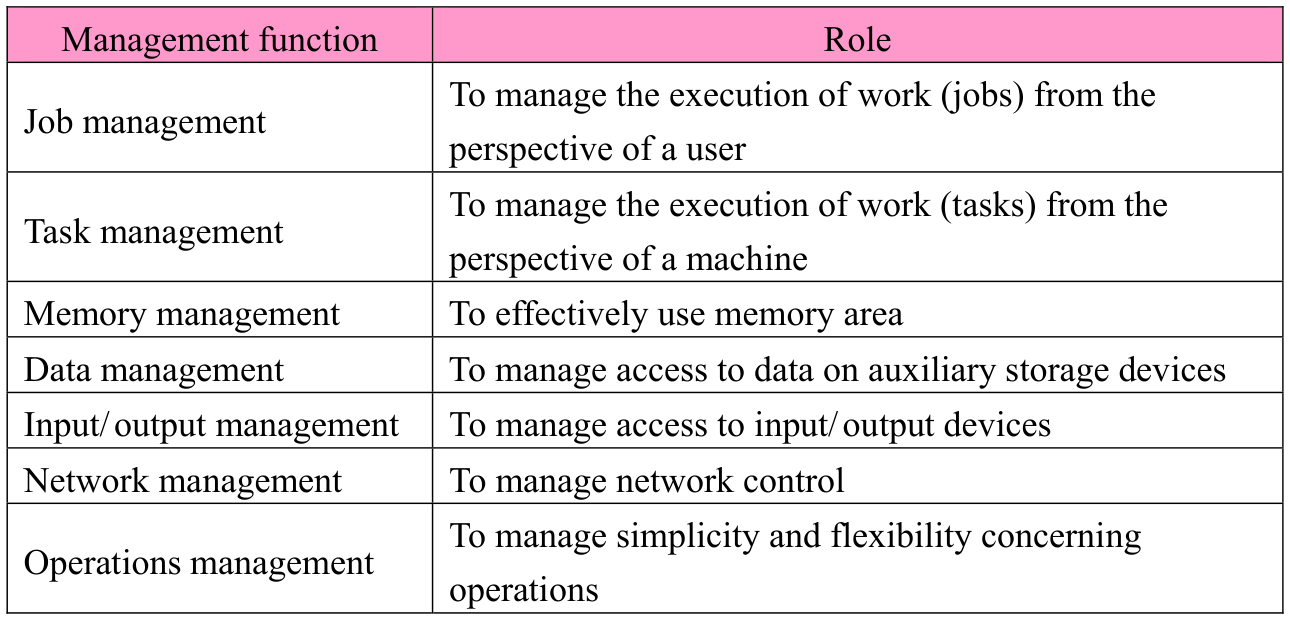
Original textbook callout or table. Source text: Management function Role To manage the execution of work (jobs) from the Job management perspective of a user To manage the execution of work (tasks) from the Task management perspective of a machine Memory management To effectively use memory area Data management To manage access to data on auxiliary storage devices Input/output management To manage access to input/output devices Network management To manage network control To manage simplicity and flexibility concerning Operations management operations
p. 196 · Enlarge

p. 197

Original textbook callout or table. Source text: User management To manage information and controls relating to users Security management To manage information and controls relating to security To perform management relating to the detection, Fault management recording, and handling of a fault
p. 197 · Enlarge

Section progress

Original chapter exercises

Original chapter exercises →

New FE Textbook Vol.1 · IT Fundamentals · First Edition, April 2015
