Contents
Chapter 6 · SecurityPractice

LEARN WITH HARU

Video Lesson တွေက Haru အတန်းသားတွေအတွက်ပါ

Haru ရဲ့ ITPEC FE Full Course မှာ ယခု သင်ခန်းစာတွေကို တစ်ခုချင်း တစ်ကြောင်းချင်း အသေးစိတ်ရှင််ရှင်းပြထားပါတယ်

အခြေခံ မရှိတဲ့ ကျောင်းသားများစွာဟာလည်း ဒီ Course နဲ့ ပဲ အောင်မြင်ကုန်ကြပါပြီ

အတန်းမအပ်သေးပဲ Haru ဆီမှာ အစမ်းသင်ကြည့်ချင်ပါသလား?

သင်တန်းသားတွေရဲ့ စကားသံများ

သင်တန်းသားတွေရဲ့ စကားသံများ
Learning toolsProgress & bookmarks

Current section

2-3 Physical Security Measures

p. 387

Progress

Not marked complete

Progress and bookmarks

p. 387

2 - 3 Physical Security Measures

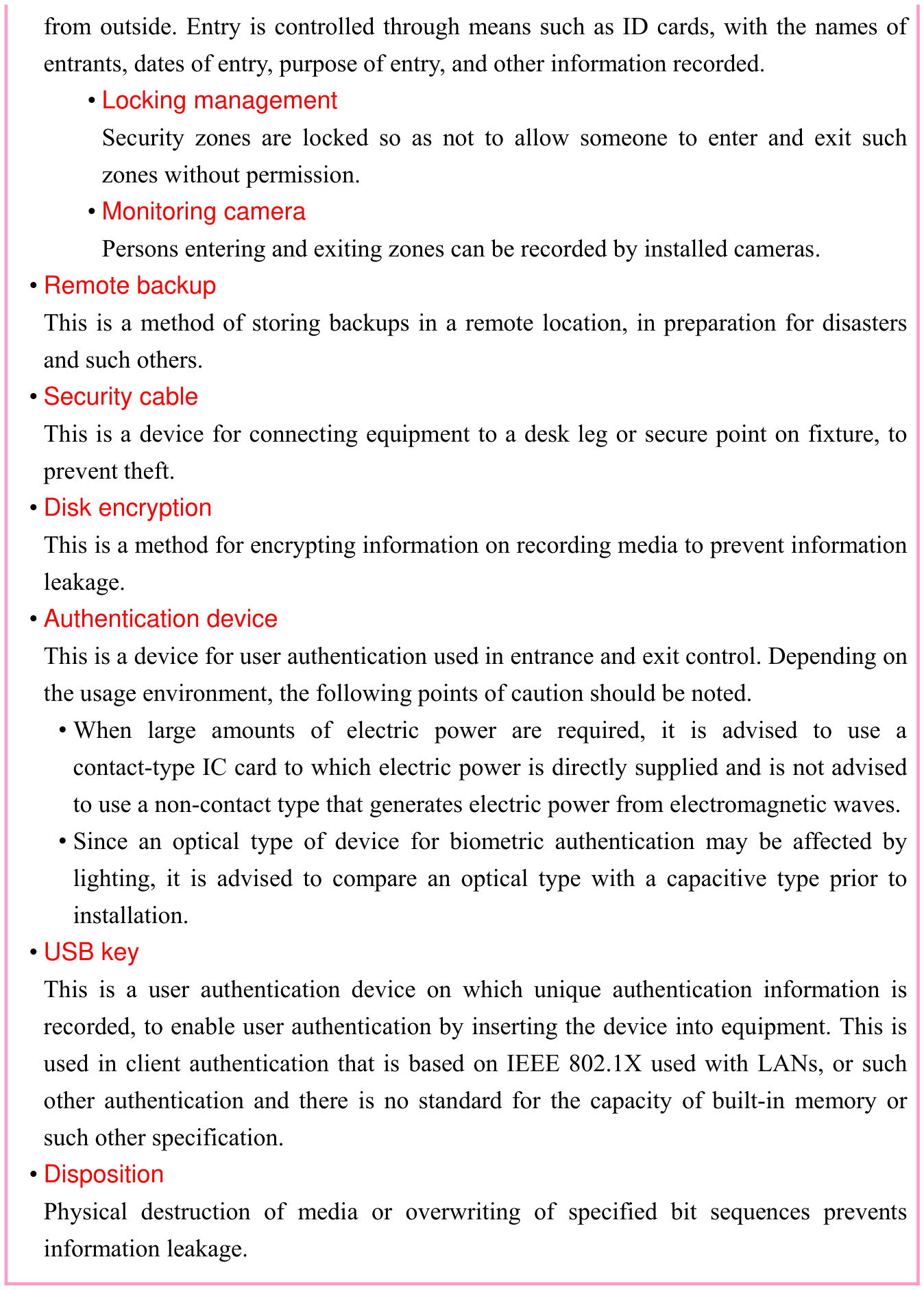
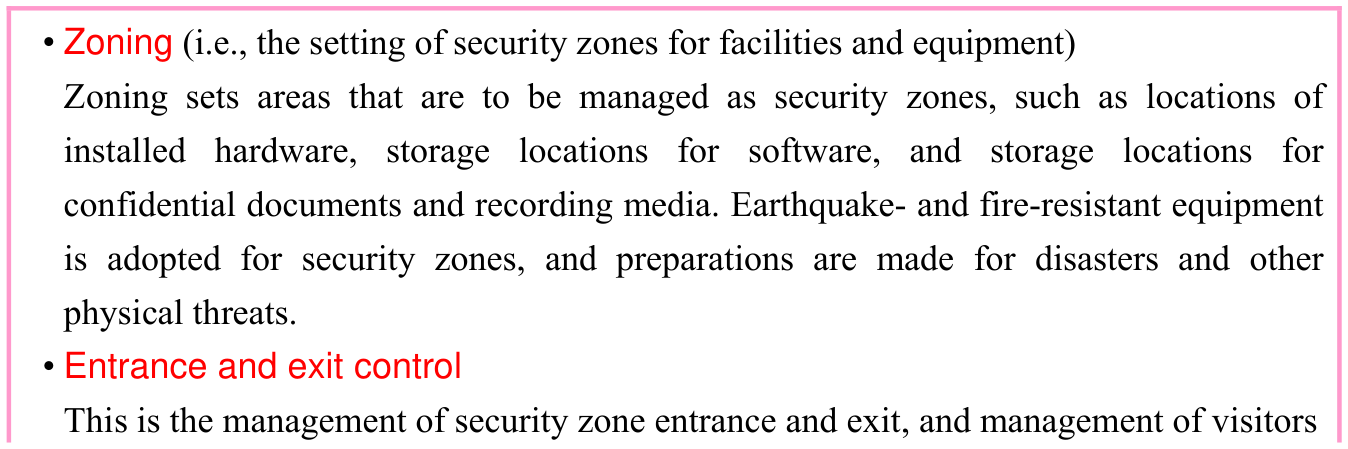
Physical security is security that pertains to environmental management including facilities and equipment, and document management including recording media. While physical security measures enhance the S (Security) of RASIS, the adoption of RAS technology (e.g., technology to control the occurrence of failure) to enhance RAS (Reliability, Availability, Serviceability) can also be thought of as part of physical security. Typical types of physical security measures and related technologies include the following.
Original Security textbook callout or table, preserving the original labels, values, symbols and spatial arrangement. Source text: • Zoning (i.e., the setting of security zones for facilities and equipment) Zoning sets areas that are to be managed as security zones, such as locations of installed hardware, storage locations for software, and storage locations for confidential documents and recording media. Earthquake- and fire-resistant equipment is adopted for security zones, and preparations are made for disasters and other physical threats. • Entrance and exit control This is the management of security zone entrance and exit, and management of visitors
p. 387 · Enlarge

p. 388

Original Security textbook callout or table, preserving the original labels, values, symbols and spatial arrangement. Source text: from outside. Entry is controlled through means such as ID cards, with the names of entrants, dates of entry, purpose of entry, and other information recorded. • Locking management Security zones are locked so as not to allow someone to enter and exit such zones without permission. • Monitoring camera Persons entering and exiting zones can be recorded by installed cameras. • Remote backup This is a method of storing backups in a remote location, in preparation for disasters and such others. • Security cable This is a device for connecting equipment to a desk leg or secure point on fixture, to prevent theft. • Disk encryption This is a method for encrypting information on recording media to prevent information leakage. • Authentication device This is a device for user authentication used in entrance and exit control. Depending on the usage environment, the following points of caution should be noted. • When large amounts of electric power are required, it is advised to use a contact-type IC card to which electric power is directly supplied and is not advised to use a non-contact type that generates electric power from electromagnetic waves. • Since an optical type of device for biometric authentication may be affected by lighting, it is advised to compare an optical type with a capacitive type prior to installation. • USB key This is a user authentication device on which unique authentication information is recorded, to enable user authentication by inserting the device into equipment. This is used in client authentication that is based on IEEE 802.1X used with LANs, or such other authentication and there is no standard for the capacity of built-in memory or such other specification. • Disposition Physical destruction of media or overwriting of specified bit sequences prevents information leakage.
p. 388 · Enlarge

Section progress

Original chapter exercises

Original chapter exercises →

New FE Textbook Vol.1 · IT Fundamentals · First Edition, April 2015