Contents
Chapter 6 · SecurityPractice

LEARN WITH HARU

Video Lesson တွေက Haru အတန်းသားတွေအတွက်ပါ

Haru ရဲ့ ITPEC FE Full Course မှာ ယခု သင်ခန်းစာတွေကို တစ်ခုချင်း တစ်ကြောင်းချင်း အသေးစိတ်ရှင််ရှင်းပြထားပါတယ်

အခြေခံ မရှိတဲ့ ကျောင်းသားများစွာဟာလည်း ဒီ Course နဲ့ ပဲ အောင်မြင်ကုန်ကြပါပြီ

အတန်းမအပ်သေးပဲ Haru ဆီမှာ အစမ်းသင်ကြည့်ချင်ပါသလား?

သင်တန်းသားတွေရဲ့ စကားသံများ

သင်တန်းသားတွေရဲ့ စကားသံများ

Highlighted text? Practice this concept. Highlighted passages and figures open related questions.

Practice related questions (36)Progress & bookmarks

Current section

1 Overview of Information Security

p. 352

Practice this section 36 linked exam questions with default filters

Progress

Not marked complete

Related questions in this lesson 5

Availability definition4Information integrity and website defacement1
Progress and bookmarks

p. 352

1 Overview of Information Security

Information systems and the Internet are becoming part of the infrastructure of modern society. As dependence upon IT increases, so does the importance of information security. Since measures implemented in information security are broadly divided into technological measures and management measures, this section discusses information security overall in terms of both technology and management.

1 - 1 Concept of Information Security

ISO/IEC 27000:2014 (JIS Q 27000:2014) describes information security as “preservation of confidentiality, integrity, and availability of information; in addition, other properties such as, authenticity, accountability, non-repudiation, and reliability can also be involved.”
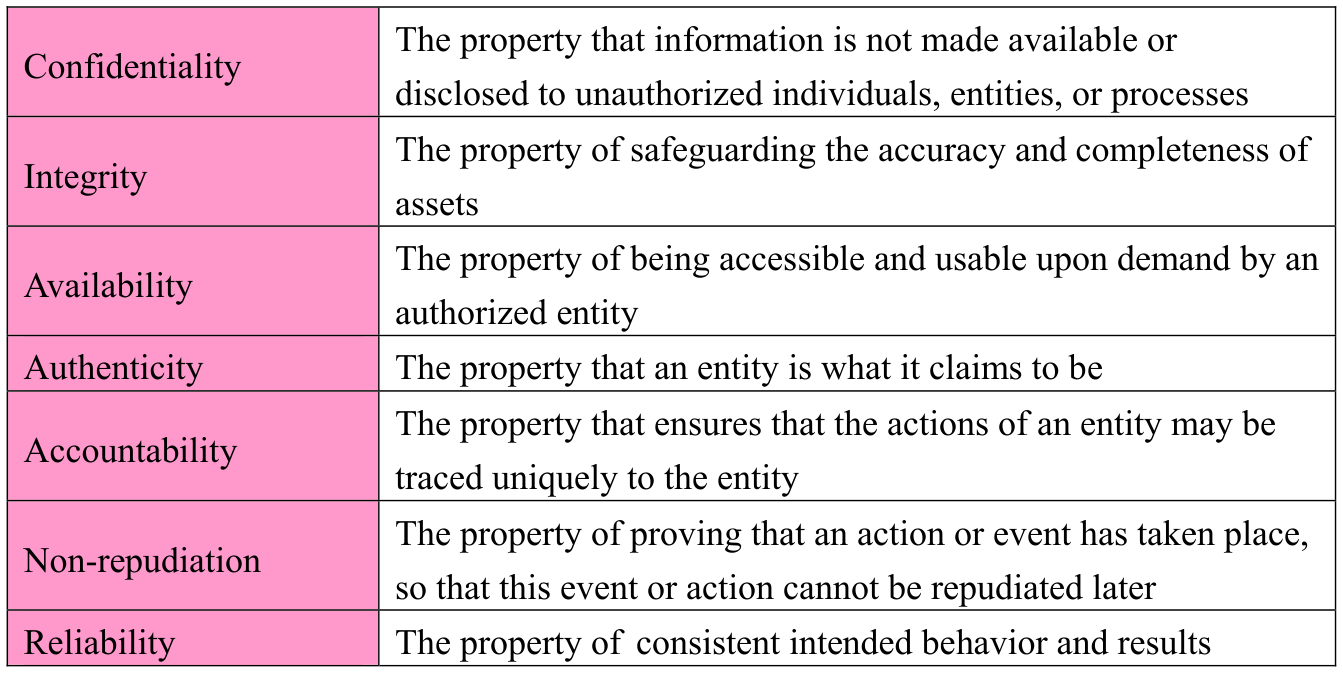
Original Security textbook callout or table, preserving the original labels, values, symbols and spatial arrangement. Source text: The property that information is not made available or Confidentiality disclosed to unauthorized individuals, entities, or processes The property of safeguarding the accuracy and completeness of Integrity assets The property of being accessible and usable upon demand by an Availability authorized entity Authenticity The property that an entity is what it claims to be The property that ensures that the actions of an entity may be Accountability traced uniquely to the entity The property of proving that an action or event has taken place, Non-repudiation so that this event or action cannot be repudiated later Reliability The property of consistent intended behavior and results
p. 352 · Enlarge
Information integrity and website defacement · 1 practice questionsAvailability definition · 4 practice questions

In information security, the following three objects to be managed and four management functions are given attention to maintain the confidentiality, integrity, and availability of information.

[Objects to be managed in information security]

Original Security textbook callout or table, preserving the original labels, values, symbols and spatial arrangement. Source text: Asset Anything that has value to the organization A potential cause of an unwanted incident, which may result in Threat harm to a system or organization
p. 352 · Enlarge

p. 353

Original Security textbook callout or table, preserving the original labels, values, symbols and spatial arrangement. Source text: A weakness of an asset or group of assets that can be exploited Vulnerability by one or more threats
p. 353 · Enlarge

[Management functions of information security]
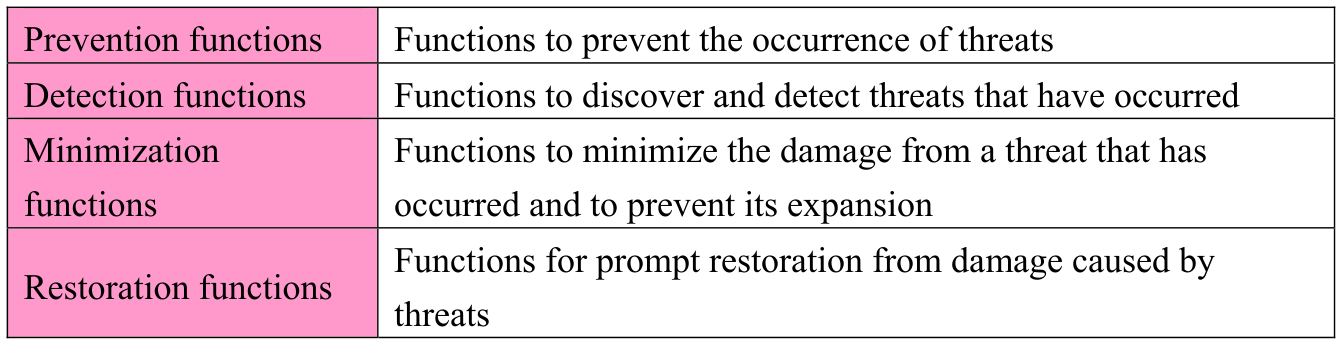
Original Security textbook callout or table, preserving the original labels, values, symbols and spatial arrangement. Source text: Prevention functions Functions to prevent the occurrence of threats Detection functions Functions to discover and detect threats that have occurred Minimization Functions to minimize the damage from a threat that has functions occurred and to prevent its expansion Functions for prompt restoration from damage caused by Restoration functions threats
p. 353 · Enlarge

In addition, the OECD (Organization for Economic Cooperation and Development) recommends the following nine principles for participants (information system owners, providers, and users) in its “Guidelines for the Security of Information Systems and Networks.”
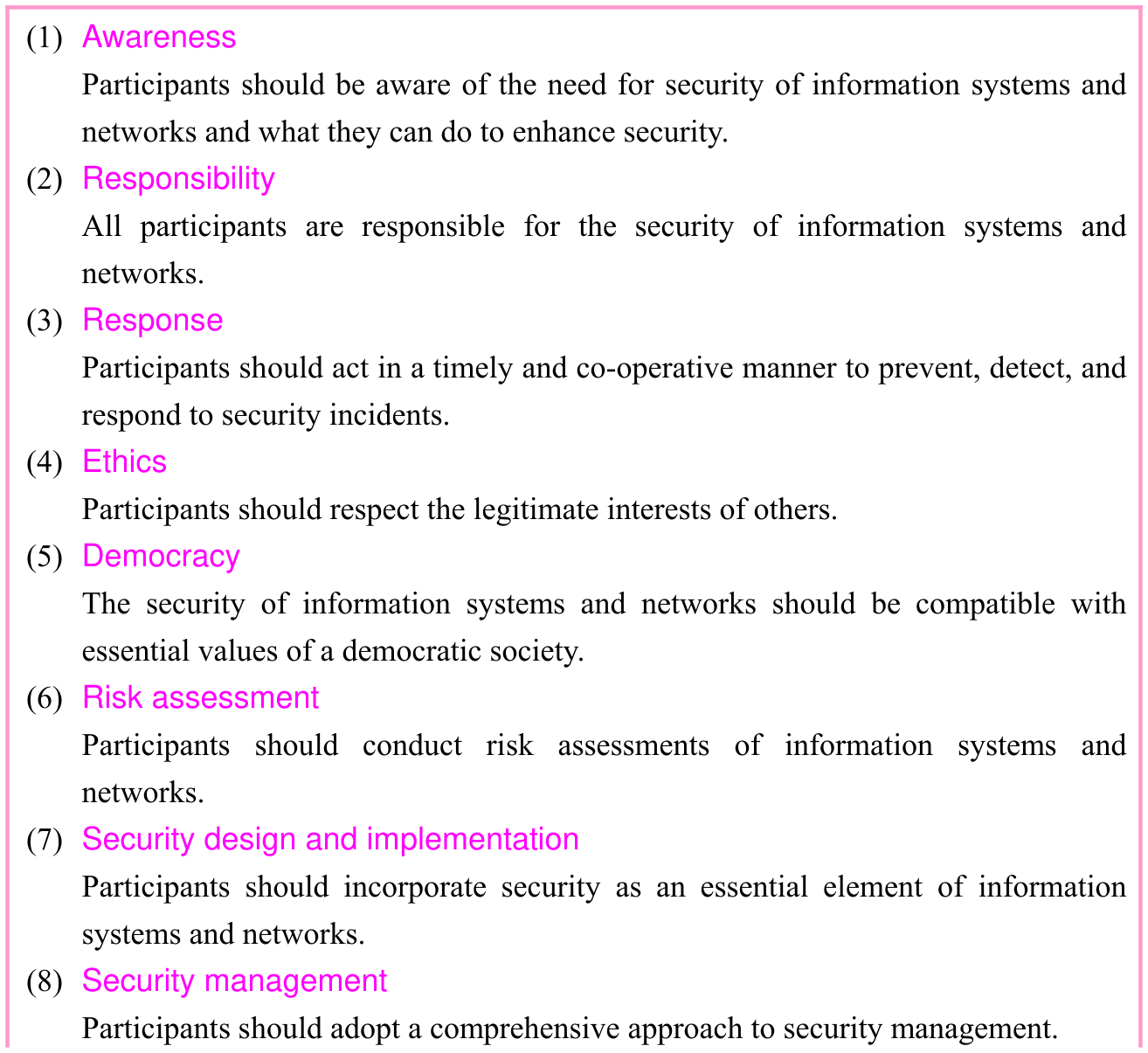
Original Security textbook callout or table, preserving the original labels, values, symbols and spatial arrangement. Source text: (1) Awareness Participants should be aware of the need for security of information systems and networks and what they can do to enhance security. (2) Responsibility All participants are responsible for the security of information systems and networks. (3) Response Participants should act in a timely and co-operative manner to prevent, detect, and respond to security incidents. (4) Ethics Participants should respect the legitimate interests of others. (5) Democracy The security of information systems and networks should be compatible with essential values of a democratic society. (6) Risk assessment Participants should conduct risk assessments of information systems and networks. (7) Security design and implementation Participants should incorporate security as an essential element of information systems and networks. (8) Security management Participants should adopt a comprehensive approach to security management.
p. 353 · Enlarge

p. 354

Original Security textbook callout or table, preserving the original labels, values, symbols and spatial arrangement. Source text: (9) Reassessment Participants should review and reassess the security of information systems and networks, and make appropriate modifications to security policies, practices, measures, and procedures.
p. 354 · Enlarge

For understanding of the concept of information security, objects to be managed by information security are detailed in order.

Original chapter exercises

Original chapter exercises →

New FE Textbook Vol.1 · IT Fundamentals · First Edition, April 2015

