Contents
Chapter 6 · Service ManagementPractice

LEARN WITH HARU

Video Lesson တွေက Haru အတန်းသားတွေအတွက်ပါ

Haru ရဲ့ ITPEC FE Full Course မှာ ယခု သင်ခန်းစာတွေကို တစ်ခုချင်း တစ်ကြောင်းချင်း အသေးစိတ်ရှင််ရှင်းပြထားပါတယ်

အခြေခံ မရှိတဲ့ ကျောင်းသားများစွာဟာလည်း ဒီ Course နဲ့ ပဲ အောင်မြင်ကုန်ကြပါပြီ

အတန်းမအပ်သေးပဲ Haru ဆီမှာ အစမ်းသင်ကြည့်ချင်ပါသလား?

သင်တန်းသားတွေရဲ့ စကားသံများ

သင်တန်းသားတွေရဲ့ စကားသံများ

Highlighted text? Practice this concept. Highlighted passages and figures open related questions.

Practice related questions (3)Progress & bookmarks

Current section

1 Overview of Service Management

p. 344

Practice this section 3 linked exam questions with default filters

Progress

Not marked complete

Related questions in this lesson 3

Service level agreement3
Progress and bookmarks

p. 344 · PDF 350

1 Overview of Service Management

Services are offered to fulfill the requirements of the customers. Service management refers to management for efficiently and continuously offering the service.

1 - 1 Purpose and Concept of Service Management

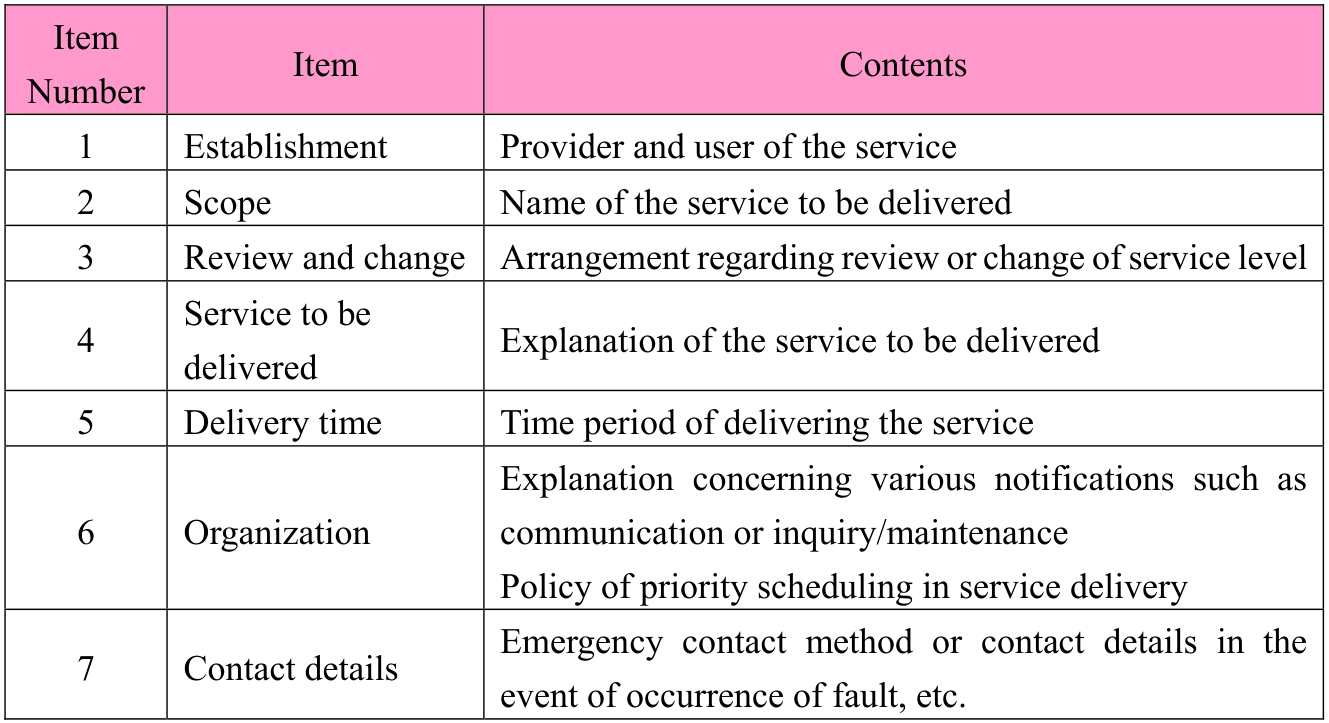
Service management is a set of capabilities and processes to direct and control the service provider’s activities and resources for the design, transition, delivery, and improvement of services to fulfill the requirements of the customers. Service refers to the means that are used by the service provider for delivering value for the customer by facilitating results that the customer wants to achieve. Service is generally intangible and can also be delivered to the service provider by a supplier, an internal group, or a customer acting as a supplier. An IT-based service is especially called IT service, and management of IT service is called IT service management. For fulfilling the service requirements of the customer and for increasing customer satisfaction, it is necessary to clearly define the service value that is required by the customer. For that, the service provider prepares an SLA (Service Level Agreement) that contains an SLR (Service Level Requirement), such as the type of service provided, service quality (e.g., availability, reliability), service time, response time of service, performance of service process, and security. Service level agreement is a documented agreement between the service provider and the customer. (It is sometimes included in contracts.) It identifies the service and the service targets and describes the following. · 3 questions

Item
Number
Item Contents
1 Establishment Provider and user of the service
2 Scope Name of the service to be delivered
3 Review and change Arrangement regarding review or change of service level
4 Service to be
delivered
Explanation of the service to be delivered
5 Delivery time Time period of delivering the service
6 Organization Explanation concerning various notifications such as
communication or inquiry/maintenance
Policy of priority scheduling in service delivery
7 Contact details Emergency contact method or contact details in the
event of occurrence of fault, etc.
View original table · p. 344Service level agreement items; original source comparison.Enlarge original table

p. 345 · PDF 351

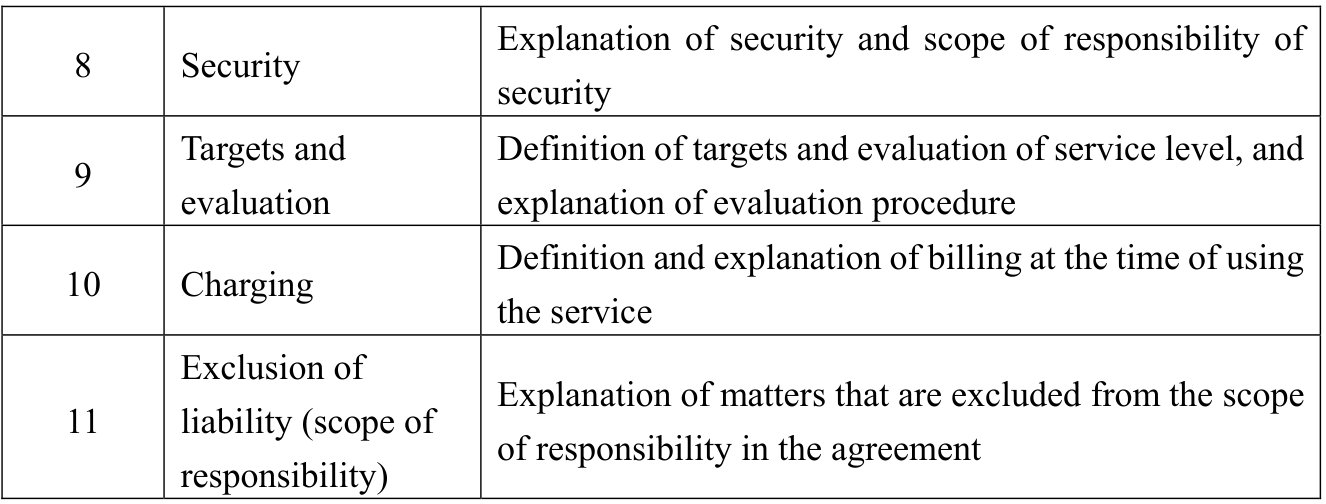
8 Security Explanation of security and scope of responsibility of
security
9 Targets and
evaluation
Definition of targets and evaluation of service level, and
explanation of evaluation procedure
10 Charging Definition and explanation of billing at the time of using
the service
11 Exclusion of
liability (scope of
responsibility)
Explanation of matters that are excluded from the scope
of responsibility in the agreement
View original table · p. 345Service level agreement items, continued; original source comparison.Enlarge original table

Section progress

Original chapter exercises

Original chapter exercises →

New FE Textbook Vol.2 · First Edition, April 2015