Contents
Chapter 7 · Data Structure and AlgorithmPractice

LEARN WITH HARU

Video Lesson တွေက Haru အတန်းသားတွေအတွက်ပါ

Haru ရဲ့ ITPEC FE Full Course မှာ ယခု သင်ခန်းစာတွေကို တစ်ခုချင်း တစ်ကြောင်းချင်း အသေးစိတ်ရှင််ရှင်းပြထားပါတယ်

အခြေခံ မရှိတဲ့ ကျောင်းသားများစွာဟာလည်း ဒီ Course နဲ့ ပဲ အောင်မြင်ကုန်ကြပါပြီ

အတန်းမအပ်သေးပဲ Haru ဆီမှာ အစမ်းသင်ကြည့်ချင်ပါသလား?

သင်တန်းသားတွေရဲ့ စကားသံများ

သင်တန်းသားတွေရဲ့ စကားသံများ

Highlighted text? Practice this concept. Highlighted passages and figures open related questions.

Practice related questions (5)Progress & bookmarks

Current section

1-3 Stack and Queue

p. 407

Practice this section 5 linked exam questions with default filters

Progress

Not marked complete

Related questions in this lesson 6

Stack LIFO order4Stack pointer and topmost element2
Progress and bookmarks

p. 407 · PDF 417

1 - 3 Stack and Queue

Stack and queue are data structures that model the methods of using data. They are also called problem resolution data structures, and they are implemented by using an array.

1-3-1 Stack

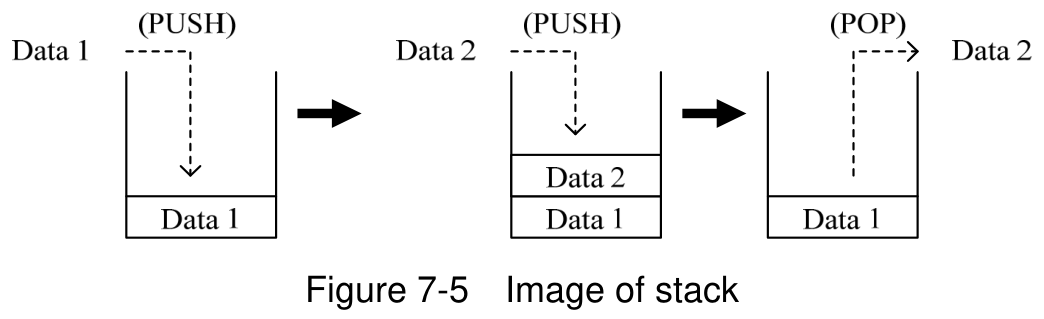
Stack is an LIFO (Last-In First-Out) data structure where data that is recorded last is extracted first. You can simply imagine a data structure where data is stacked in the box, and data is extracted from the box. Since data is stacked and extracted from the same side, data that is stored most recently is extracted first. Storing data in the stack is called PUSH, and extracting data from the stack is called POP. · 4 questions

p. 408 · PDF 418

Figure 7-5  Image of stack; original source comparison.
Enlarge original visual
Original source text
Figure 7-5  Image of stack 
Source visual description

The original stack drawing shows PUSH and POP operations and the changing Data 1 and Data 2 contents.
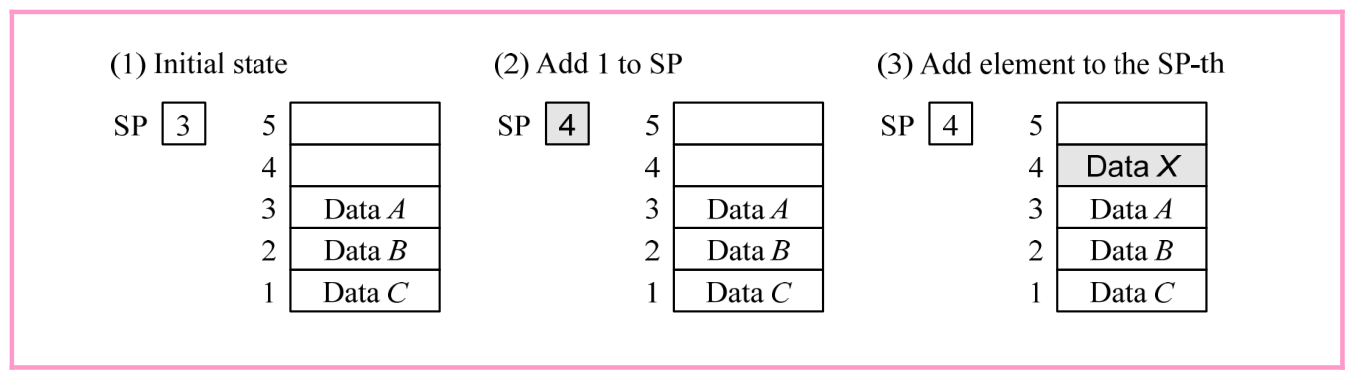
For implementing a stack, it is a common practice to use an SP (Stack Pointer). The stack pointer shows the position (i.e., index if an array structure) of the topmost element of the stack at present. When data is stored, data is recorded in the position where the value of the stack pointer is updated (e.g., generally +1). In contrast, when data is extracted, the value of the stack pointer is updated (e.g., generally −1) after data is extracted from the position of the stack pointer. For ease of understanding, the process of storing (i.e., pushing) data is shown in the figure below. Here, an array in the figure is shown as reversed. · 2 questions

Original Stack and Queue layout, PDF 418; original source comparison.
Enlarge original visual
Source visual description

Original Stack and Queue source layout. Source labels: .

A stack is suitable for temporarily storing return address or data that is being processed during a function call or a recursive call. In addition, OS and application programs use stacks after stack space is secured in main memory.

Original chapter exercises

Original chapter exercises →

New FE Textbook Vol.1 · IT Fundamentals · First Edition, April 2015